CT Lamont Primary Health Care Research Centre, Department of Family Medicine, University of Ottawa, Ottawa, Ontario, Canada.
Bruyère Research Institute, Ottawa, Ontario, Canada.
BMJ Open. 2019 May 30;9(5):e028888. doi: 10.1136/bmjopen-2018-028888.
To examine the process of implementing an electronic consultation (eConsult) service and evaluate its impact along key metrics outlined by the Reach, Effectiveness, Adoption, Implementation and Maintenance (RE-AIM) framework.
Cross-sectional study.
Clinics using eConsult in four provinces across Canada: Alberta, Manitoba, Quebec and Newfoundland and Labrador.
All eConsult cases submitted in four participating provinces were included.
The eConsult service is a secure online application that allows primary care providers and specialists to communicate regarding a patient's care. We measured the impact using system utilisation data and mandatory close-out surveys completed at the end of each eConsult.
Implementation progress and impact were examined using the five categories outlined by the RE-AIM framework: reach, effectiveness, adoption, implementation and maintenance.
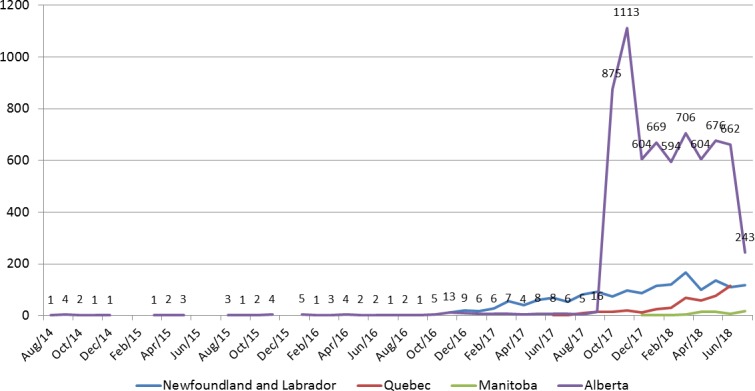
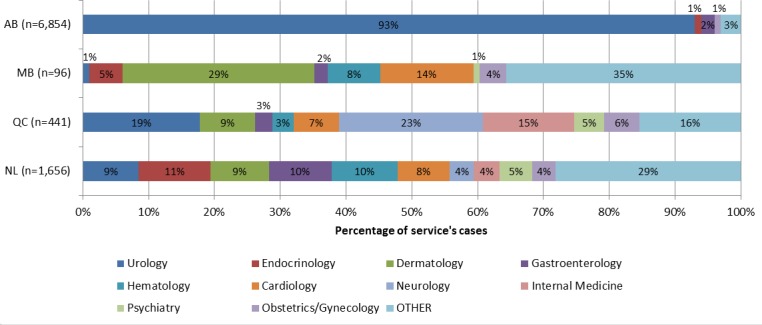
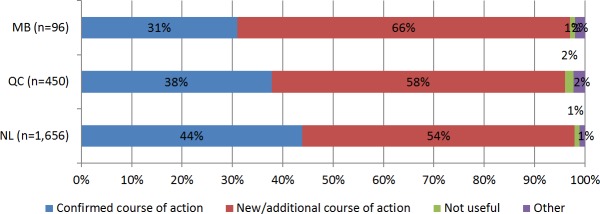
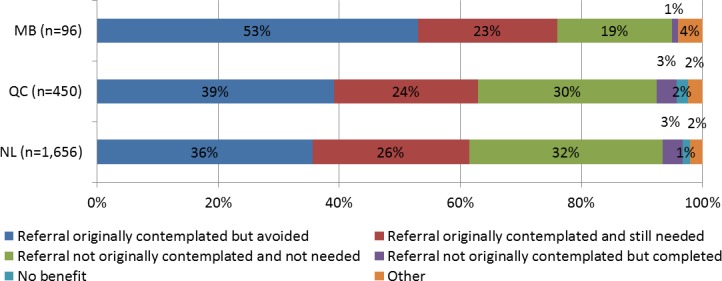
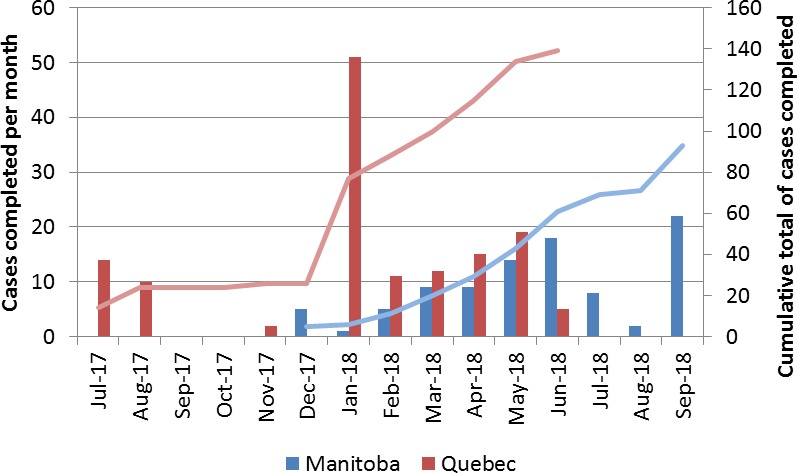
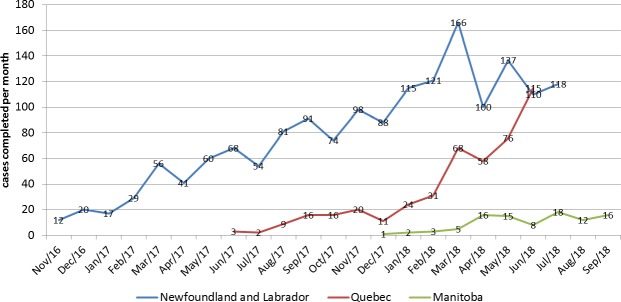
Four provinces provided data from different periods, ranging from 4 years (Alberta) to 10 months (Manitoba). Total cases completed ranged from 96 (Manitoba) to 6885 (Alberta). Newfoundland had the largest menu of available specialties (n=35), while Alberta and Quebec had the smallest (n=22). The most frequently requested groups varied across provinces, with only endocrinology appearing in the top five for all provinces. The average specialist response time ranged from 3 days (Manitoba) to 16.7 days (Alberta). Between 54% (Newfoundland) and 66% (Manitoba) of cases resulted in new or additional information. Primary care providers avoided completing referrals they had originally considered in 36% (Newfoundland) to 53% of cases (Manitoba), while only between 27 % (Quebec) and 29% (Newfoundland) of cases resulted in a referral. In every province, services demonstrated higher rates of usage in their last quarter of data than their first.
eConsult was successfully implemented in four new provinces across Canada. Implementation strategies and scope varied, but services demonstrated substantial consistency on several key metrics, most notably on whether new information was learnt and impact on decision to refer.
考察电子咨询(eConsult)服务的实施过程,并按照 Reach、Effectiveness、Adoption、Implementation 和 Maintenance(RE-AIM)框架中列出的关键指标评估其影响。
横断面研究。
加拿大四个省的使用 eConsult 的诊所:艾伯塔省、马尼托巴省、魁北克省和纽芬兰和拉布拉多省。
包括四个参与省份提交的所有 eConsult 病例。
eConsult 服务是一个安全的在线应用程序,允许初级保健提供者和专家就患者的护理进行沟通。我们使用系统利用数据和每个 eConsult 结束时完成的强制性关闭调查来衡量影响。
使用 RE-AIM 框架中概述的五个类别检查实施进度和影响:覆盖范围、效果、采用、实施和维护。
四个省提供了来自不同时期的数据,范围从 4 年(艾伯塔省)到 10 个月(马尼托巴省)。完成的总病例数从 96 例(马尼托巴省)到 6885 例(艾伯塔省)不等。纽芬兰省提供的专业种类最多(n=35),而艾伯塔省和魁北克省提供的专业种类最少(n=22)。各省间请求最多的科室不同,只有内分泌科出现在所有省份的前五名。专科医生的平均回复时间从 3 天(马尼托巴省)到 16.7 天(艾伯塔省)不等。在 54%(纽芬兰省)到 66%(马尼托巴省)的病例中,产生了新的或额外的信息。在 36%(纽芬兰省)到 53%(马尼托巴省)的病例中,初级保健提供者避免了他们最初考虑的转诊,而只有 27%(魁北克省)到 29%(纽芬兰省)的病例导致转诊。在每个省份,服务在数据的最后一个季度的使用量都高于第一个季度。
电子咨询在加拿大四个新省成功实施。实施策略和范围各不相同,但服务在几个关键指标上表现出了相当大的一致性,最重要的是是否获得了新信息以及对转诊决策的影响。