Chen Si, Liu Dafei, Tian Jin, Kang Hongtao, Guo Dongchun, Jiang Qian, Liu Jiasen, Li Zhijie, Hu Xiaoliang, Qu Liandong
State Key Laboratory of Veterinary Biotechnology, Harbin Veterinary Research Institute, Chinese Academy of Agricultural Sciences, Harbin, 150001, People's Republic of China.
Arch Virol. 2019 Aug;164(8):2159-2164. doi: 10.1007/s00705-019-04296-9. Epub 2019 May 31.
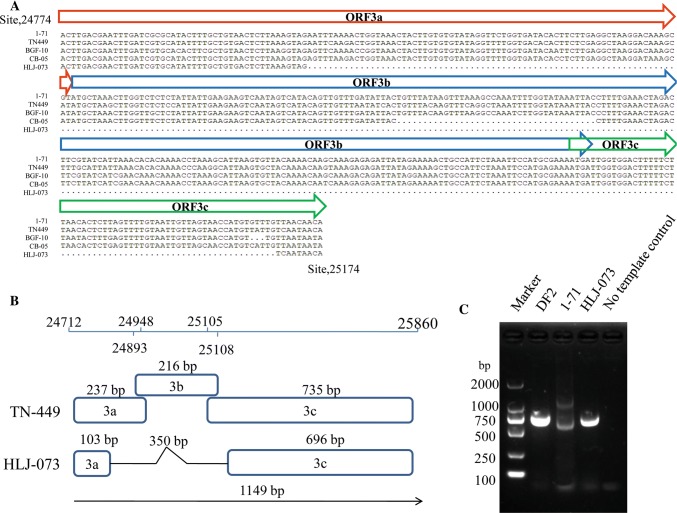
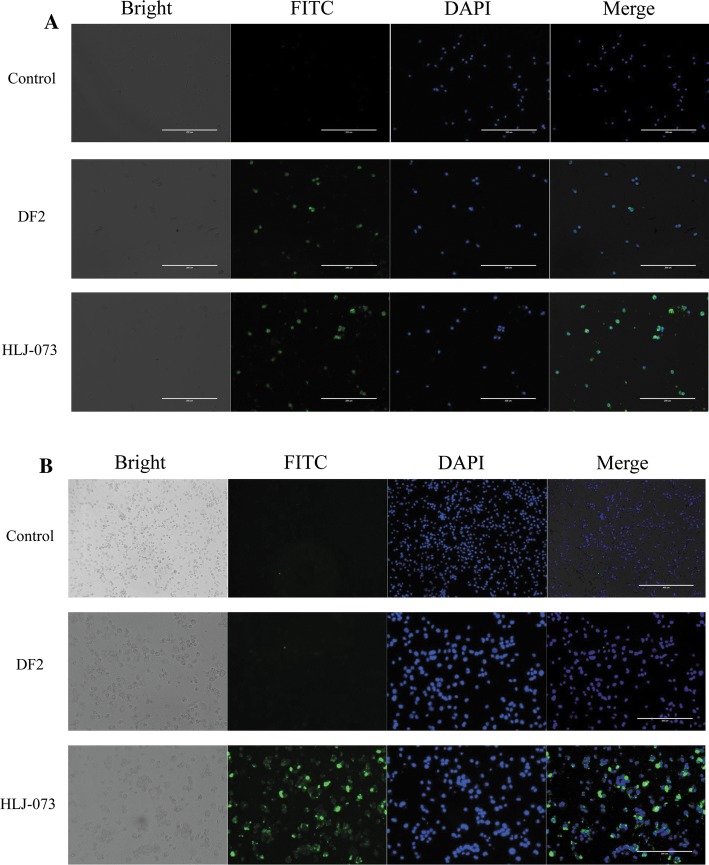
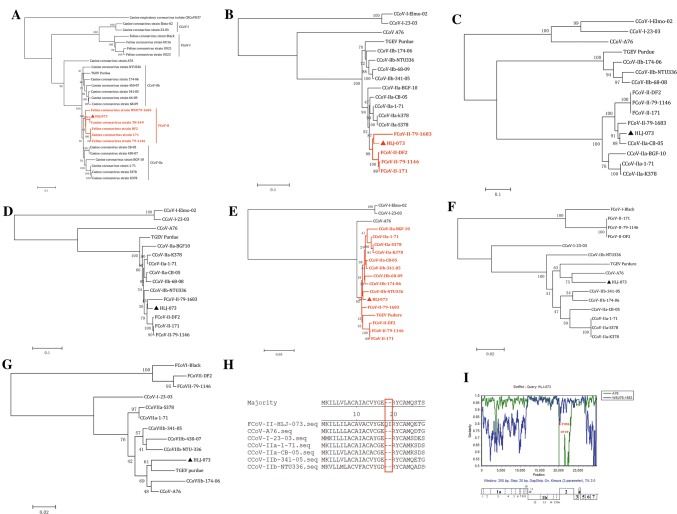
Canine enteric coronaviruses (CCoVs) are important enteric pathogens of dogs. CCoVs with different variations are typically pantropic and pathogenic in dogs. In this study, we isolated a CCoV, designated HLJ-073, from a dead 6-week-old male Pekingese with gross lesions and diarrhea. Interestingly, sequence analysis suggested that HLJ-073 contained a 350-nt deletion in ORF3abc compared with reference CCoV isolates, resulting in the loss of portions of ORF3a and ORF3c and the complete loss of ORF3b. Phylogenetic analysis based on the S gene showed that HLJ-073 was more closely related to members of the FCoV II cluster than to members of the CCoV I or CCoV II cluster. Furthermore, recombination analysis suggested that HLJ-073 originated from the recombination of FCoV 79-1683 and CCoV A76, which were both isolated in the United States. Cell tropism experiments suggested that HLJ-073 could effectively replicate in canine macrophages/monocytes and human THP-1 cells. This is the first report of the isolation of strain HLJ-073 in China, and this virus has biological characteristics that are different from those of other reported CCoVs.
犬肠道冠状病毒(CCoVs)是犬重要的肠道病原体。具有不同变异的CCoVs通常在犬中具有泛嗜性和致病性。在本研究中,我们从一只患有明显病变和腹泻的6周龄死亡雄性京巴犬中分离出一株CCoV,命名为HLJ - 073。有趣的是,序列分析表明,与参考CCoV分离株相比,HLJ - 073在ORF3abc中存在一个350 nt的缺失,导致ORF3a和ORF3c部分缺失以及ORF3b完全缺失。基于S基因的系统发育分析表明,HLJ - 073与猫冠状病毒II型簇的成员比与犬冠状病毒I型或犬冠状病毒II型簇的成员关系更密切。此外,重组分析表明,HLJ - 073起源于均在美国分离的猫冠状病毒79 - 1683和犬冠状病毒A76的重组。细胞嗜性实验表明,HLJ - 073能够在犬巨噬细胞/单核细胞和人THP - 1细胞中有效复制。这是中国首次报道分离出HLJ - 073株,该病毒具有与其他已报道的CCoVs不同的生物学特性。