Department of Medical Biology, Faculty of Health Sciences, UiT-The Arctic University of Norway, Tromsø, Norway.
Genomics Group, Faculty of Biosciences and Aquaculture, Nord University, Bodø, Norway.
BMC Mol Biol. 2019 Jun 1;20(1):16. doi: 10.1186/s12867-019-0134-y.
The mitochondrial genomes of mushroom corals (Corallimorpharia) are remarkable for harboring two complex group I introns; ND5-717 and COI-884. How these autocatalytic RNA elements interfere with mitochondrial RNA processing is currently not known. Here, we report experimental support for unconventional processing events of ND5-717 containing RNA.
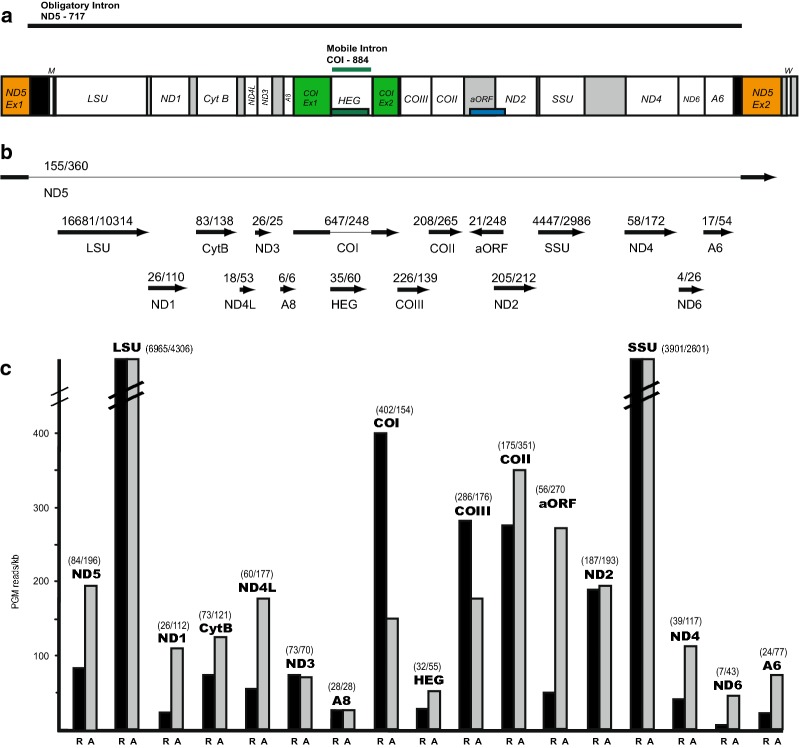
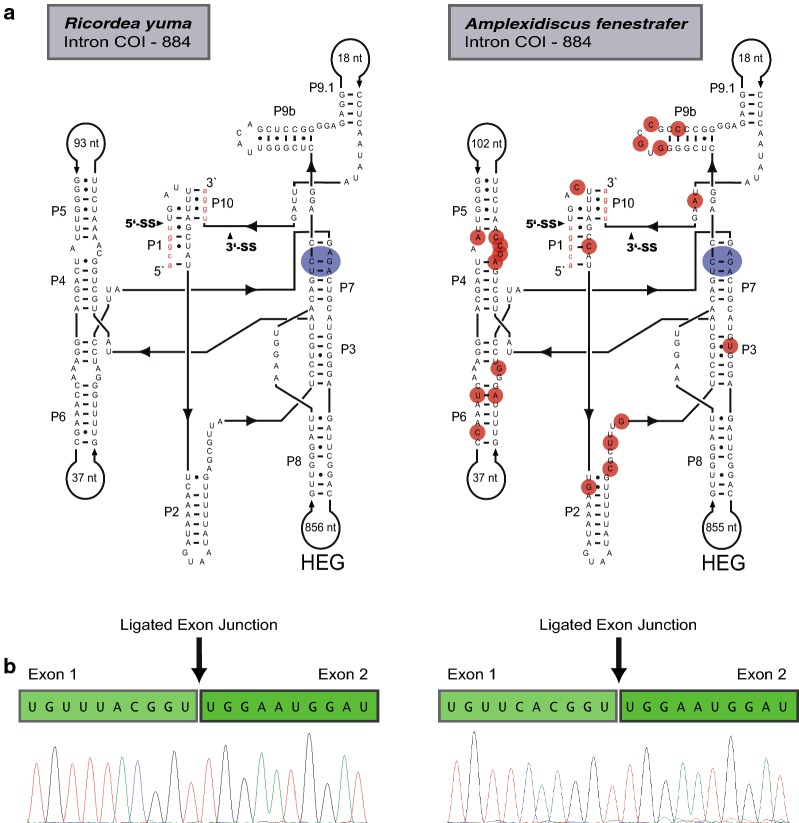
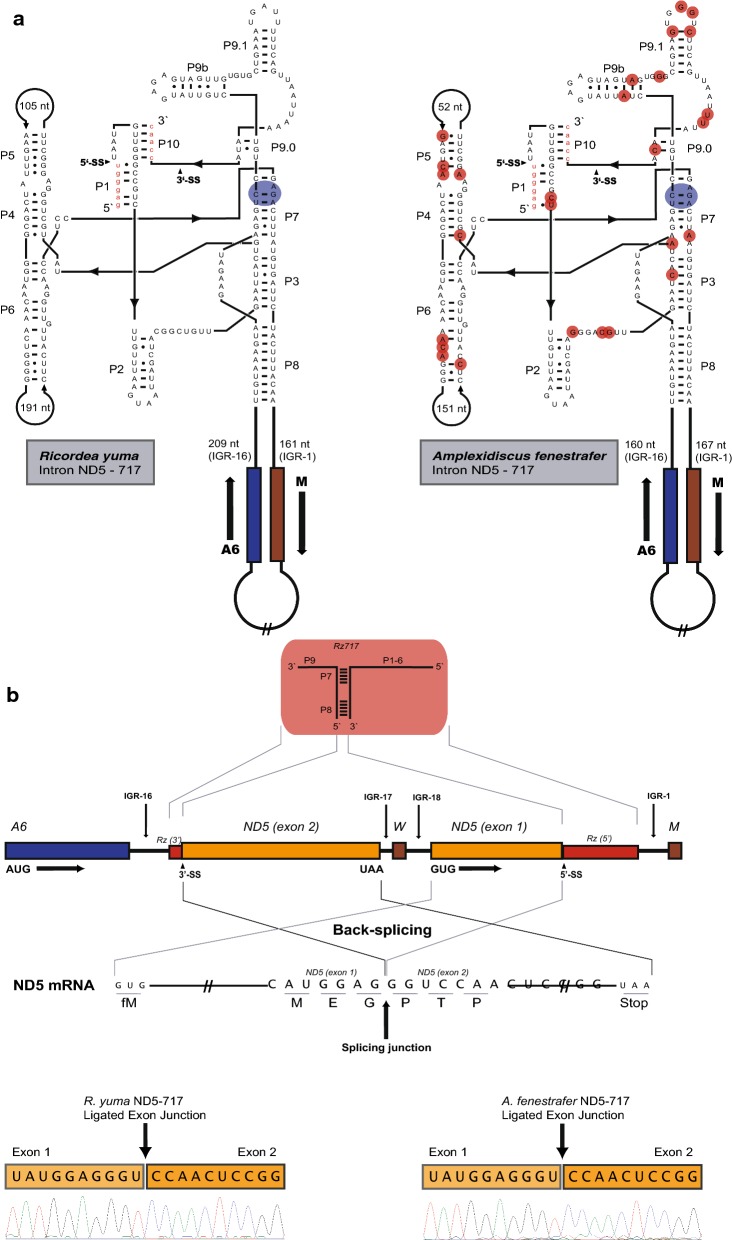
We obtained the complete mitochondrial genome sequences and corresponding mitochondrial transcriptomes of the two distantly related corallimorpharian species Ricordea yuma and Amplexidiscus fenestrafer. All mitochondrial genes were found to be expressed at the RNA-level. Both introns were perfectly removed by autocatalytic splicing, but COI-884 excision appeared more efficient than ND5-717. ND5-717 was organized into giant group I intron elements of 18.1 kb and 19.3 kb in A. fenestrafer and R. yuma, respectively. The intron harbored almost the entire mitochondrial genome embedded within the P8 peripheral segment.
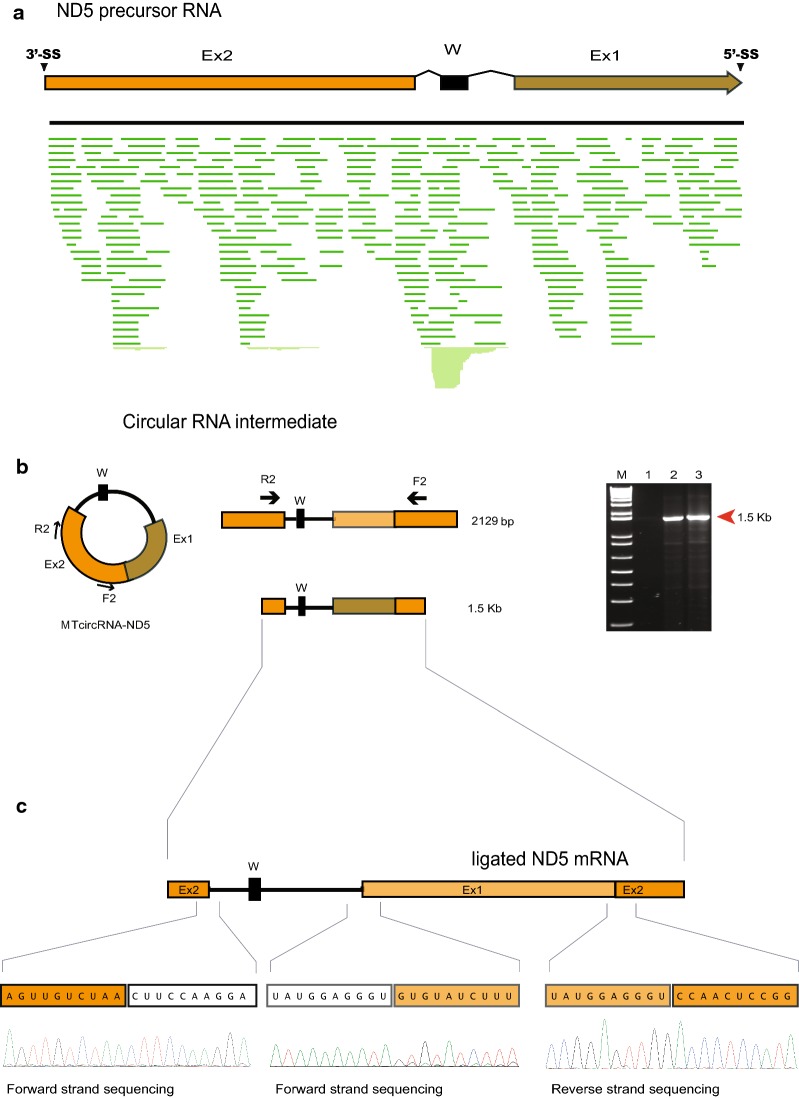
ND5-717 was removed by group I intron splicing from a small primary transcript that contained a permutated intron-exon arrangement. The splicing pathway involved a circular exon-containing RNA intermediate, which is a hallmark of RNA back-splicing. ND5-717 represents the first reported natural group I intron that becomes excised by back-splicing from a permuted precursor RNA. Back-splicing may explain why Corallimorpharia mitochondrial genomes tolerate giant group I introns.
蘑菇珊瑚(珊瑚虫纲)的线粒体基因组因其含有两个复杂的 I 组内含子(ND5-717 和 COI-884)而引人注目。这些自我催化的 RNA 元件如何干扰线粒体 RNA 加工目前尚不清楚。在这里,我们报告了对含有 RNA 的非传统 ND5-717 加工事件的实验支持。
我们获得了两种亲缘关系较远的珊瑚虫物种 Ricordea yuma 和 Amplexidiscus fenestrafer 的完整线粒体基因组序列和相应的线粒体转录组。所有的线粒体基因都在 RNA 水平上被发现有表达。两个内含子都通过自我催化剪接完美地被切除,但 COI-884 的切除似乎比 ND5-717 更有效。ND5-717 在 A. fenestrafer 和 R. yuma 中分别组织成 18.1kb 和 19.3kb 的巨大 I 组内含子元件。内含子包含了几乎整个嵌入 P8 外围片段的线粒体基因组。
ND5-717 通过 I 组内含子剪接从包含一个重排内含子-外显子排列的小初级转录本中被切除。剪接途径涉及一种含有环状外显子的 RNA 中间产物,这是 RNA 反向剪接的标志。ND5-717 是第一个报道的天然 I 组内含子,它通过反向剪接从重排的前体 RNA 中被切除。反向剪接可能解释了为什么珊瑚虫纲的线粒体基因组能够容忍巨大的 I 组内含子。