Karuppiah Valliappan, Sun Jianan, Li Tingting, Vallikkannu Murugappan, Chen Jie
School of Agriculture and Biology, Shanghai Jiao Tong University, Shanghai, China.
State Key Laboratory of Microbial Metabolism, Shanghai Jiao Tong University, Shanghai, China.
Front Microbiol. 2019 May 16;10:1068. doi: 10.3389/fmicb.2019.01068. eCollection 2019.
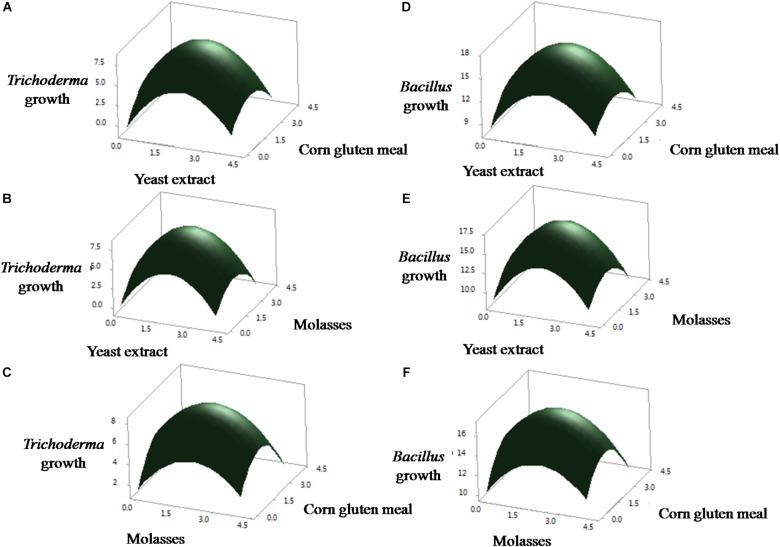
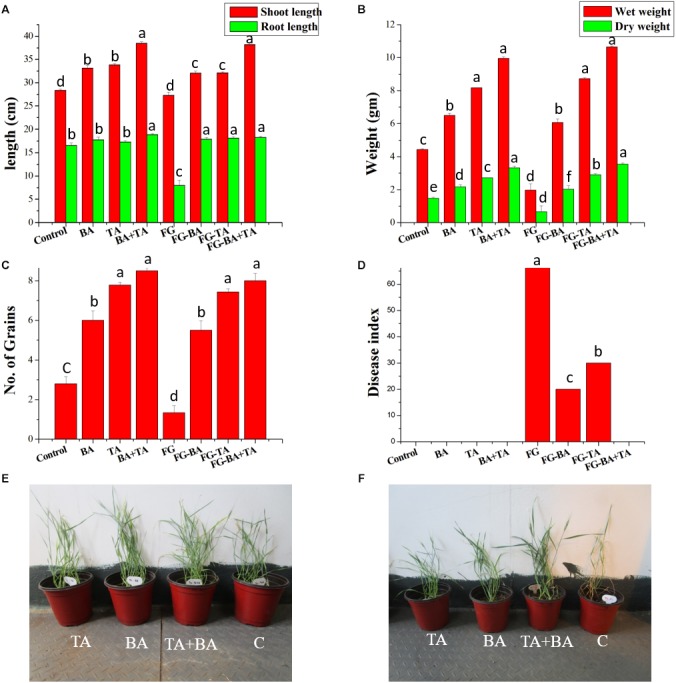
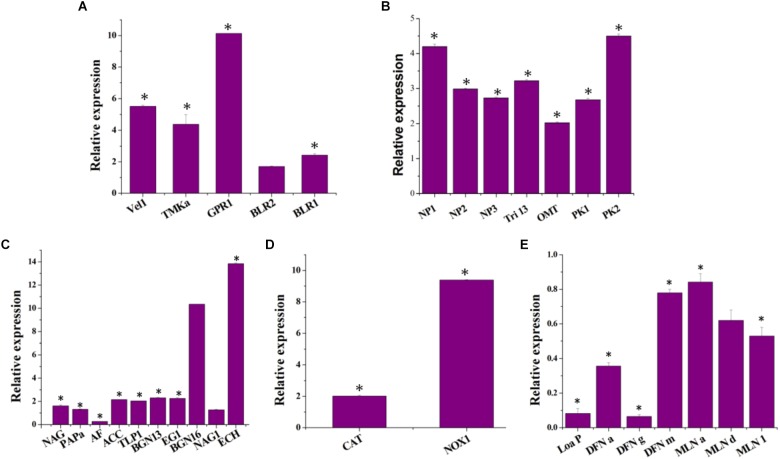
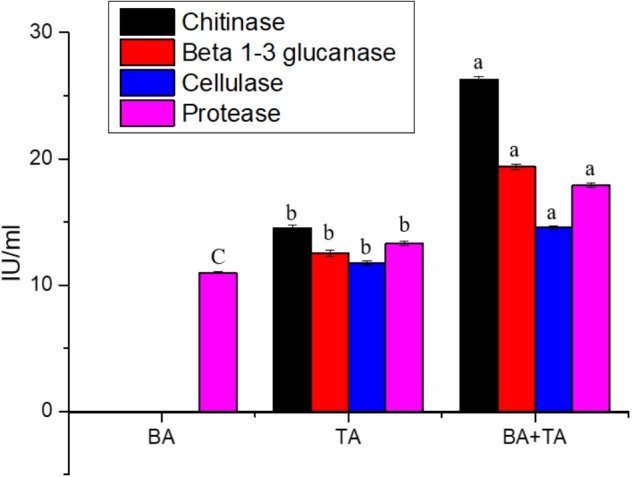
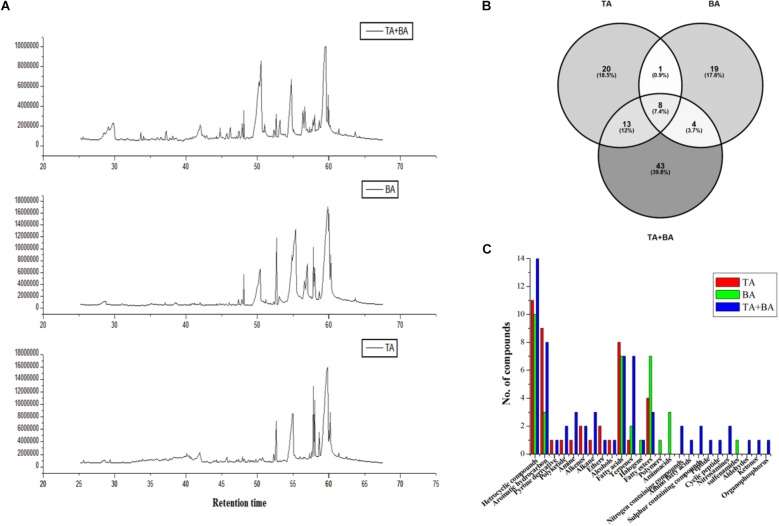
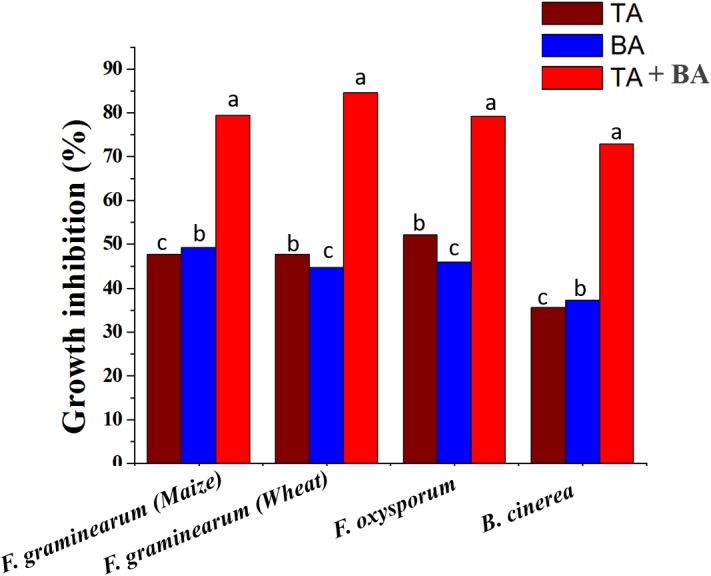
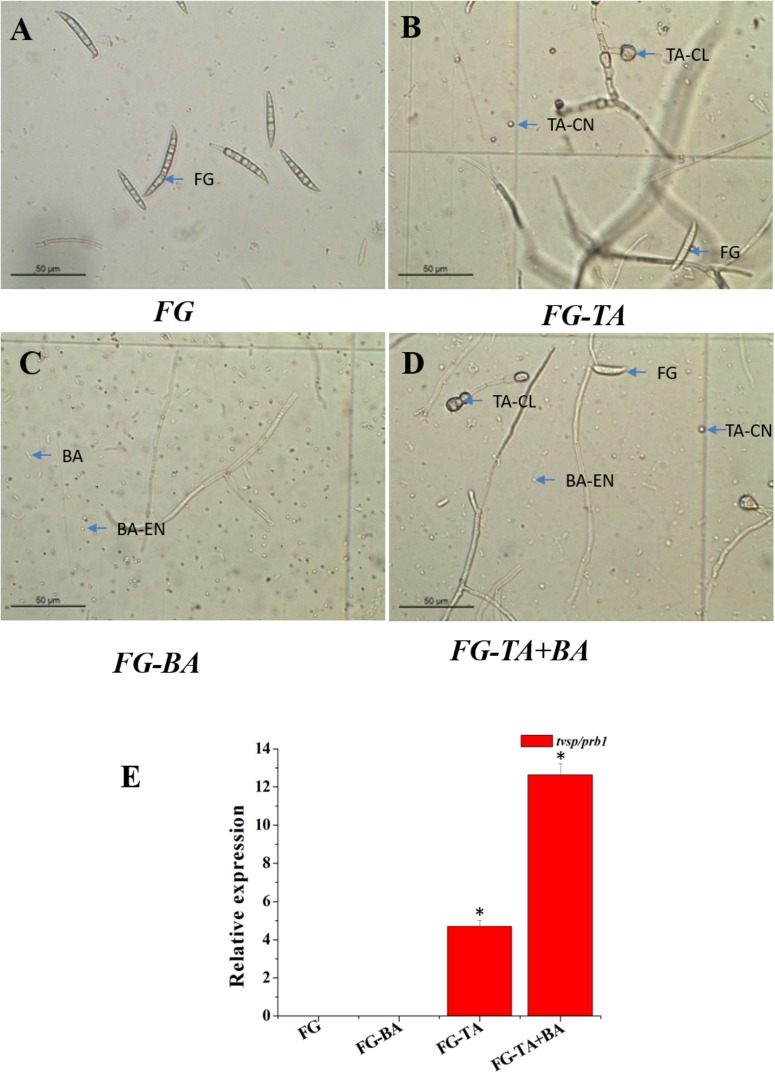
In an effort to balance the demands of plant growth promoting and biological control agents in a single product, the technology on the co-cultivation of two microbes, GDFS1009 and 1841 has been developed and demonstrated its effectiveness in synergistic interactions and its impact on the plant growth and biocontrol potential. In this study, optimization of and growth in a single medium was carried out using response surface methodology (RSM). The optimal medium for enhanced growth was estimated as 2% yeast extract, 2% molasses and 2% corn gluten meal. evolved the complicated molecular mechanisms in the co-culture by the induction of BLR-1/BLR-2, VELVET, and NADPH oxidases genes. In performance with these genes, conserved signaling pathways, such as heterotrimeric G proteins and mitogen-activated protein kinases (MAPKs) had also involved in this molecular orchestration. The co-cultivation induced the expression of genes related to secondary metabolism, mycoparasitism, antioxidants and plant growth. On the other hand, the competition during co-cultivation induced the production of new compounds that are not detected in axenic cultures. In addition, the co-culture significantly enhanced the plant growth and protection against . The present study demonstrated the potential of co-cultivation technology could be a used to grow the GDFS1009 and 1841 synergistically to improve the production of mycoparasitism related enzymes, secondary metabolites, and plant growth promoting compounds to significantly enhance the plant growth and protection against plant pathogens.
为了在单一产品中平衡促进植物生长和生物防治剂的需求,已开发出两种微生物GDFS1009和1841共培养的技术,并证明了其在协同相互作用中的有效性及其对植物生长和生物防治潜力的影响。在本研究中,使用响应面法(RSM)对单一培养基中两种微生物的生长进行了优化。促进生长的最佳培养基估计为2%酵母提取物、2%糖蜜和2%玉米蛋白粉。在共培养中,通过诱导BLR-1/BLR-2、VELVET和NADPH氧化酶基因,两种微生物进化出复杂的分子机制。与这些基因协同作用时,保守的信号通路,如异源三聚体G蛋白和丝裂原活化蛋白激酶(MAPK)也参与了这一分子调控。共培养诱导了与次生代谢、真菌寄生、抗氧化剂和植物生长相关的基因表达。另一方面,共培养期间的竞争诱导产生了在无菌培养中未检测到的新化合物。此外,共培养显著促进了植物生长并增强了对(此处原文缺失某种病原体名称)的抗性。本研究证明了共培养技术的潜力,可用于协同培养GDFS1009和1841,以提高真菌寄生相关酶、次生代谢产物和促进植物生长化合物的产量,从而显著促进植物生长并增强对植物病原体的抗性。