Cellular and Molecular Research Center, Yasuj University of Medical Sciences, Yasuj, Iran.
Medicinal Plants Research Center, Yasuj University of Medical Sciences, Yasuj, Iran.
BMC Complement Altern Med. 2019 Jun 3;19(1):113. doi: 10.1186/s12906-019-2518-4.
Embryonic neural stem cells (eNSCs) are immature precursors of the central nervous system (CNS), with self-renewal and multipotential differentiation capacities. These are regulated by endogenous and exogenous factors such as alpha-linolenic acid (ALA), a plant-based essential omega-3 polyunsaturated fatty acid.
In this study, we investigated the effects of various concentrations of Alyssum homolocarpum seed oil (AHSO), containing natural ALA, stearic acid (SA), myristic acid (MA), and β-sitosterol, on proliferation and differentiation of eNSCs, in comparison to controls and to synthetic pure ALA.
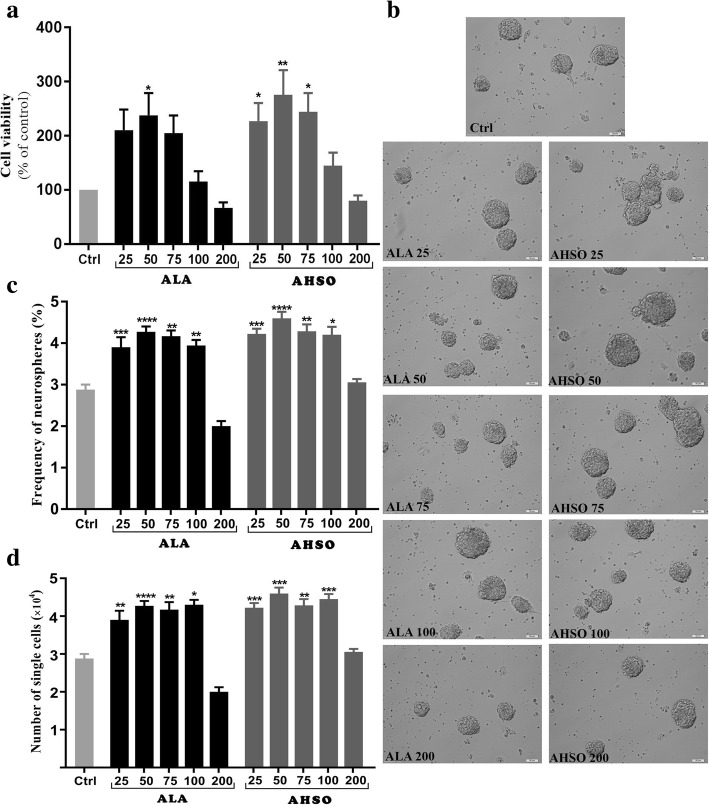
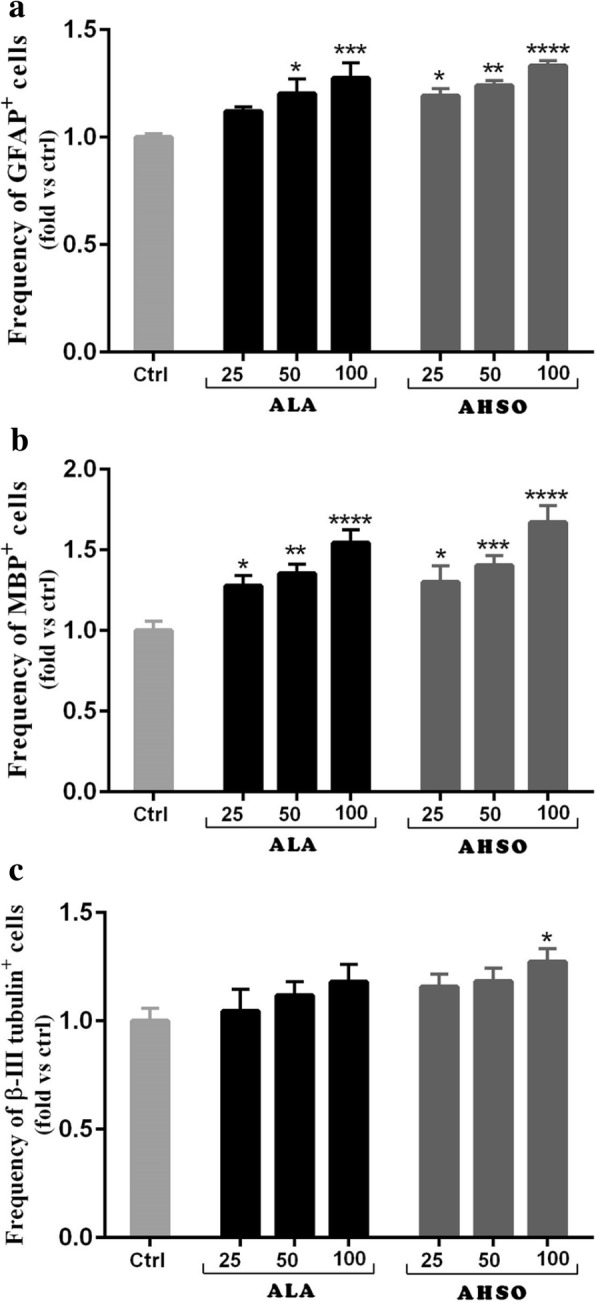
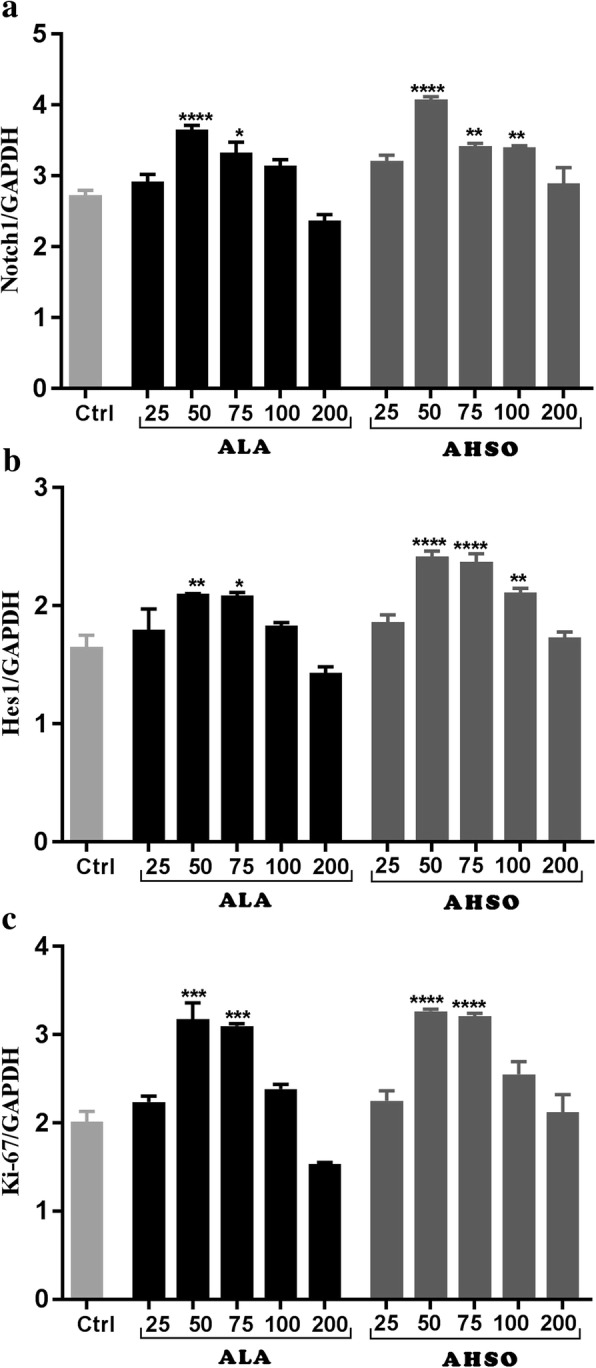
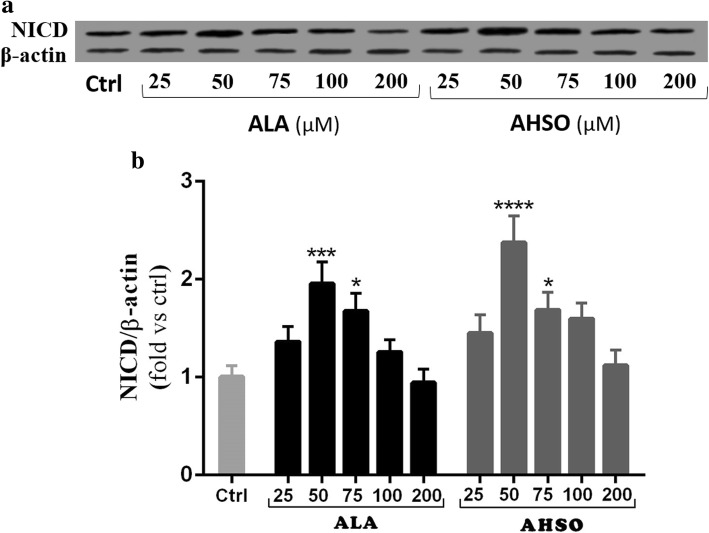
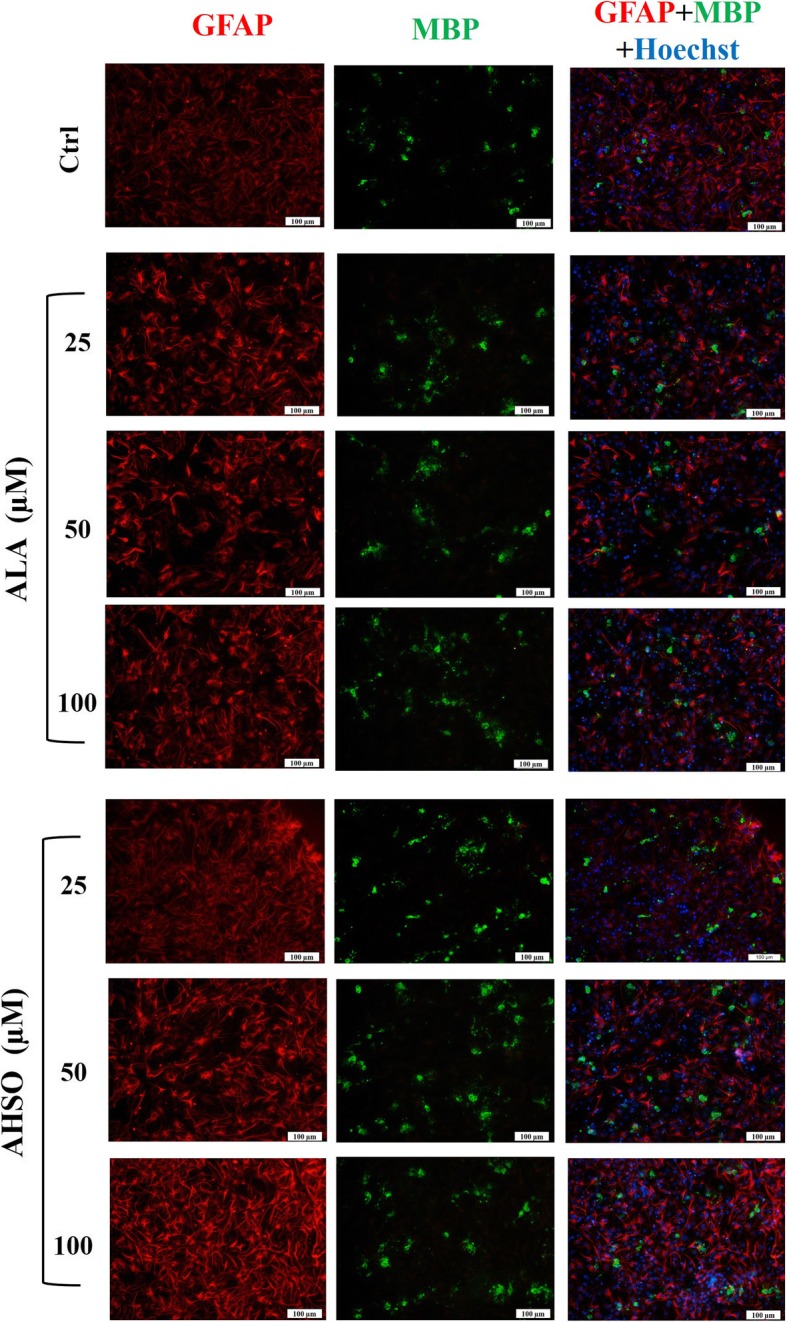
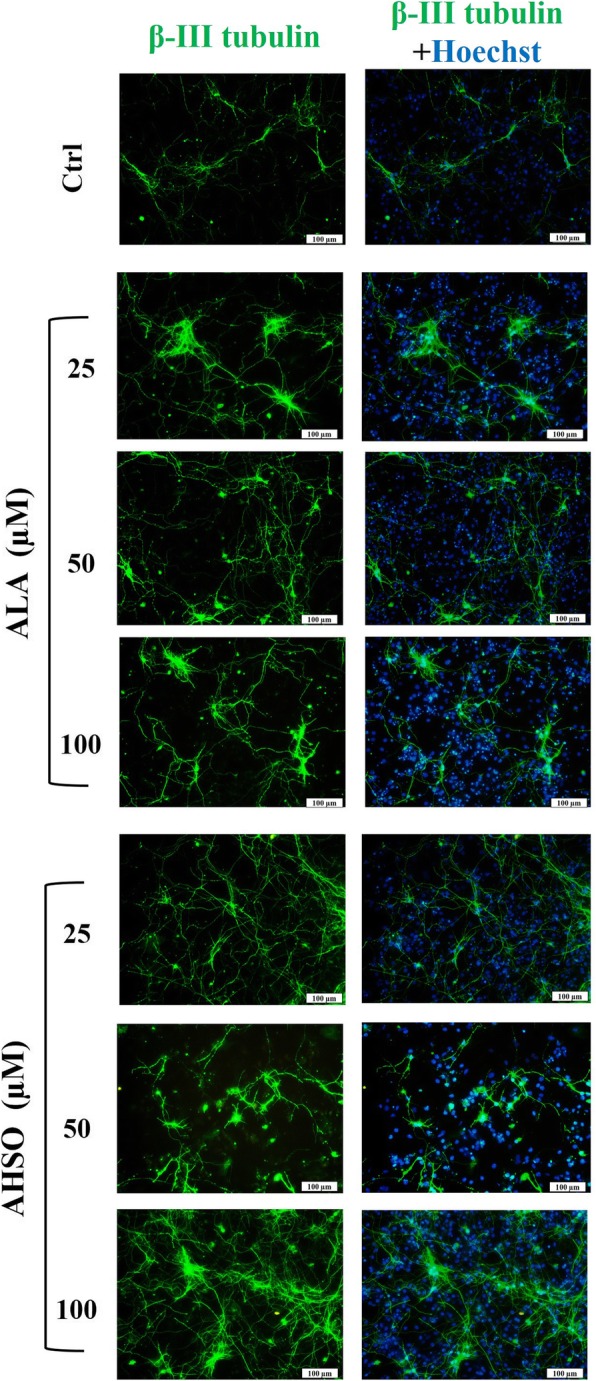
Treatment with natural AHSO (25 to 75 μM), similar to synthetic ALA, caused a significant ~ 2-fold increase in eNCSs viability, in comparison to controls. To confirm this proliferative activity, treatment of NSCs with 50 or 75 μM AHSO resulted in a significant increase in mRNA levels of notch1, hes-1 and Ki-67and NICD protein expression, in comparison to controls. Moreover, AHSO administration significantly increased the differentiation of eNSCs toward astrocytes (GFAP+) and oligodendrocytes (MBP+) in a dose dependent manner and was more potent than ALA, at similar concentrations, in comparison to controls. Indeed, only high concentrations of 100 μM AHSO, but not ALA, caused a significant increase in the frequency of neurons (β-III Tubulin+).
Our data demonstrated that AHSO, a rich source of ALA containing also other beneficial fatty acids, increased the proliferation and stimulated the differentiation of eNSCs. We suggest that AHSO's effects are caused by β-sitosterol, SA and MA, present within this oil. AHSO could be used in diet to prevent neurodevelopmental syndromes, cognitive decline during aging, and various psychiatric disorders.
胚胎神经干细胞(eNSC)是中枢神经系统(CNS)的未成熟前体细胞,具有自我更新和多能分化能力。这些能力受到内源性和外源性因素的调节,如α-亚麻酸(ALA),一种植物源性必需的ω-3 多不饱和脂肪酸。
在这项研究中,我们研究了不同浓度的 Alyssum homolocarpum 籽油(AHSO)对 eNSC 增殖和分化的影响,AHSO 中含有天然 ALA、硬脂酸(SA)、肉豆蔻酸(MA)和β-谷甾醇,与对照组和合成纯 ALA 进行了比较。
与对照组相比,天然 AHSO(25 至 75μM)处理类似于合成 ALA,导致 eNCSs 活力显著增加约 2 倍。为了证实这种增殖活性,用 50 或 75μM AHSO 处理 NSCs 导致 notch1、hes-1 和 Ki-67 的 mRNA 水平以及 NICD 蛋白表达显著增加,与对照组相比。此外,AHSO 给药以剂量依赖的方式显著增加 eNSC 向星形胶质细胞(GFAP+)和少突胶质细胞(MBP+)的分化,并且在相似浓度下比 ALA 更有效,与对照组相比。事实上,只有高浓度的 100μM AHSO,但不是 ALA,导致神经元(β-III Tubulin+)的频率显著增加。
我们的数据表明,AHSO 是 ALA 的丰富来源,还含有其他有益的脂肪酸,可增加 eNSC 的增殖并刺激其分化。我们认为 AHSO 的作用是由存在于这种油中的β-谷甾醇、SA 和 MA 引起的。AHSO 可用于饮食中,以预防神经发育综合征、衰老过程中的认知能力下降和各种精神疾病。