Department of Anatomy and Histology, Fukushima Medical University School of Medicine, Fukushima, Japan.
Department of Biochemistry, Niigata University Graduate School of Medical and Dental Sciences, Niigata, Japan.
Mol Cell Biol. 2019 Jul 29;39(16). doi: 10.1128/MCB.00024-19. Print 2019 Aug 15.
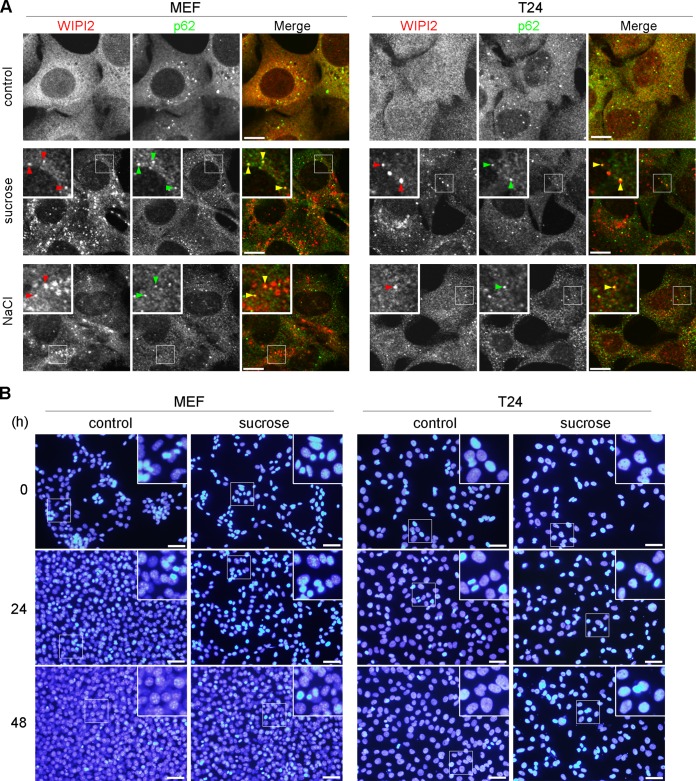
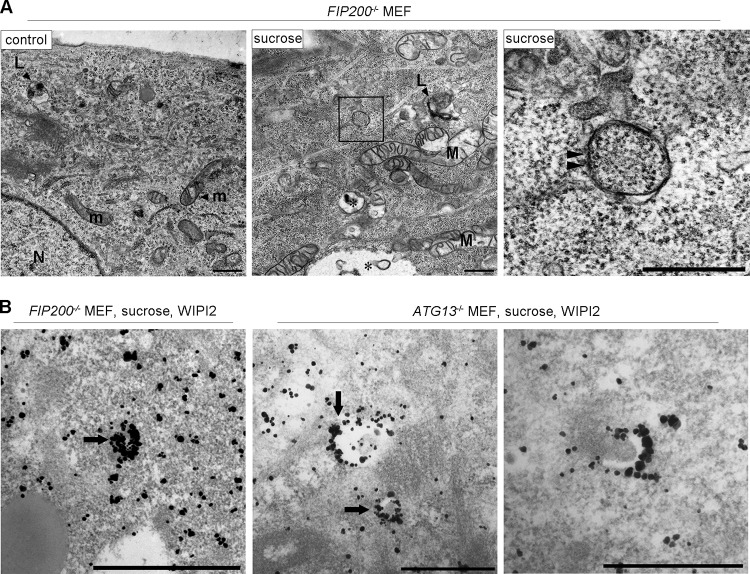
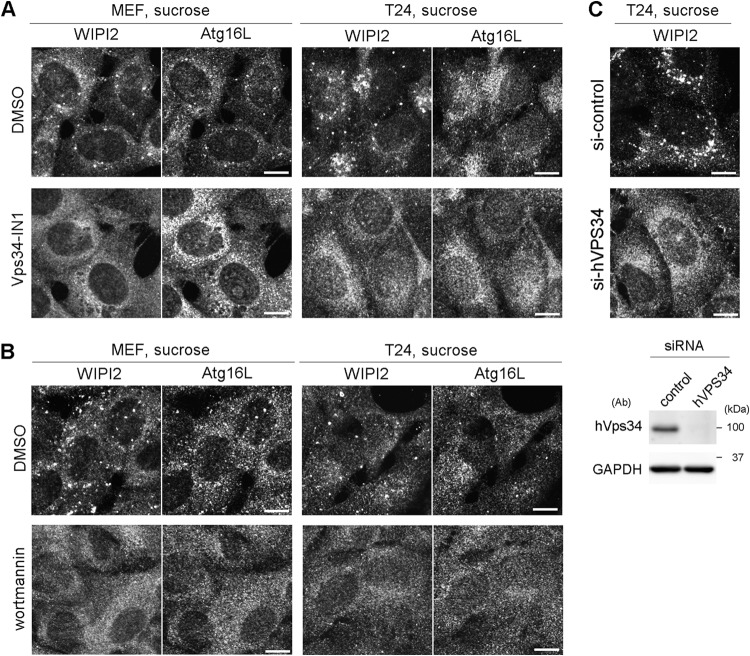
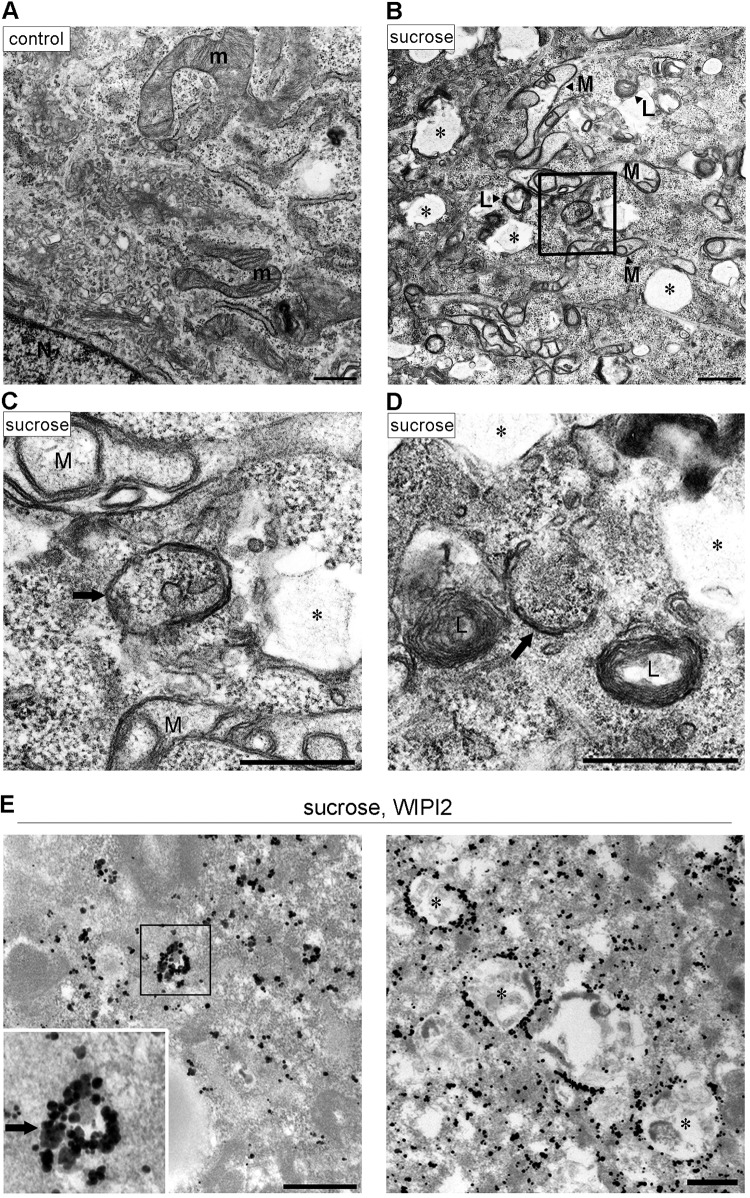
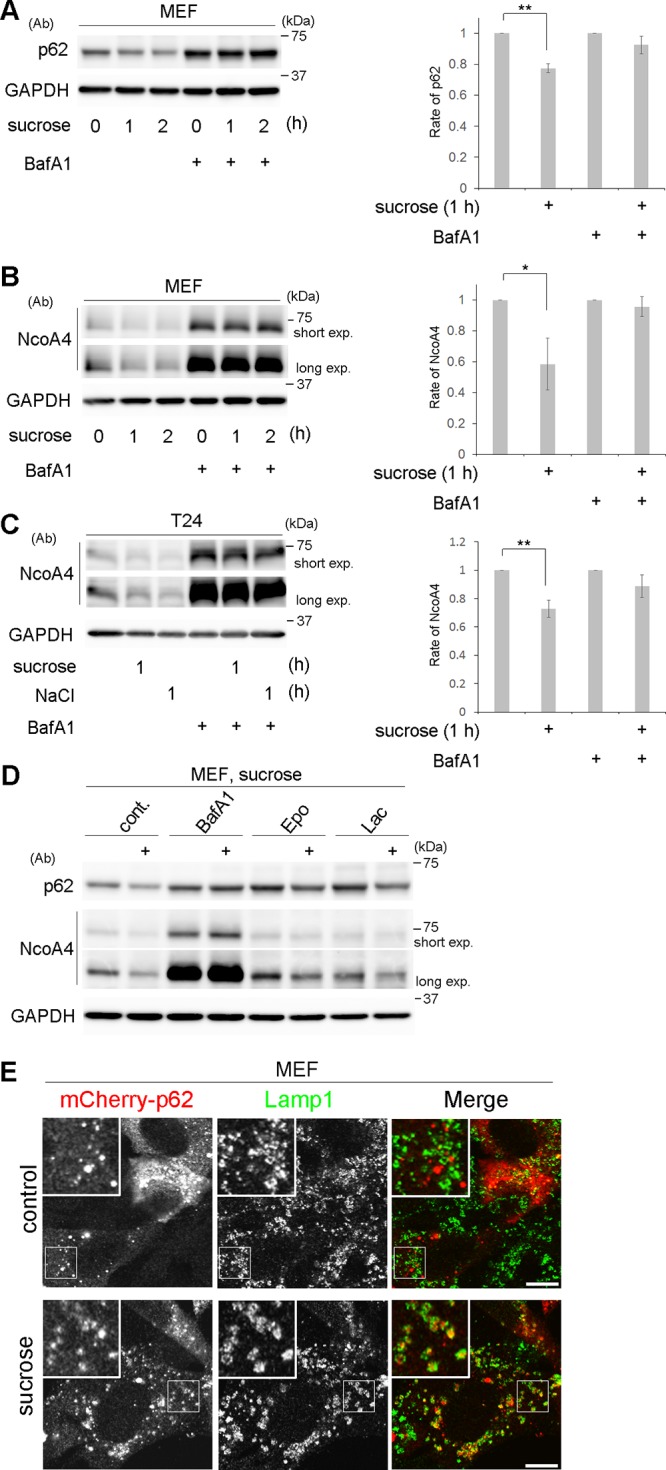
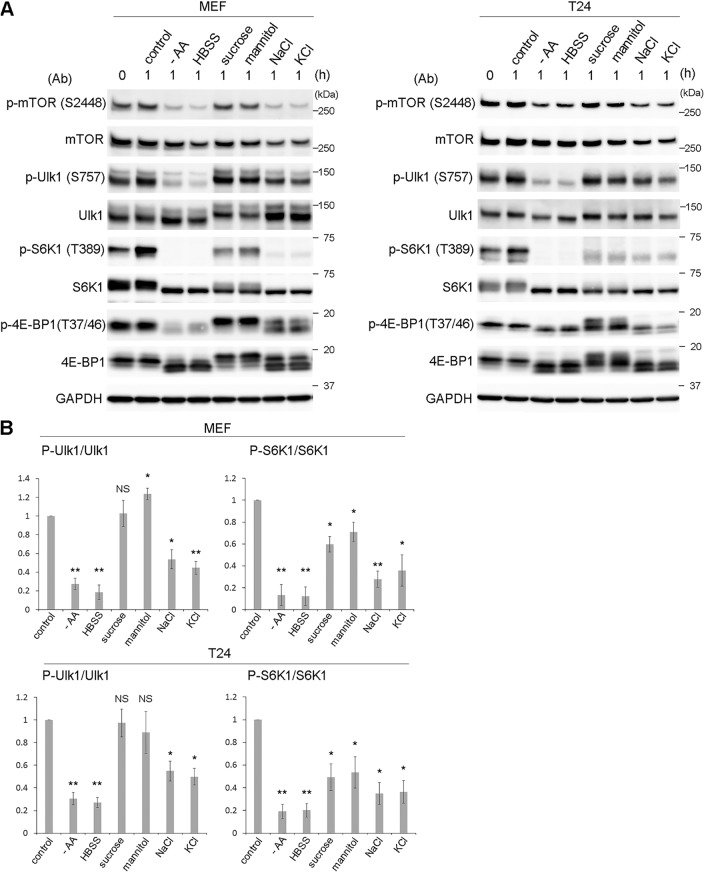
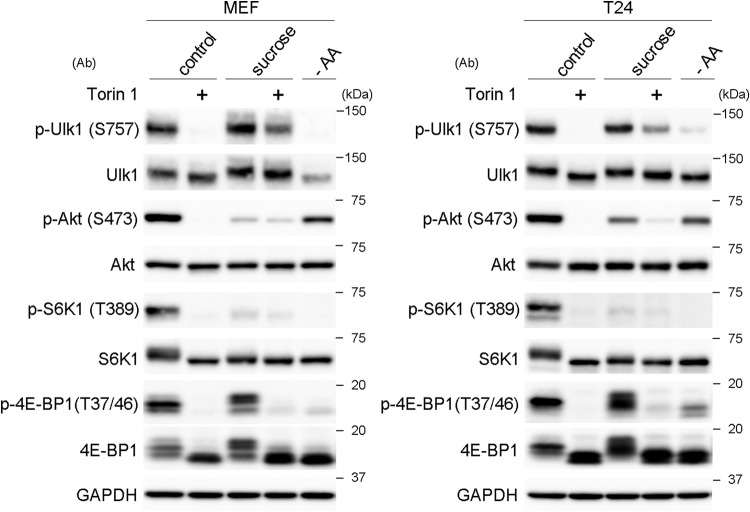
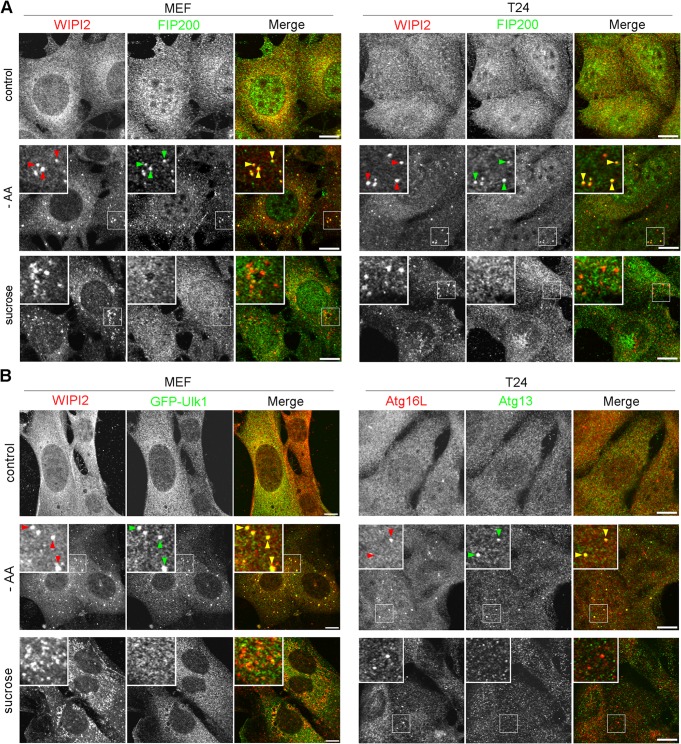
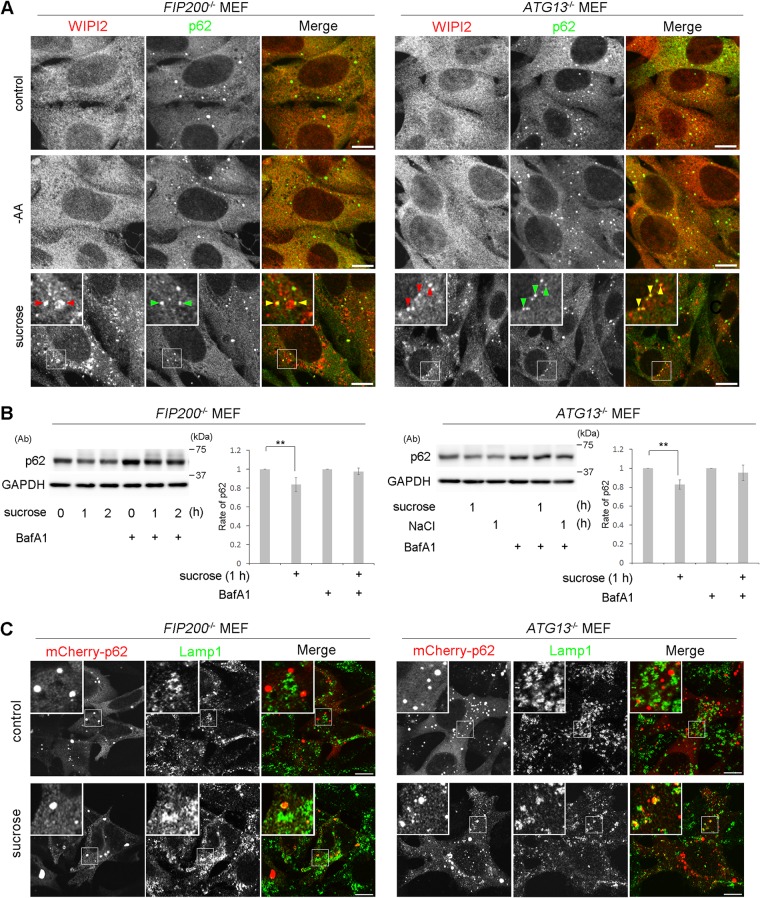
Autophagy is considered an adaptive mechanism against hyperosmotic stress. Although the process has been reported to be triggered by the inhibition of mTORC1, the precise downstream mechanisms remain elusive. Here, we demonstrate that hyperosmotic-stress-induced autophagy is different from conventional macroautophagy in mouse embryonic fibroblasts (MEFs) and human T24 cells. Our results indicated that cytoplasmic puncta for the isolation membrane markers WIPI2 and Atg16L increased after hyperosmotic stress. They were found to partially colocalize with puncta for a selective autophagy substrate, SQSTM1/p62, and were shown to be diminished by inhibitors of phosphatidylinositol 3-kinase (PI3K) or by knockdown of human Vps34 (hVps34), a component of PI3K. In addition, flux assays showed that SQSTM1/p62 and NcoA4 were degraded by the lysosomal pathway. Surprisingly, Ulk1, which is essential for starvation-induced macroautophagy, remained inactivated under hyperosmotic stress, which was partially caused by mTOR activity. Accordingly, the Ulk1 complex was not nucleated under hyperosmotic stress. Finally, autophagy proceeded even in MEFs deficient in or , which encode components of the Ulk1 complex. These data suggest that hyperosmotic-stress-induced autophagy represents an unconventional type of autophagy that bypasses Ulk1 signaling.
自噬被认为是一种对抗高渗应激的适应性机制。尽管已经报道该过程是由 mTORC1 的抑制触发的,但确切的下游机制仍不清楚。在这里,我们证明了在小鼠胚胎成纤维细胞(MEFs)和人 T24 细胞中,高渗应激诱导的自噬与传统的巨自噬不同。我们的结果表明,高渗应激后,隔离膜标记物 WIPI2 和 Atg16L 的细胞质斑点增加。发现它们部分与选择性自噬底物 SQSTM1/p62 的斑点共定位,并被磷脂酰肌醇 3-激酶(PI3K)抑制剂或人 Vps34(hVps34)的敲低所减弱,后者是 PI3K 的一个组成部分。此外,通量测定表明 SQSTM1/p62 和 NcoA4 被溶酶体途径降解。令人惊讶的是,在高渗应激下,对于饥饿诱导的巨自噬至关重要的 Ulk1 仍然失活,这部分是由于 mTOR 活性所致。因此,Ulk1 复合物在高渗应激下不会成核。最后,即使在缺乏编码 Ulk1 复合物成分的 或 的 MEFs 中,自噬也能进行。这些数据表明,高渗应激诱导的自噬代表了一种绕过 Ulk1 信号的非典型自噬。