Menzies School of Health Research, Charles Darwin University, Casuarina, Northern Territory, Australia.
Victorian Infectious Diseases Reference Laboratory, Epidemiology Unit, Peter Doherty Institute for Infection and Immunity, The Royal Melbourne Hospital and The University of Melbourne, Melbourne, Victoria, Australia.
Influenza Other Respir Viruses. 2019 Sep;13(5):438-452. doi: 10.1111/irv.12649. Epub 2019 Jun 5.
Pregnant women have an elevated risk of illness and hospitalisation from influenza. Pregnant women are recommended to be prioritised for influenza vaccination during any stage of pregnancy. The risk of seasonal influenza varies substantially throughout the year in temperate climates; however, there is limited knowledge of how vaccination timing during pregnancy impacts the benefits received by the mother and foetus.
To compare antenatal vaccination timing with regard to influenza vaccine immunogenicity during pregnancy and transplacental transfer to their newborns.
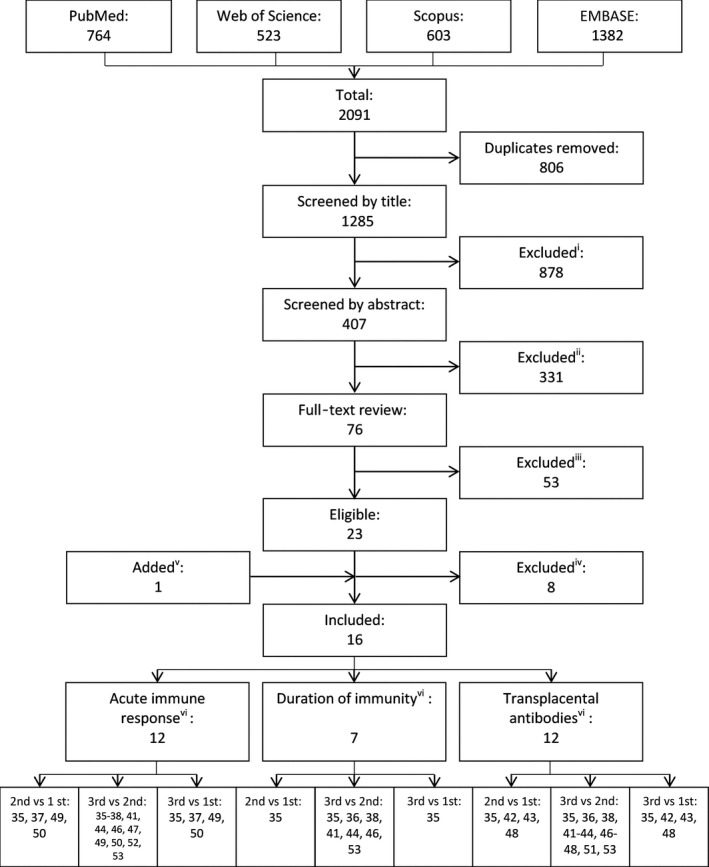
Studies were eligible for inclusion if immunogenicity to influenza vaccine was evaluated in women stratified by trimester of pregnancy. Haemagglutination inhibition (HI) titres, stratified by trimester of vaccination, had to be measured at either pre-vaccination and within one month post-vaccination, post-vaccination and at delivery in the mother, or in cord/newborn blood. Authors searched PubMed, Scopus, Web of Science and EMBASE databases from inception until June 2016 and authors of identified studies were contacted for additional data. Extracted data were tabulated and summarised via random-effect meta-analyses and qualitative methods.
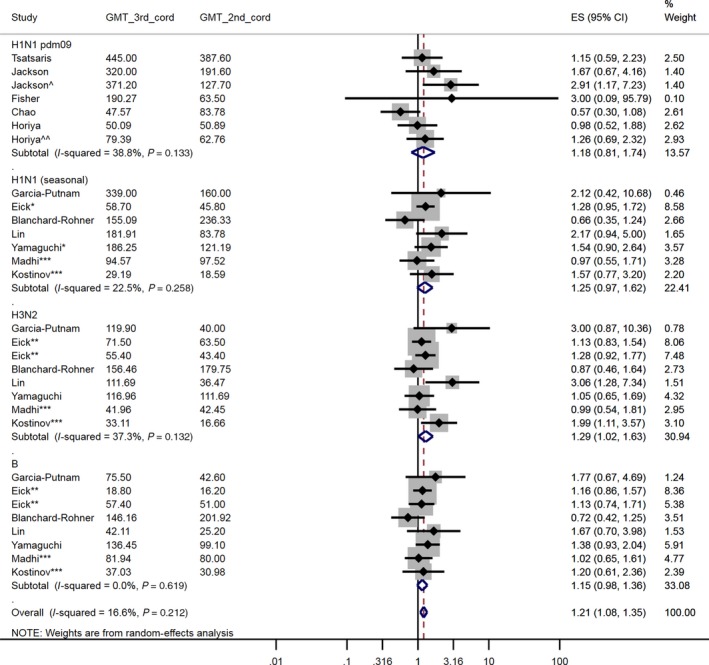
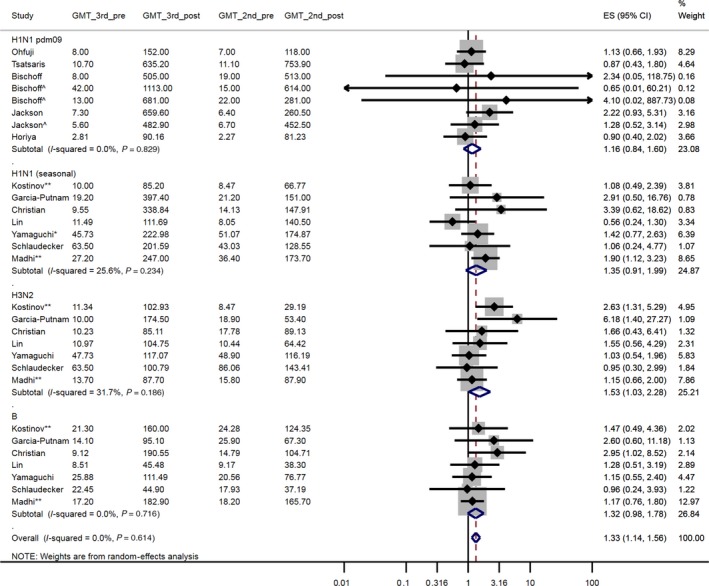
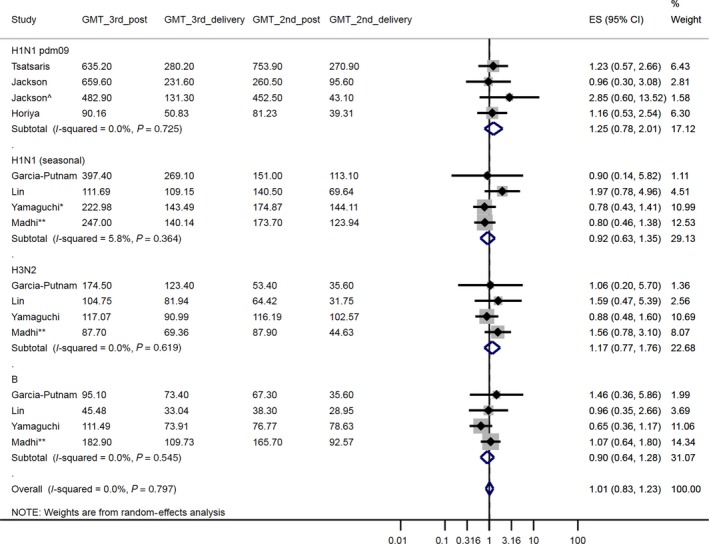
Sixteen studies met the inclusion criteria. Meta-analyses found that compared with women vaccinated in an earlier trimester, those vaccinated in a later trimester had a greater fold increase in HI titres (1.33- to 1.96-fold) and higher HI titres in cord/newborn blood (1.21- to 1.64-fold).
This review provides comparative analysis of the effect of vaccination timing on maternal immunogenicity and protection of the infant that is informative and relevant to current vaccine scheduling for pregnant women.
孕妇患流感及住院的风险增加。建议在妊娠的任何阶段都优先为孕妇接种流感疫苗。在温带气候下,季节性流感的风险在全年都有很大的变化;然而,对于孕妇在怀孕期间接种疫苗的时间如何影响母亲和胎儿的受益,我们知之甚少。
比较产前接种时间与妊娠期间流感疫苗的免疫原性以及向其新生儿的胎盘转移。
如果免疫原性是根据妊娠的三个月进行分层评估的,那么研究就有资格被纳入。必须在接种前和接种后一个月内,或在母亲的产后和分娩时,或在脐带/新生儿血液中,按接种的三个月进行分层测量血凝抑制(HI)滴度。作者搜索了 PubMed、Scopus、Web of Science 和 EMBASE 数据库,从建立数据库开始到 2016 年 6 月,并联系了已确定研究的作者以获取其他数据。提取的数据通过随机效应荟萃分析和定性方法进行制表和总结。
16 项研究符合纳入标准。荟萃分析发现,与在早期三个月接种的妇女相比,在晚期三个月接种的妇女 HI 滴度的增加倍数更大(1.33-1.96 倍),且脐带/新生儿血液中的 HI 滴度更高(1.21-1.64 倍)。
本综述提供了关于接种时间对母体免疫原性和婴儿保护作用的影响的比较分析,这对当前孕妇疫苗接种计划具有信息性和相关性。