Department of Biochemistry, University of Zurich, Winterthurerstrasse 190, 8057, Zurich, Switzerland.
Department of Molecular Biosciences, University of Kansas, Lawrence, KS, 66045-7566, USA.
Nat Commun. 2019 Jun 5;10(1):2453. doi: 10.1038/s41467-019-10356-0.
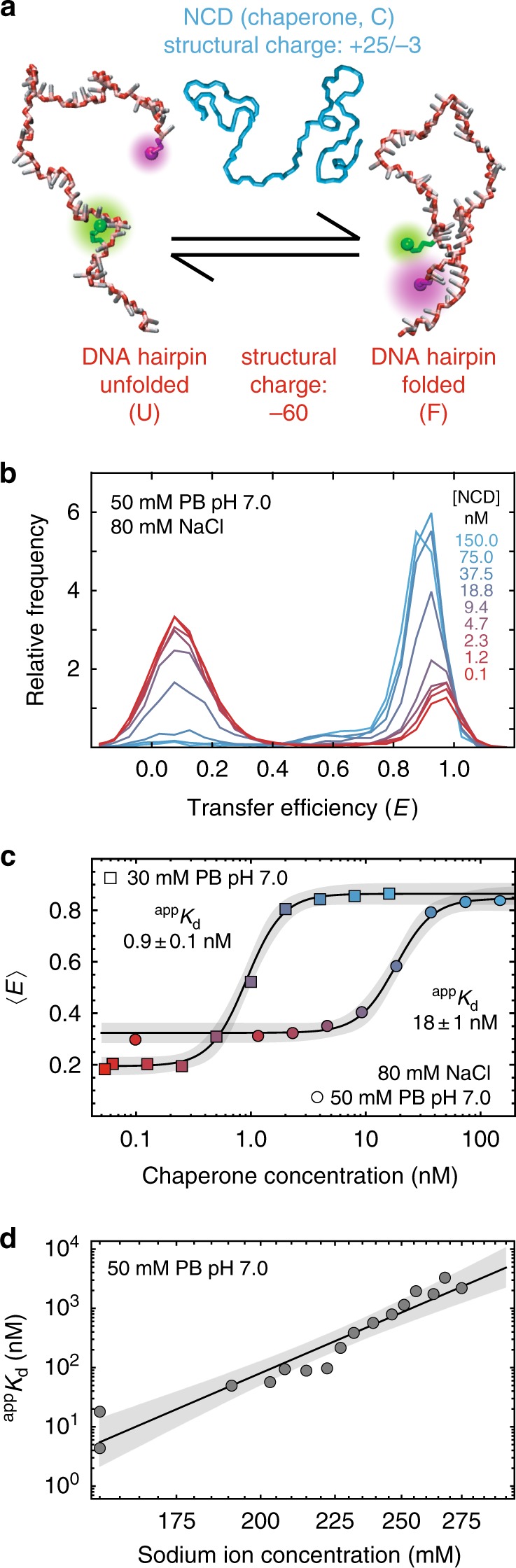
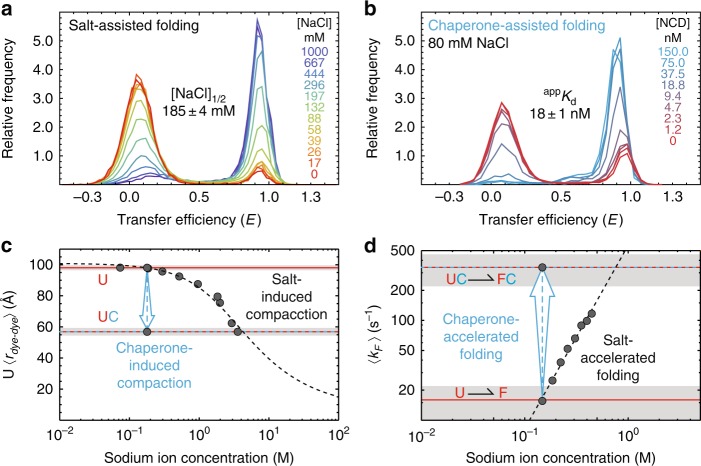
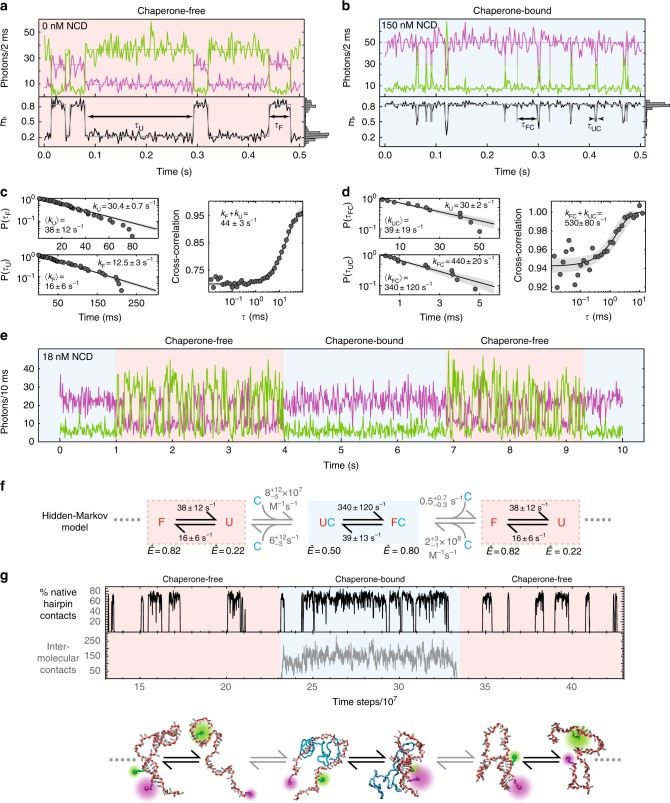
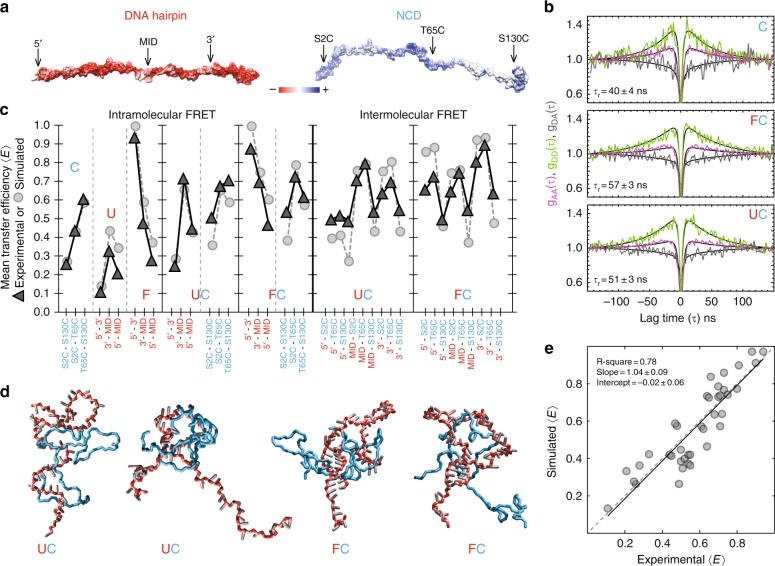
RNA chaperones are proteins that aid in the folding of nucleic acids, but remarkably, many of these proteins are intrinsically disordered. How can these proteins function without a well-defined three-dimensional structure? Here, we address this question by studying the hepatitis C virus core protein, a chaperone that promotes viral genome dimerization. Using single-molecule fluorescence spectroscopy, we find that this positively charged disordered protein facilitates the formation of compact nucleic acid conformations by acting as a flexible macromolecular counterion that locally screens repulsive electrostatic interactions with an efficiency equivalent to molar salt concentrations. The resulting compaction can bias unfolded nucleic acids towards folding, resulting in faster folding kinetics. This potentially widespread mechanism is supported by molecular simulations that rationalize the experimental findings by describing the chaperone as an unstructured polyelectrolyte.
RNA 伴侣蛋白是一种辅助核酸折叠的蛋白质,但令人惊讶的是,许多这些蛋白质本身就是无序的。没有明确的三维结构,这些蛋白质怎么能发挥作用呢?在这里,我们通过研究丙型肝炎病毒核心蛋白来解决这个问题,该蛋白是一种促进病毒基因组二聚化的伴侣蛋白。使用单分子荧光光谱法,我们发现这种带正电荷的无序蛋白质可以通过充当灵活的大分子抗衡离子来促进紧凑的核酸构象形成,从而局部屏蔽与摩尔盐浓度等效的排斥静电相互作用。这种紧凑化可以使未折叠的核酸偏向于折叠,从而导致更快的折叠动力学。分子模拟支持了这一潜在的普遍机制,通过将伴侣蛋白描述为无定形聚电解质,合理地解释了实验结果。