Max Planck Research Group "Rationality Enhancement", Max Planck Institute for Intelligent Systems, Max-Planck-Ring 4, 72076, Tübingen, Germany.
Psychology of Learning with Digital Media, Faculty of Humanities, TU Chemnitz, Straße der Nationen 12, 09111, Chemnitz, Germany.
Sci Rep. 2019 Jun 5;9(1):8291. doi: 10.1038/s41598-019-44718-x.
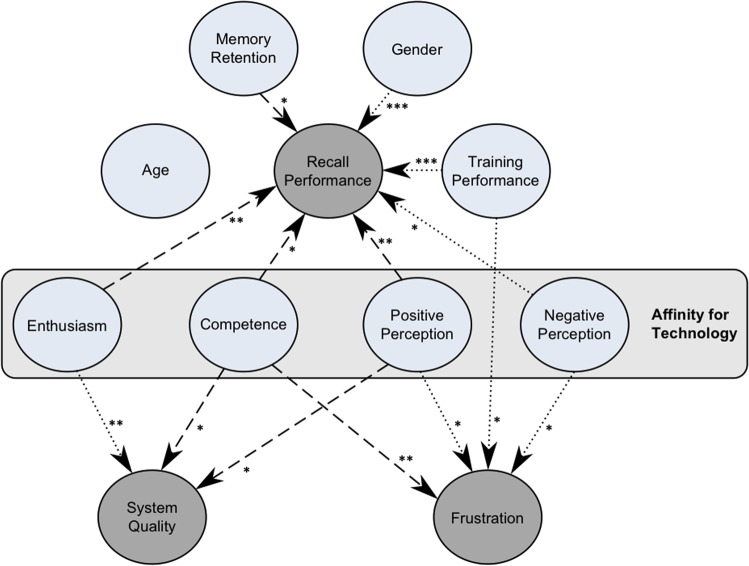
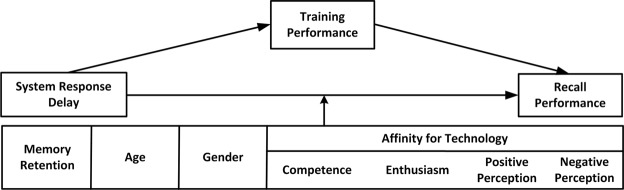
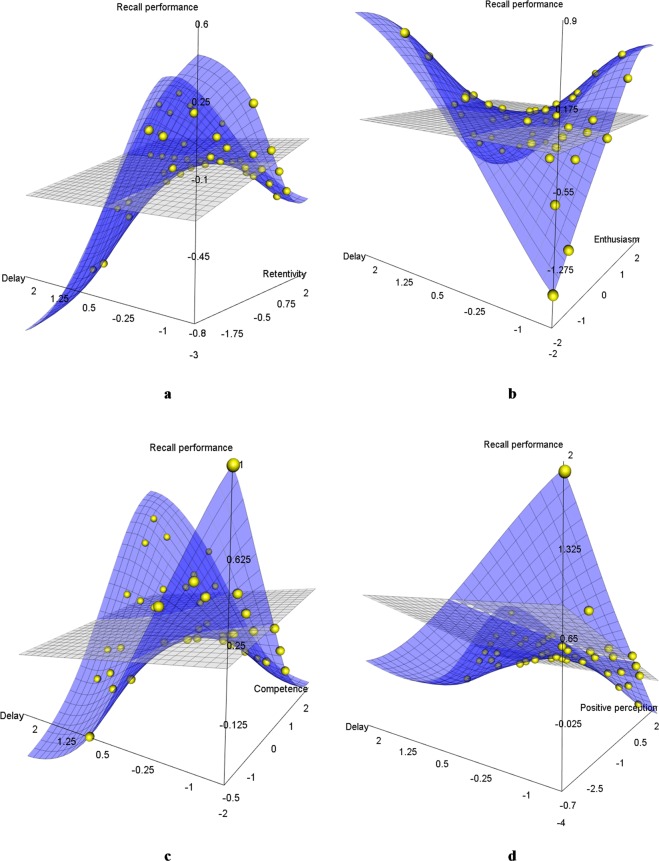
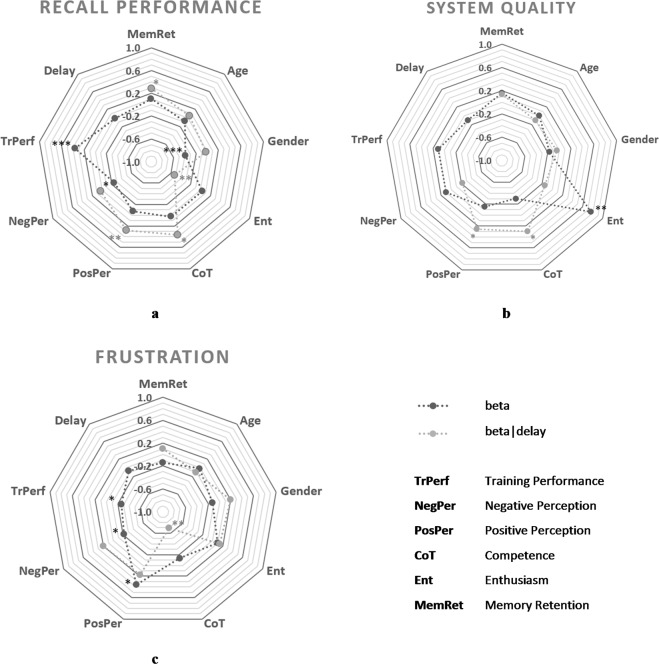
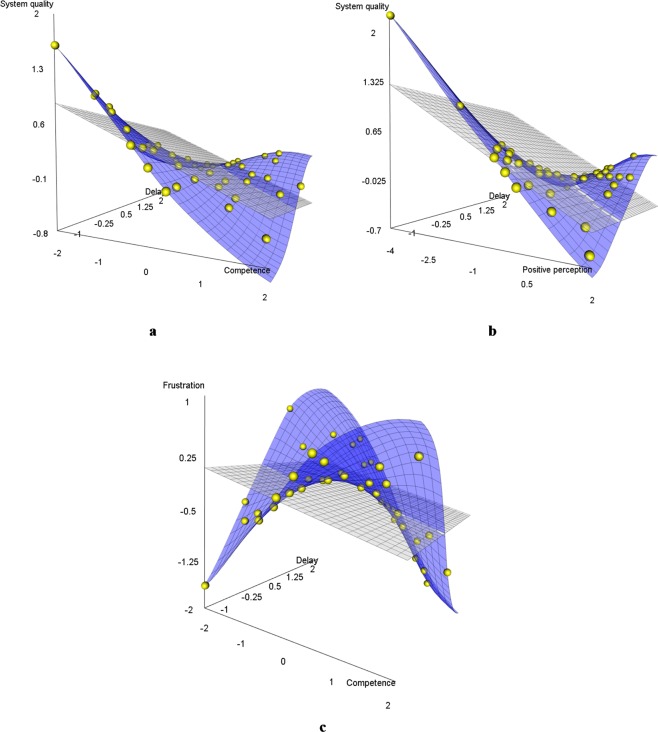
Observed influences of system response delay in spoken human-machine dialogues are rather ambiguous and mainly focus on perceived system quality. Studies that systematically inspect effects on cognitive performance are still lacking, and effects of individual characteristics are also often neglected. Building on benefits of cognitive training for decelerating cognitive decline, this Wizard-of-Oz study addresses both issues by testing 62 elderly participants in a dialogue-based memory training with a virtual agent. Participants acquired the method of loci with fading instructional guidance and applied it afterward to memorizing and recalling lists of German nouns. System response delays were randomly assigned, and training performance was included as potential mediator. Participants' age, gender, and subscales of affinity for technology (enthusiasm, competence, positive and negative perception of technology) were inspected as potential moderators. The results indicated positive effects on recall performance with higher training performance, female gender, and less negative perception of technology. Additionally, memory retention and facets of affinity for technology moderated increasing system response delays. Participants also provided higher ratings in perceived system quality with higher enthusiasm for technology but reported increasing frustration with a more positive perception of technology. Potential explanations and implications for the design of spoken dialogue systems are discussed.
在口语人机对话中,观察到的系统响应延迟的影响相当模糊,主要集中在感知系统质量上。缺乏系统地检查对认知性能影响的研究,而且个体特征的影响也经常被忽视。本研究基于认知训练对减缓认知衰退的益处,通过在基于对话的记忆训练中测试 62 名老年参与者与虚拟代理的对话,解决了这两个问题。参与者采用了淡出式指导的位置记忆法,并将其应用于记忆和回忆德语名词列表。系统响应延迟是随机分配的,训练表现被纳入潜在的中介变量。参与者的年龄、性别以及对技术的亲和力子量表(热情、能力、对技术的积极和消极看法)被视为潜在的调节变量。结果表明,训练表现越高、女性性别、对技术的负面看法越少,对回忆表现有积极影响。此外,记忆保持和对技术的亲和力方面调节了系统响应延迟的增加。参与者对技术热情越高,对感知系统质量的评价越高,但对技术的积极看法越强烈,报告的挫败感也越强。讨论了对口语对话系统设计的潜在解释和影响。