GABI, INRA, AgroParisTech, Université Paris-Saclay, 78350, Jouy-en-Josas, France.
SYSAAF Section Aquacole, Campus de Beaulieu, 35000, Rennes, France.
Genet Sel Evol. 2019 Jun 6;51(1):26. doi: 10.1186/s12711-019-0468-4.
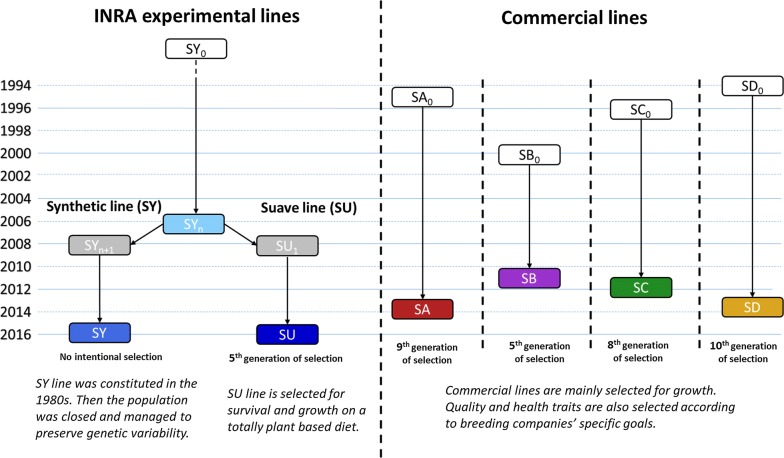
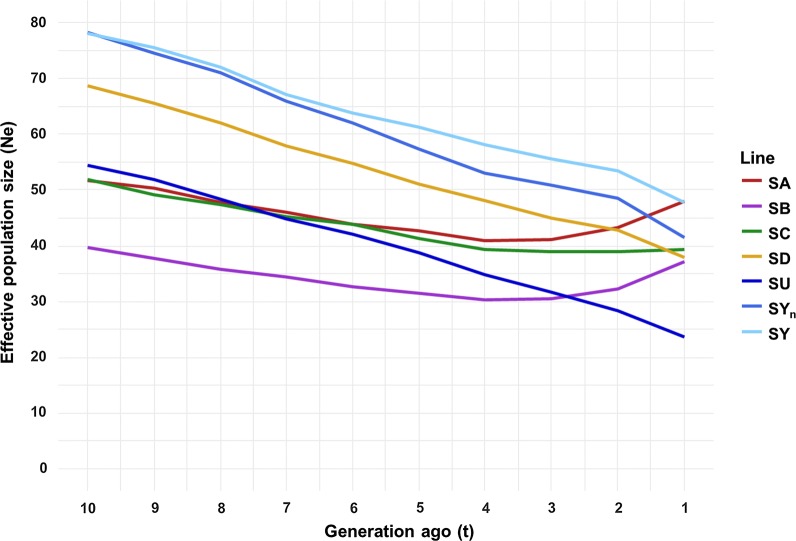
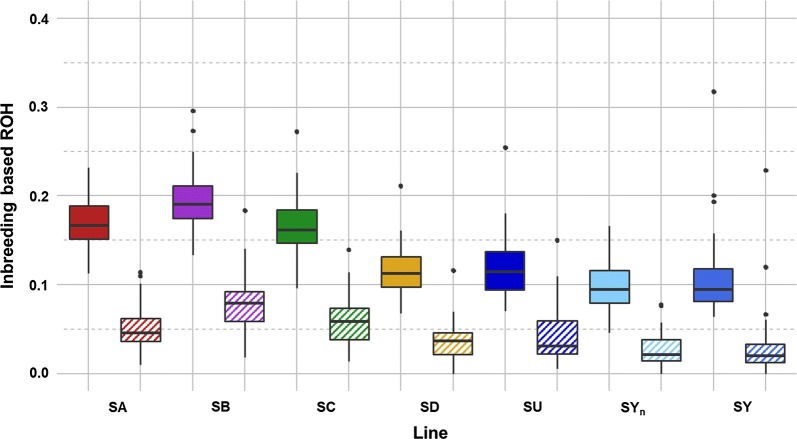
Selective breeding is a relatively recent practice in aquaculture species compared to terrestrial livestock. Nevertheless, the genetic variability of farmed salmonid lines, which have been selected for several generations, should be assessed. Indeed, a significant decrease in genetic variability due to high selection intensity could have occurred, potentially jeopardizing the long-term genetic progress as well as the adaptive capacities of populations facing change(s) in the environment. Thus, it is important to evaluate the impact of selection practices on genetic diversity to limit future inbreeding. The current study presents an analysis of genetic diversity within and between six French rainbow trout (Oncorhynchus mykiss) experimental or commercial lines based on a medium-density single nucleotide polymorphism (SNP) chip and various molecular genetic indicators: fixation index (F), linkage disequilibrium (LD), effective population size (N) and inbreeding coefficient derived from runs of homozygosity (ROH).
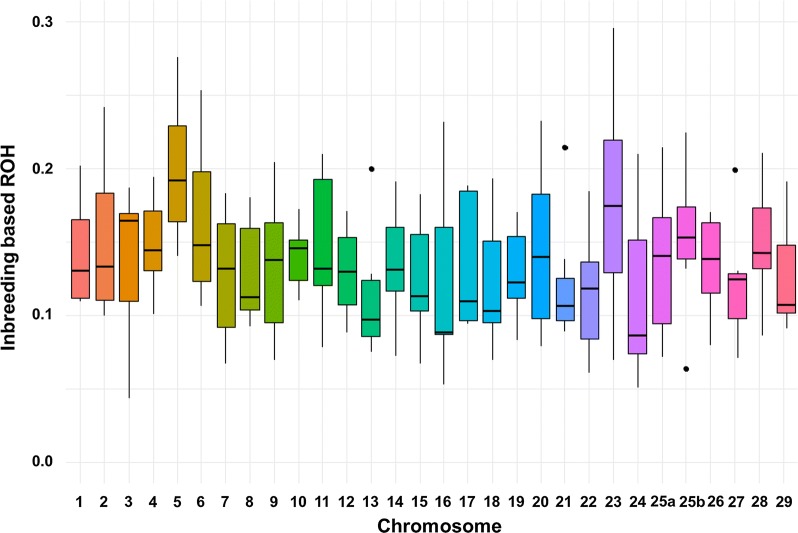
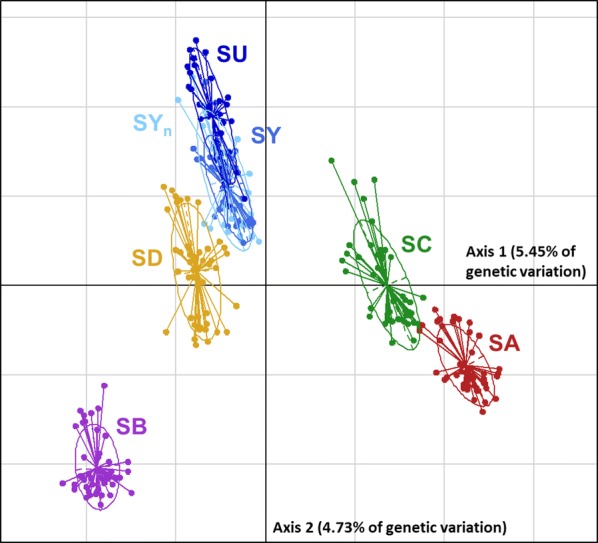
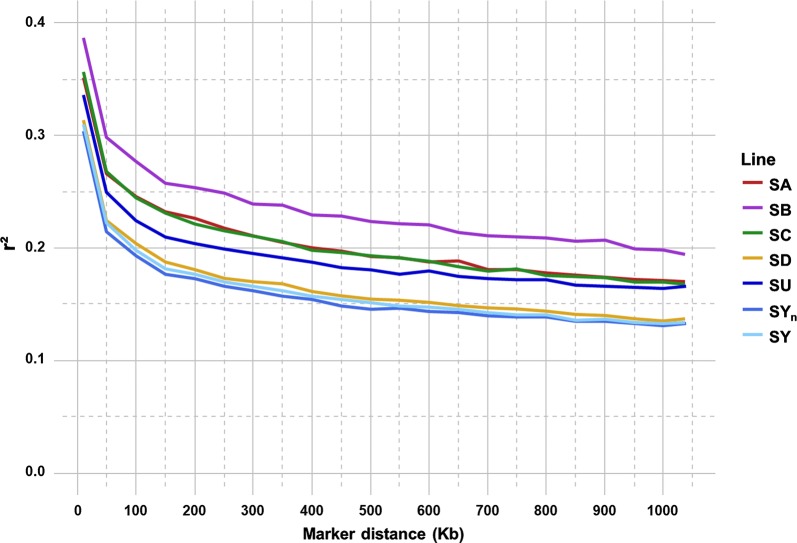
Our results showed a moderate level of genetic differentiation between selected lines (F ranging from 0.08 to 0.15). LD declined rapidly over the first 100 kb, but then remained quite high at long distances, leading to low estimates of N in the last generation ranging from 24 to 68 depending on the line and methodology considered. These results were consistent with inbreeding estimates that varied from 10.0% in an unselected experimental line to 19.5% in a commercial line, and which are clearly higher than corresponding estimates in ruminants or pigs. In addition, strong variations in LD and inbreeding were observed along the genome that may be due to differences in local rates of recombination or due to key genes that tended to have fixed favorable alleles for domestication or production.
This is the first report on ROH for any aquaculture species. Inbreeding appeared to be moderate to high in the six French rainbow trout lines, due to founder effects at the start of the breeding programs, but also likely to sweepstakes reproductive success in addition to selection for the selected lines. Efficient management of inbreeding is a major goal in breeding programs to ensure that populations can adapt to future breeding objectives and SNP information can be used to manage the rate at which inbreeding builds up in the fish genome.
与陆生牲畜相比,选择育种在水产养殖物种中是一种相对较新的做法。然而,已经经过几代选育的养殖鲑鱼种群的遗传变异性应该得到评估。事实上,由于高强度的选择,遗传变异性可能会显著降低,这可能危及种群的长期遗传进展以及适应环境变化的能力。因此,评估选择实践对遗传多样性的影响对于限制未来的近亲繁殖非常重要。本研究基于中等密度单核苷酸多态性(SNP)芯片和各种分子遗传指标,对来自六个法国虹鳟(Oncorhynchus mykiss)实验或商业品系的遗传多样性进行了分析:固定指数(F)、连锁不平衡(LD)、有效种群大小(N)和由纯合性 runs (ROH)推导而来的近交系数。
我们的研究结果表明,选择的品系之间存在中等程度的遗传分化(F 从 0.08 到 0.15 不等)。LD 在最初的 100kb 内迅速下降,但在长距离上仍然相当高,导致最后一代的 N 估计值在 24 到 68 之间,具体取决于所考虑的品系和方法。这些结果与从一个未选择的实验品系的 10.0%到一个商业品系的 19.5%不等的近交估计值一致,明显高于反刍动物或猪的对应估计值。此外,在基因组上观察到 LD 和近交率的强烈变化,这可能是由于局部重组率的差异,也可能是由于对驯化或生产有利的关键基因趋于固定。
这是首次针对任何水产养殖物种的 ROH 报告。在六个法国虹鳟品系中,由于繁殖计划开始时的奠基者效应,近交程度为中等至高,但也可能是由于选择的成功,加上优胜劣汰的繁殖成功。在繁殖计划中,有效管理近交是确保种群能够适应未来繁殖目标的主要目标,并且 SNP 信息可以用于管理近交在鱼类基因组中积累的速度。