Tianjin Medical University Cancer Institute and Hospital, National Clinical Research Center of Cancer, Key Laboratory of Cancer Prevention and Therapy, Tianjin, Tianjin's Clinical Research Center for Cancer, Tianjin, 300060, China.
Key Laboratory of Breast Cancer Prevention and Therapy, Tianjin Medical University, Ministry of Education, West Huanhu Road, Ti Yuan Bei, Hexi District, Tianjin, 300060, Tianjin, China.
J Exp Clin Cancer Res. 2019 Jun 6;38(1):238. doi: 10.1186/s13046-019-1252-6.
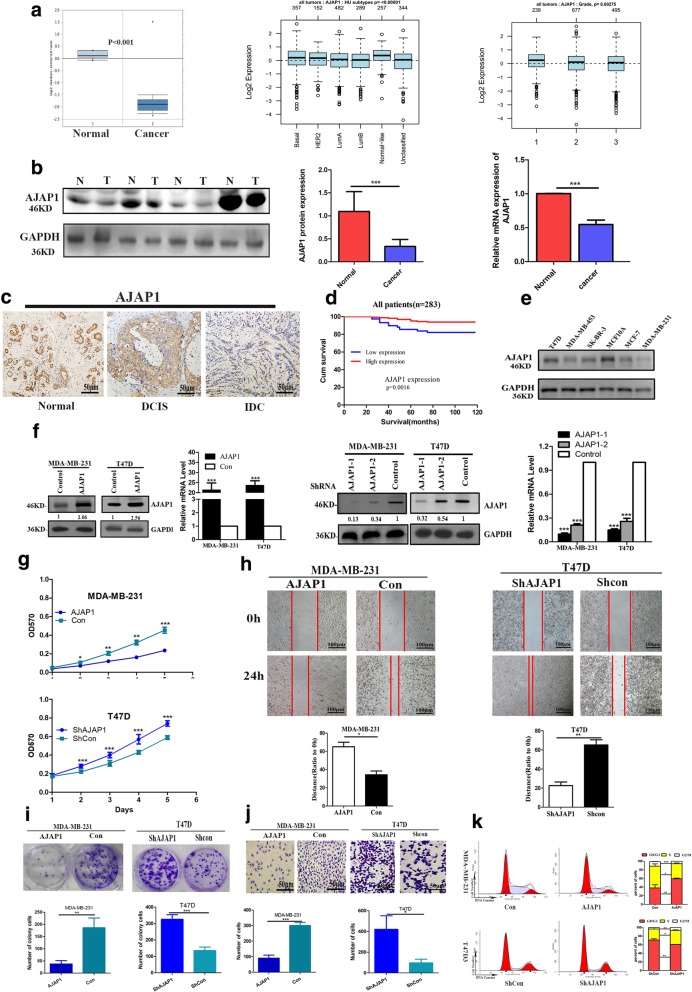
Adherent junction associated protein 1 (AJAP1), a typical molecule of adherent junctions, has been found to be a tumor suppressor in many cancer types. Aberrant activation of β-catenin has been demonstrated to be associated with malignant biological properties of tumors including breast cancer. This study aimed to investigate the function and mechanism of AJAP1-mediated β-catenin activity of breast cancer lines in vitro and in breast cancer patients.
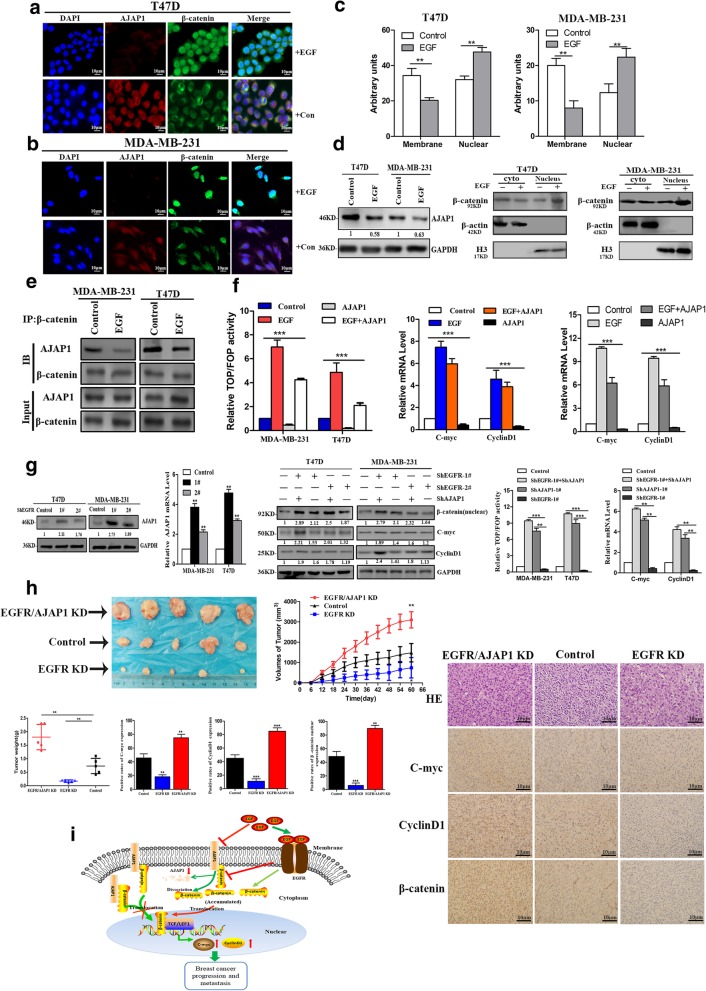
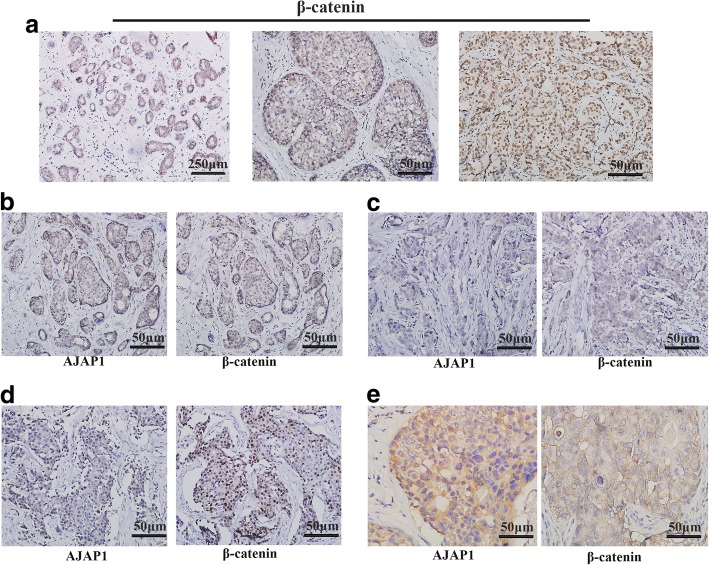
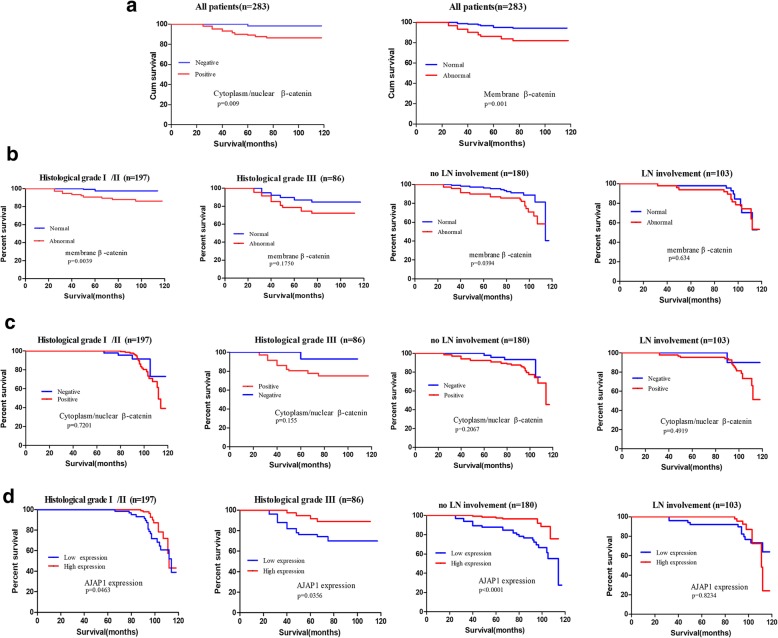
AJAP1 and β-catenin expressions in breast cancer tissues and cell lines were detected by immunohistochemistry, western blotting and qRT-PCR. The EGF/EGFR axis-mediated AJAP1 attenuated β-catenin nuclear location was measured by western blotting, immunofluorescence assay, co-immunoprecipitation, luciferase assay and ubiquitination assays. Furthermore, the function of AJAP1 and β-catenin regulated breast cancer progression was explored both in vivo and in vitro.
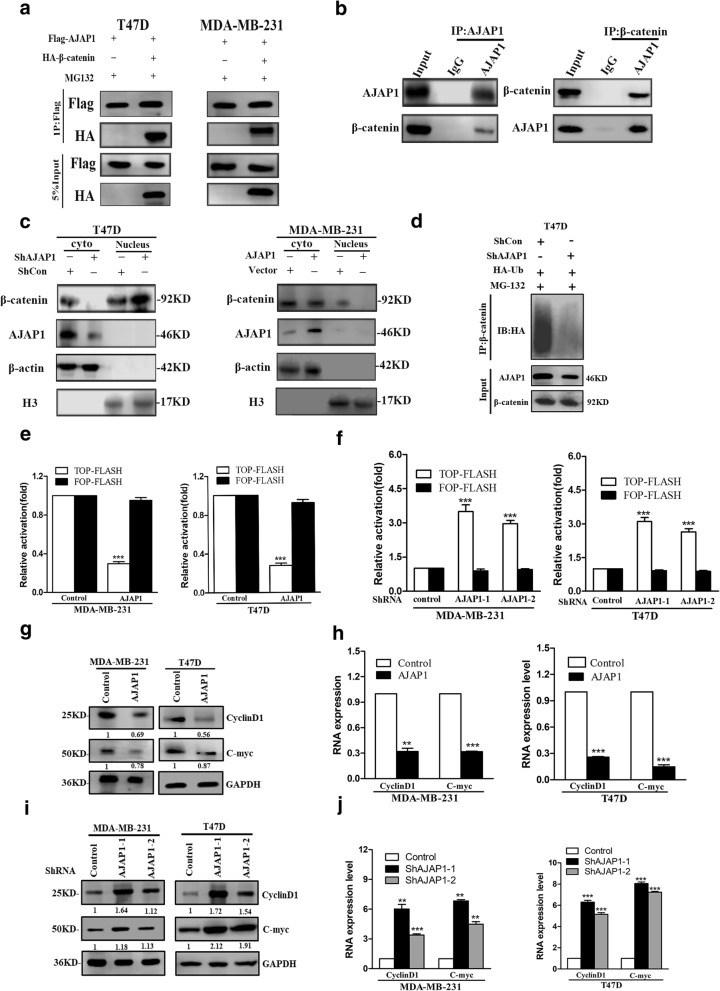
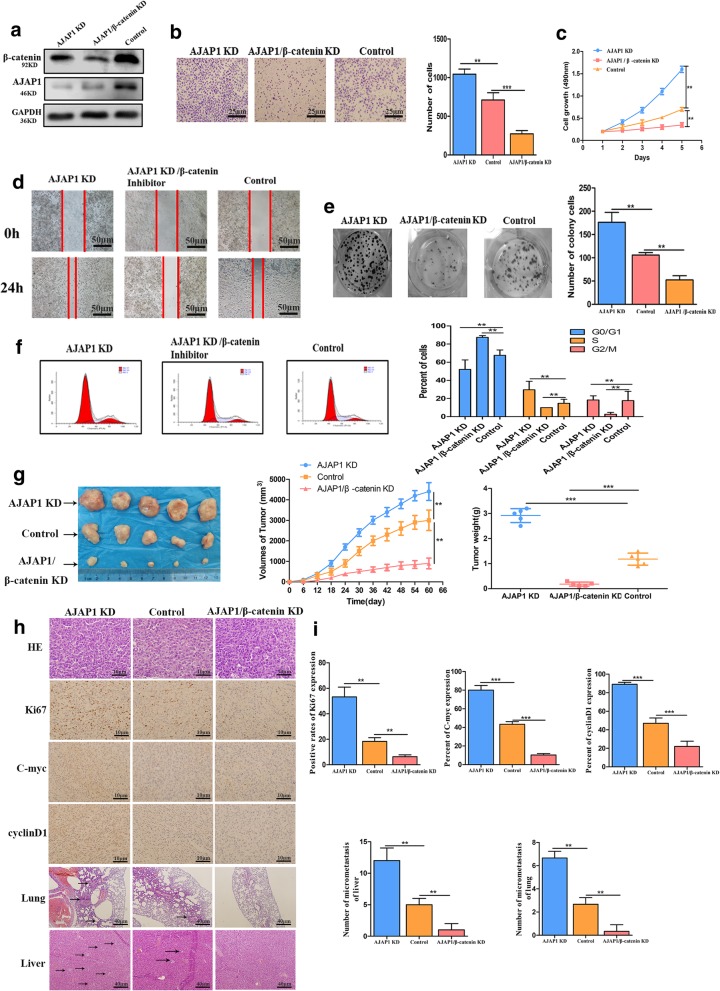
It was found that AJAP1 had a high negative correlation with β-catenin nuclear expression and was a novel tumor suppressor in breast cancer. AJAP1 loss can mediate β-catenin accumulated in cytoplasm and then transferred it to the nucleus, activating β-catenin transcriptional activity and downstream genes. Additionally, β-catenin can reverse the invasion, proliferation ability and tumorigenicity of the depletion of AJAP1 caused both in vivo and in vitro. Besides, EGF/EGFR also involved in the process of AJAP1-depiction induced β-catenin transactivation to the nucleus. More importantly, EGFR depletion/AJAP1 knocked down promoted the progression of breast cancer by regulating the activity of β-catenin nuclear transactivation.
This study demonstrated that AJAP1 acted as a putative tumor suppressor while β-catenin nuclear localization positively fed back on EGF/EGFR-attenuated AJAP1 expression in breast cancer, which might be beneficial to develop new therapeutic targets for decreasing nuclear β-catenin-mediated malignancy in breast cancer.
黏着连接相关蛋白 1(AJAP1)是黏着连接的典型分子,已在多种癌症类型中被发现为肿瘤抑制因子。β-连环蛋白的异常激活已被证明与包括乳腺癌在内的肿瘤的恶性生物学特性有关。本研究旨在体外和乳腺癌患者中研究 AJAP1 介导的乳腺癌系中β-连环蛋白活性的功能和机制。
通过免疫组织化学、western blot 和 qRT-PCR 检测乳腺癌组织和细胞系中的 AJAP1 和 β-连环蛋白表达。通过 western blot、免疫荧光分析、共免疫沉淀、荧光素酶测定和泛素化测定测量 EGF/EGFR 轴介导的 AJAP1 减弱的β-连环蛋白核定位。此外,还在体内和体外探索了 AJAP1 和 β-连环蛋白调节乳腺癌进展的功能。
发现 AJAP1 与β-连环蛋白核表达呈高度负相关,是乳腺癌中的一种新型肿瘤抑制因子。AJAP1 缺失可以介导β-连环蛋白在细胞质中积累,然后将其转移到细胞核中,激活β-连环蛋白转录活性和下游基因。此外,β-连环蛋白可以逆转体内和体外 AJAP1 耗竭引起的侵袭、增殖能力和致瘤性。此外,EGF/EGFR 也参与了 AJAP1 缺失诱导的β-连环蛋白核转激活过程。更重要的是,EGFR 耗竭/AJAP1 敲低通过调节核β-连环蛋白转激活活性促进乳腺癌的进展。
本研究表明,AJAP1 作为一种潜在的肿瘤抑制因子,而β-连环蛋白核定位正向反馈 EGF/EGFR 减弱的 AJAP1 在乳腺癌中的表达,这可能有助于开发减少乳腺癌中核β-连环蛋白介导的恶性的新治疗靶点。