Howard Hughes Medical Institute, USA; Yale Systems Biology Institute, West Haven, CT 06477, USA; Departments of Immunobiology and Microbial Pathogenesis, Yale University School of Medicine, New Haven, CT 06510, USA.
Howard Hughes Medical Institute, USA; Yale Systems Biology Institute, West Haven, CT 06477, USA; Departments of Immunobiology and Microbial Pathogenesis, Yale University School of Medicine, New Haven, CT 06510, USA.
Curr Opin Immunol. 2019 Oct;60:71-80. doi: 10.1016/j.coi.2019.04.017. Epub 2019 Jun 6.
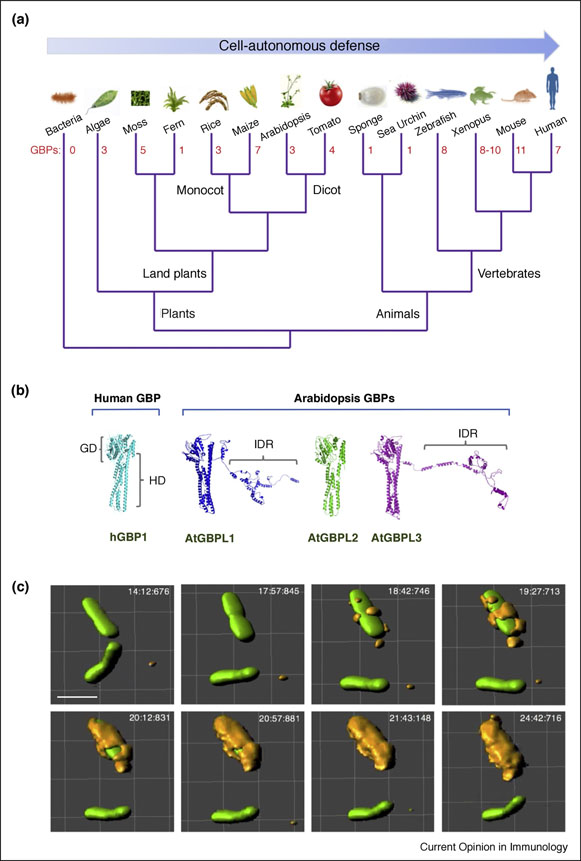
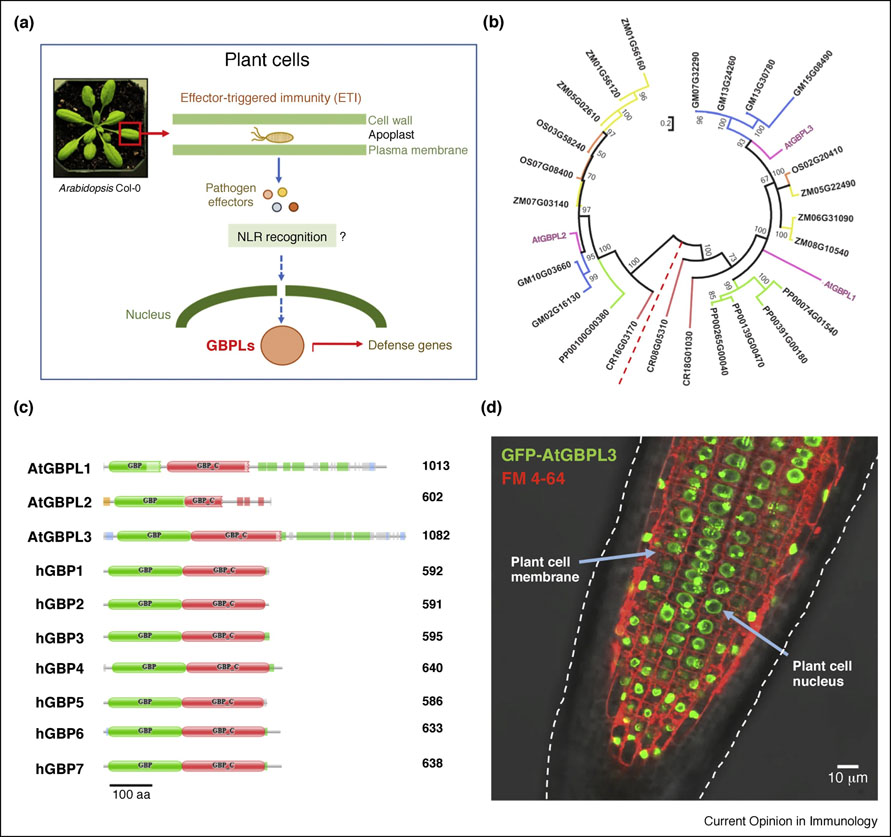
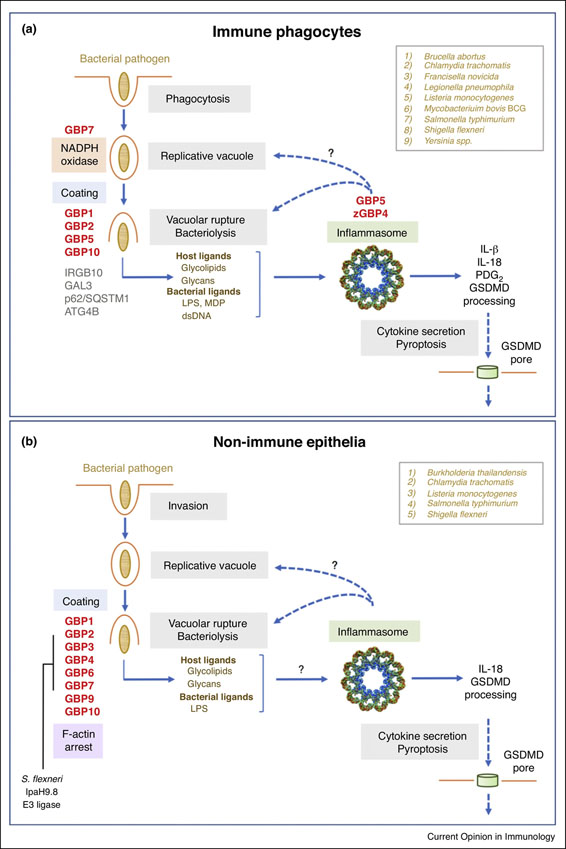
Inside host cells, guanylate binding proteins (GBPs) rapidly assemble into large antimicrobial defense complexes that combat a wide variety of bacterial pathogens. These massive nanomachines often completely coat targeted microbes where they act as recruitment platforms for downstream effectors capable of direct bactericidal activity. GBP-containing platforms also serve as sensory hubs to activate inflammasome-driven responses in the mammalian cytosol while in plants like Arabidopsis, GBP orthologues may facilitate intranuclear signaling for immunity against invasive phytopathogens. Together, this group of immune GTPases serve as a major defensive repertoire to protect the host cell interior from bacterial colonization across plant and animal kingdoms.
在宿主细胞内,鸟苷酸结合蛋白 (GBP) 迅速组装成大型抗菌防御复合物,以对抗多种细菌病原体。这些巨大的纳米机器通常会完全覆盖目标微生物,在那里它们充当招募平台,招募能够直接杀菌的下游效应子。含 GBP 的平台还充当感应中心,在哺乳动物细胞质中激活炎症小体驱动的反应,而在拟南芥等植物中,GBP 同源物可能有助于针对入侵植物病原体的核内信号转导。总之,这组免疫 GTPases 是保护宿主细胞内部免受细菌定植的主要防御机制,存在于植物和动物界中。