Ilyashuk Elena A, Heiri Oliver, Ilyashuk Boris P, Koinig Karin A, Psenner Roland
1Institute of Ecology, University of Innsbruck, Technikerstraße 25, 6020 Innsbruck, Austria.
2Geoecology, Department of Environmental Sciences, University of Basel, Klingelbergstrasse 27, 4056 Basel, Switzerland.
Clim Dyn. 2019;52(11):6953-6967. doi: 10.1007/s00382-018-4555-y. Epub 2018 Dec 1.
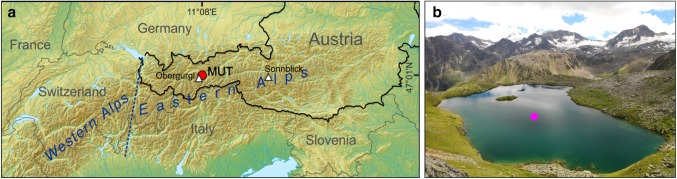
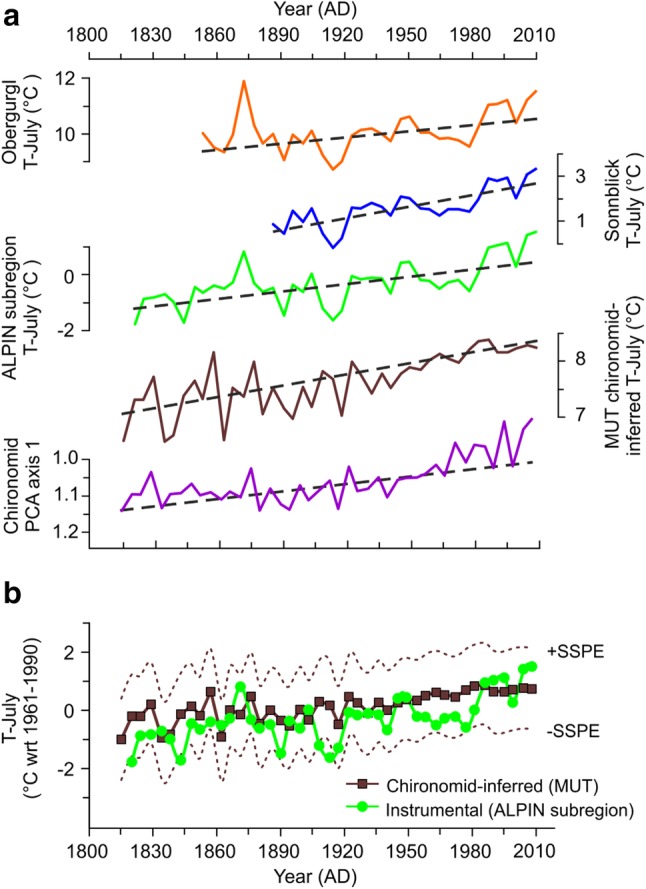
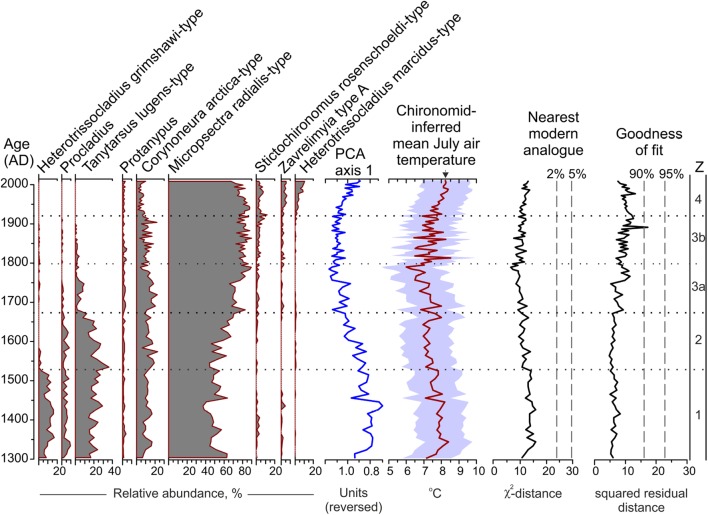
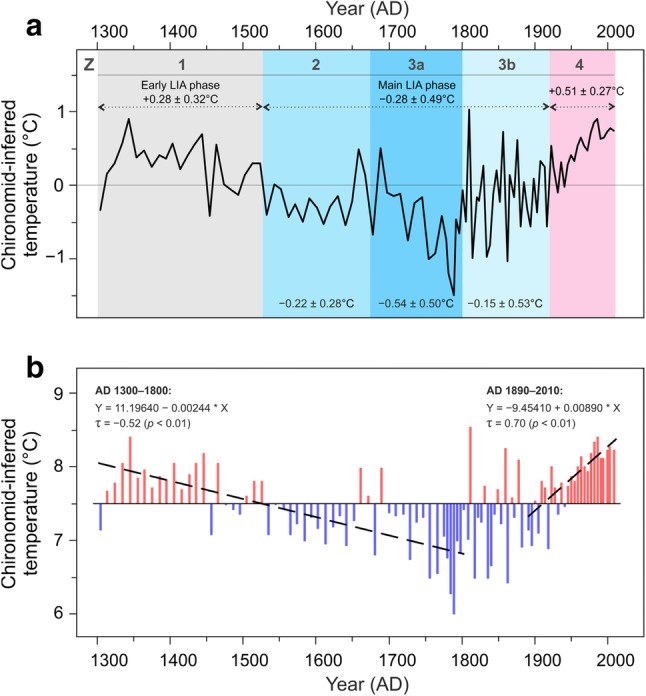
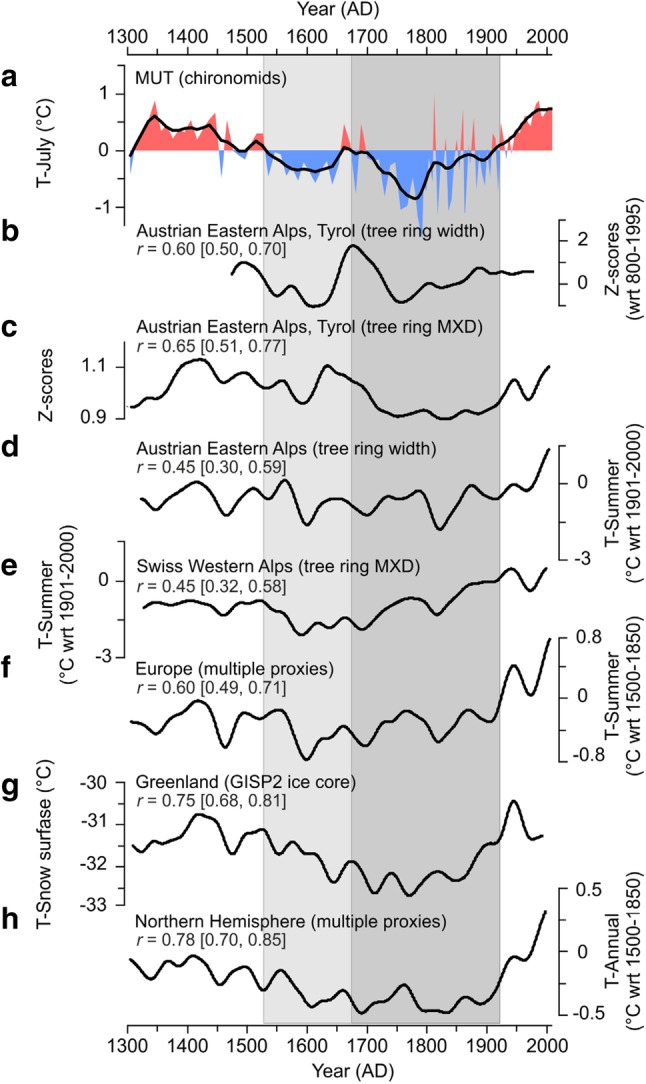
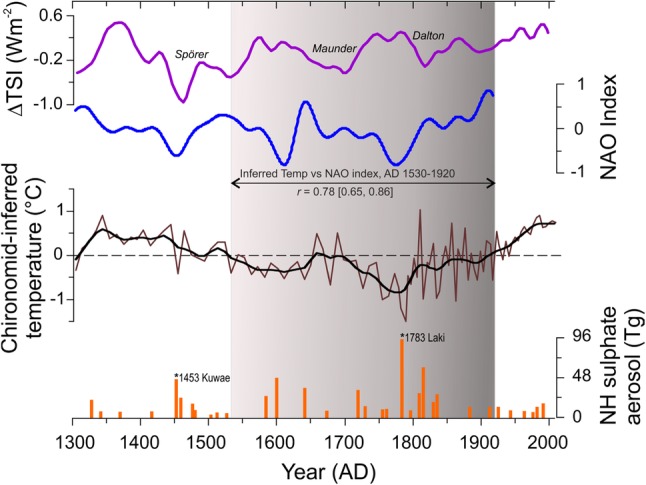
Despite the fact that the Little Ice Age (LIA) is well documented for the European Alps, substantial uncertainties concerning the regional spatio-temporal patterns of temperature changes associated with the LIA still exist, especially for their eastern sector. Here we present a high-resolution (4-10 years) 700-year long mean July air temperature reconstruction based on subfossil chironomid assemblages from a remote lake in the Austrian Eastern Alps to gain further insights into the LIA climatic deterioration in the region. The record provides evidence for a prolonged period of predominantly cooler conditions during AD 1530-1920, broadly equivalent to the climatically defined LIA in Europe. The main LIA phase appears to have consisted of two cold time intervals divided by slightly warmer episodes in the second half of the 1600s. The most severe cooling occurred during the eighteenth century. The LIA temperature minimum about 1.5 °C below the long-term mean recorded in the mid-1780 s coincides with the strongest volcanic signal found in the Greenland ice cores over the past 700 years and may be, at least in part, a manifestation of cooling that followed the long-lasting AD 1783-1784 Laki eruption. A continuous warming trend is evident since ca AD 1890 (1.1 °C in 120 years). The chironomid-inferred temperatures show a clear correlation with the instrumental data and reveal a close agreement with paleotemperature evidence from regional high-elevation tree-ring chronologies. A considerable amount of the variability in the temperature record may be linked to changes in the North Atlantic Oscillation.
尽管欧洲阿尔卑斯山的小冰期(LIA)有充分的文献记载,但与小冰期相关的区域温度变化的时空模式仍存在很大的不确定性,尤其是在其东部地区。在此,我们基于奥地利东部阿尔卑斯山一个偏远湖泊的亚化石摇蚊组合,呈现了一个分辨率为4 - 10年、长达700年的7月平均气温重建结果,以进一步深入了解该地区小冰期的气候恶化情况。该记录为公元1530 - 1920年期间主要为较冷条件的长期时期提供了证据,大致相当于欧洲气候定义的小冰期。小冰期的主要阶段似乎由两个寒冷时段组成,中间被17世纪后半叶稍暖的时期隔开。最严重的降温发生在18世纪。18世纪80年代中期记录的小冰期温度最低点比长期平均值低约1.5°C,这与过去700年格陵兰冰芯中发现的最强火山信号相吻合,并且可能至少部分是公元1783 - 1784年拉基火山长期喷发后降温的一种表现。自公元1890年左右以来,明显出现了持续的变暖趋势(120年内上升了1.1°C)。摇蚊推断的温度与仪器数据显示出明显的相关性,并且与区域高海拔树木年轮年表的古温度证据高度一致。温度记录中的相当一部分变化可能与北大西洋涛动的变化有关。