Department of Medical and Surgical Sciences and Advanced Technologies "GF Ingrassia", University of Catania, 95124 Catania, Italy, Via S. Sofia 87, 95123 Catania, Italy.
Nutrients. 2019 Jun 10;11(6):1308. doi: 10.3390/nu11061308.
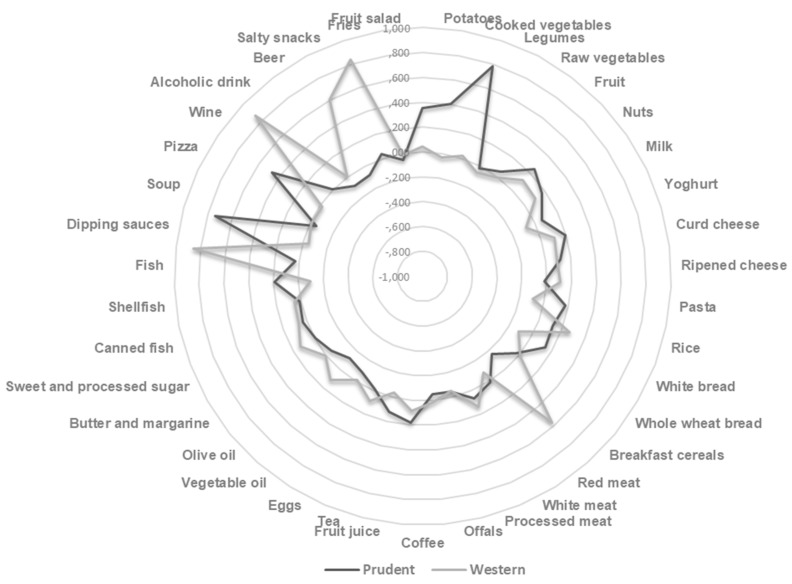
The present study investigated the association of maternal dietary patterns with pre-pregnancy body mass index (BMI) and total gestational weight gain (GWG), using data of 232 women from the "Mamma & Bambino" cohort. Dietary patterns were derived by a food frequency questionnaire and principal component analysis. Self-reported pre-pregnancy BMI and GWG were calculated according to the World Health Organization and Institute of Medicine guidelines, respectively. The adherence to the "Western" dietary pattern-characterized by high intake of red meat, fries, dipping sauces, salty snacks and alcoholic drinks-was associated with increased GWG (β = 1.217; standard error [SE] = 0.487; = 0.013), especially among obese women (β = 7.363; SE = 1.808; = 0.005). In contrast, the adherence to the "prudent" dietary pattern-characterized by high intake of boiled potatoes, cooked vegetables, legumes, pizza and soup-was associated with reduced pre-pregnancy BMI (β = -0.631; SE = 0.318; -trend = 0.038). Interestingly, the adherence to this pattern was positively associated with GWG among underweight (β = 4.127; SE = 1.722; = 0.048), and negatively among overweight and obese individuals (β = -4.209; SE = 1.635; = 0.016 and β = -7.356; SE = 2.304; = 0.031, respectively). Our findings point out that the promotion of a healthy diet might represent a potential preventive strategy against inadequate weight gain, even during the periconceptional period.
本研究利用“Mamma & Bambino”队列中 232 名女性的数据,调查了母体膳食模式与孕前体重指数(BMI)和总孕期体重增加(GWG)的关系。膳食模式通过食物频率问卷和主成分分析得出。根据世界卫生组织和医学研究所的指南,分别计算了自我报告的孕前 BMI 和 GWG。“西方”饮食模式的特点是大量摄入红肉、薯条、蘸酱、咸点心和酒精饮料,与 GWG 增加有关(β=1.217;标准误差[SE]=0.487;=0.013),尤其是肥胖女性(β=7.363;SE=1.808;=0.005)。相比之下,“谨慎”饮食模式的特点是大量摄入煮土豆、熟蔬菜、豆类、比萨和汤,与孕前 BMI 降低有关(β=-0.631;SE=0.318;-趋势=0.038)。有趣的是,这种模式的依从性与低体重者的 GWG 呈正相关(β=4.127;SE=1.722;=0.048),与超重和肥胖者的 GWG 呈负相关(β=-4.209;SE=1.635;=0.016 和 β=-7.356;SE=2.304;=0.031)。我们的研究结果表明,促进健康饮食可能是一种潜在的预防策略,可以防止体重增加不足,甚至在围孕期也是如此。