Jiang Lili, Li Shu, Zheng Junsong, Li Yan, Huang Hui
Department of Clinical and Military Laboratory Medicine, Army Medical University, Chongqing 400038, China.
Department of Microbiology, Army Medical University, Chongqing 400038, China.
Micromachines (Basel). 2019 Jun 5;10(6):375. doi: 10.3390/mi10060375.
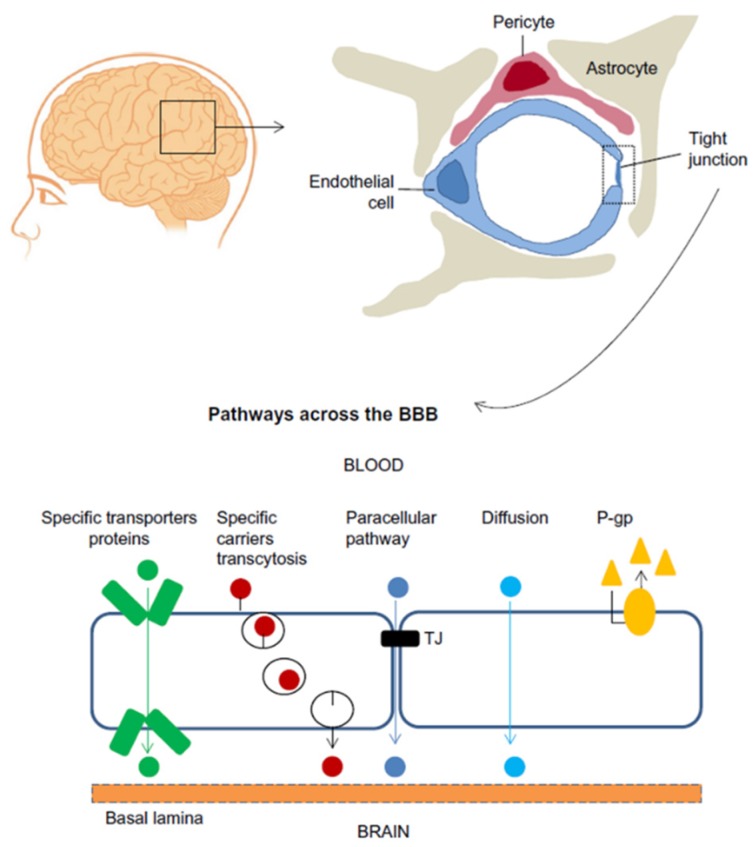
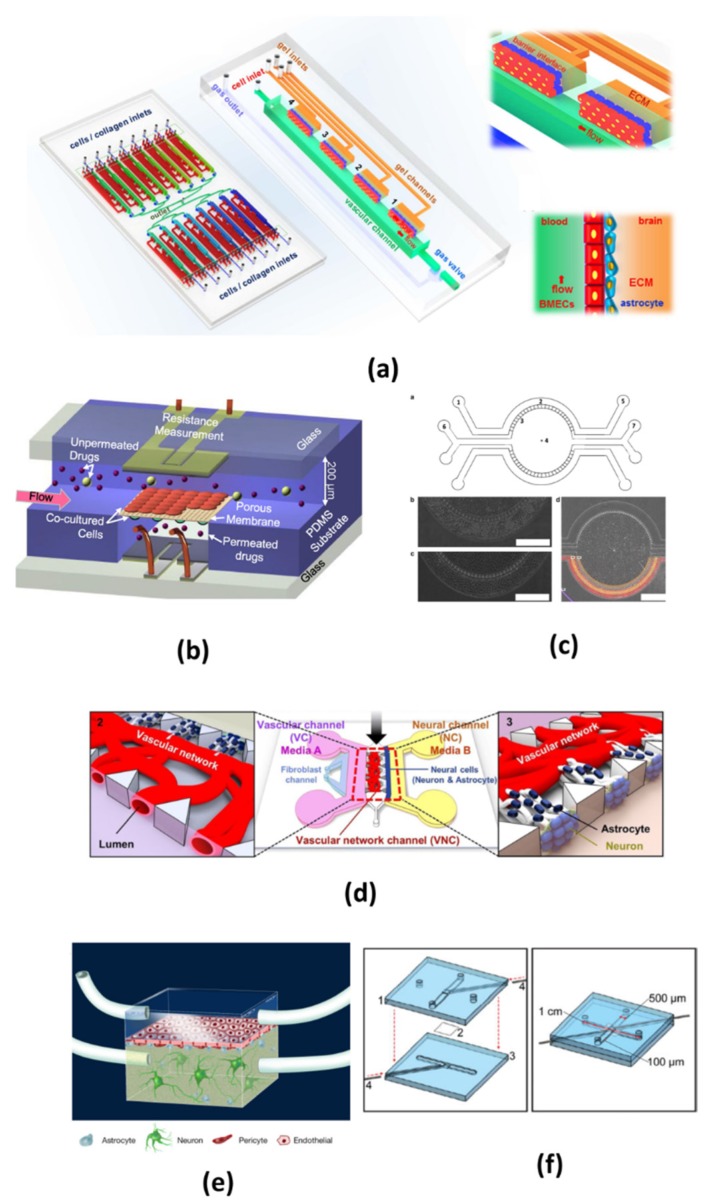
The blood-brain barrier (BBB) is a critical physical and chemical barrier that maintains brain homeostasis. Researchers in academia and industry are highly motivated to develop experimental models that can accurately mimic the physiological characteristics of the BBB. Microfluidic systems, which manipulate fluids at the micrometer scale, are ideal tools for simulating the BBB microenvironment. In this review, we summarized the progress in the design and evaluation of microfluidic in vitro BBB models, including advances in chip materials, porous membranes, the use of endothelial cells, the importance of shear stress, the detection specific markers to monitor tight junction formation and integrity, measurements of TEER and permeability. We also pointed out several shortcomings of the current microfluidic models. The purpose of this paper is to let the readers understand the characteristics of different types of model design, and select appropriate design parameters according to the research needs, so as to obtain the best experimental results. We believe that the microfluidics BBB models will play an important role in neuroscience and pharmaceutical research.
血脑屏障(BBB)是维持脑内环境稳定的关键物理和化学屏障。学术界和工业界的研究人员都积极致力于开发能够准确模拟血脑屏障生理特征的实验模型。微流控系统可在微米尺度上操控流体,是模拟血脑屏障微环境的理想工具。在本综述中,我们总结了微流控体外血脑屏障模型在设计和评估方面的进展,包括芯片材料、多孔膜、内皮细胞的应用、剪切应力的重要性、监测紧密连接形成和完整性的检测特异性标志物、跨上皮电阻(TEER)和通透性的测量。我们还指出了当前微流控模型的几个缺点。本文的目的是让读者了解不同类型模型设计的特点,并根据研究需求选择合适的设计参数,从而获得最佳实验结果。我们相信微流控血脑屏障模型将在神经科学和药物研究中发挥重要作用。