Nanjing Hospital of Traditional Chinese Medicine, The Third Affiliated Hospital of Nanjing University of Chinese Medicine, Nanjing, China.
Department of Epidemiology and Biostatistics, School of Public Health, Nanjing Medical University, Nanjing, China.
BMC Complement Altern Med. 2019 Jun 14;19(1):131. doi: 10.1186/s12906-019-2523-7.
The effects of acupuncture on in vitro fertilization (IVF) outcomes remain controversial. And the variation in participant, interventions, outcomes studied, and trial design may relate to the efficacy of adjuvant acupuncture.
We searched digital databases for relevant studies, including Embase, PubMed, Cochrane Library and some Chinese databases up to December 2018, for randomized controlled trials (RCTs) evaluating the effects of acupuncture on women undergoing IVF. We included studies with intervention groups using needling, and control groups consisting of no acupuncture or sham (placebo) acupuncture. Primary outcomes were clinical pregnancy rate (CPR) and live birth rate (LBR). Meta-regression and subgroup analysis were conducted on the basis of eight pre-specified covariates to investigate the variances of the effects of adjuvant acupuncture on pregnancy rates and the sources of heterogeneity.
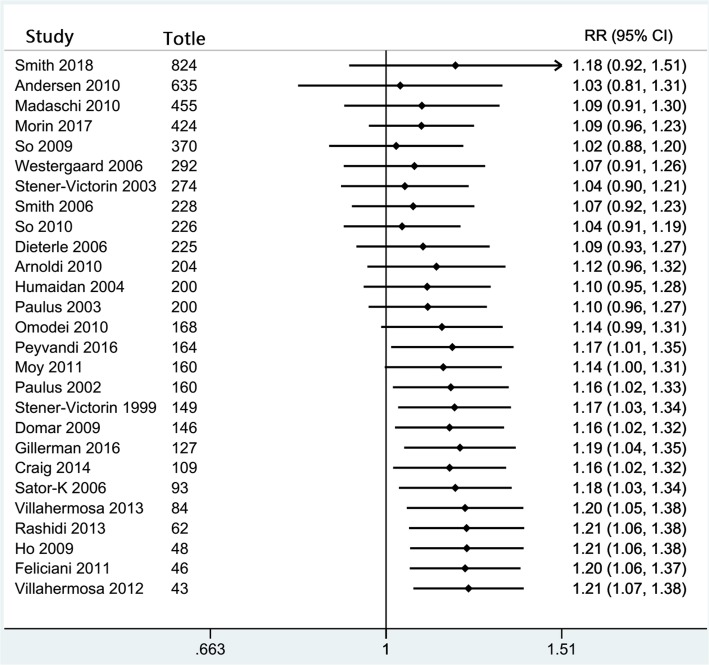
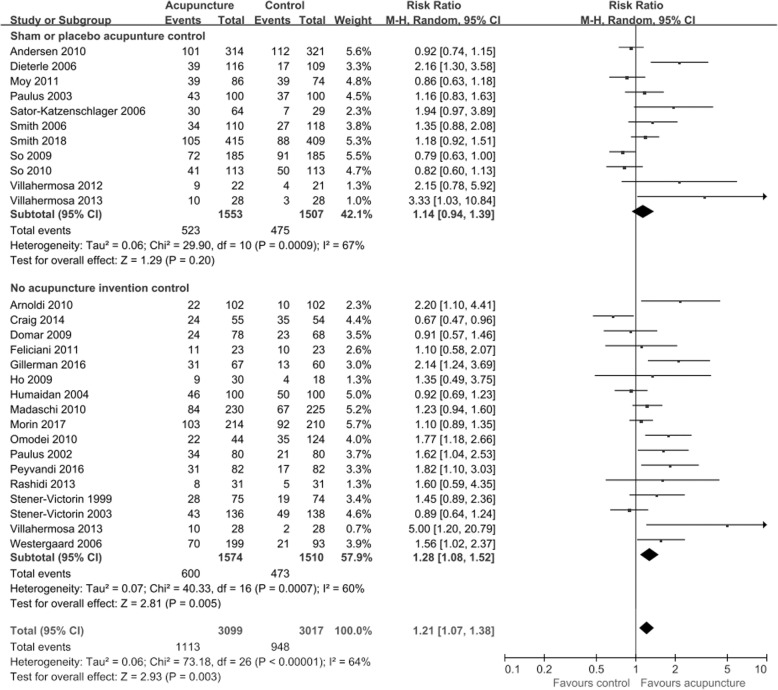
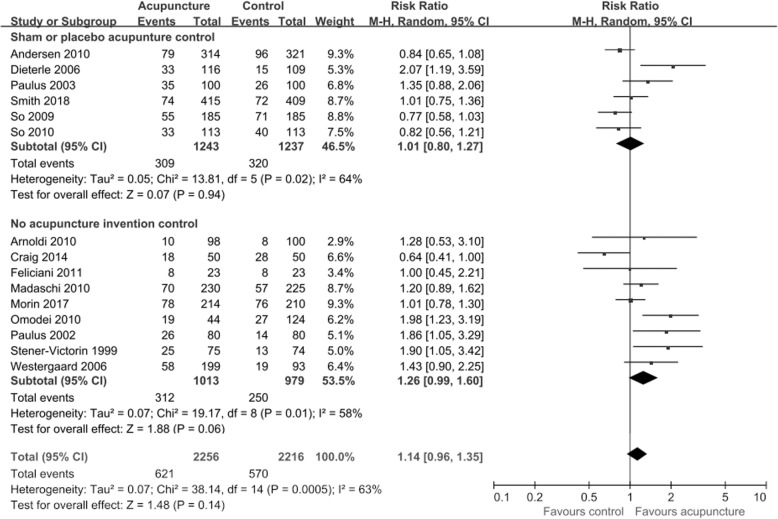
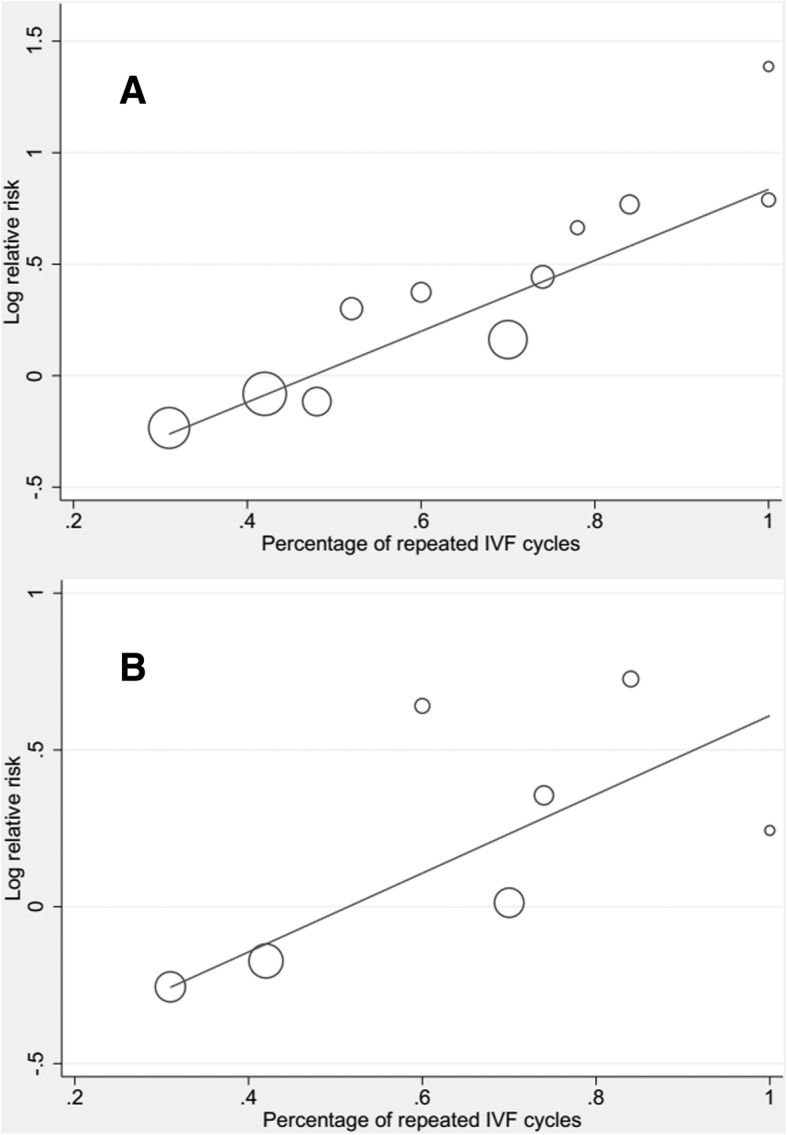
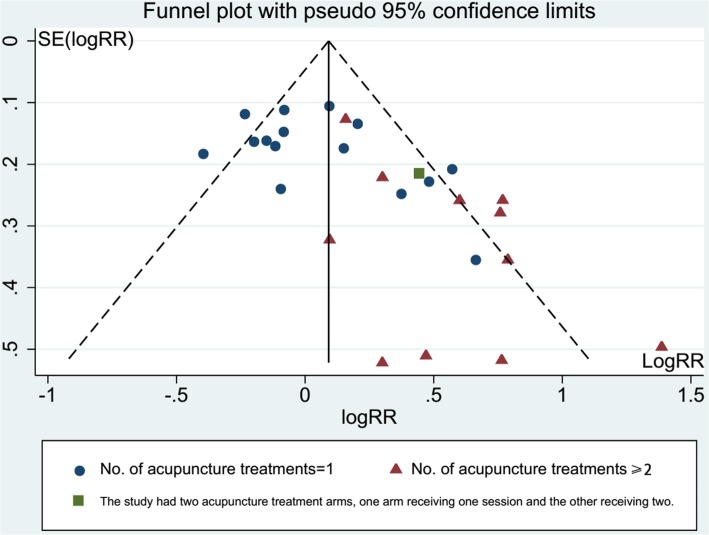
Twenty-seven studies with 6116 participants were included. The pooled clinical pregnancy rate (CPR) from all of acupuncture groups was significantly greater than that of control groups (RR 1.21, 95% CI: 1.07-1.38), whereas the pooled live birth rate (LBR) was not. Meta-regression subgroup analysis showed a more significant benefit of acupuncture for repeated IVF cycle proportion (number of women with a history of prior unsuccessful IVF attempt divided by number of women included in each trial) ≥ 50% group (CPR: RR 1.60, 95% CI: 1.28-2.00; LBR: RR 1.42, 95% CI: 1.05-1.92), and this covariate explained most of the heterogeneity (CPR and LBR: adjusted R = 100 and 87.90%). Similar results were found between CPR and number of acupuncture treatments (CPR: p = 0.002, adjusted R = 51.90%), but not LBR.
Our analysis finds a benefit of acupuncture for IVF outcomes in women with a history of unsuccessful IVF attempt, and number of acupuncture treatments is a potential influential factor. Given the poor reporting and methodological flaws of existing studies, studies with larger scales and better methodologies are needed to verify these findings.
针灸对体外受精(IVF)结局的影响仍存在争议。参与者、干预措施、研究的结局以及试验设计的差异可能与辅助针灸的疗效有关。
我们检索了 Embase、PubMed、Cochrane 图书馆和一些中文数据库,以获取截至 2018 年 12 月的关于评估针灸对接受 IVF 治疗的女性影响的随机对照试验(RCT)的相关研究。我们纳入了采用针刺的干预组和无针灸或假(安慰剂)针灸的对照组的研究。主要结局为临床妊娠率(CPR)和活产率(LBR)。根据 8 个预先指定的协变量进行了元回归和亚组分析,以探讨辅助针灸对妊娠率的影响差异及其异质性的来源。
共纳入 27 项研究,共计 6116 名参与者。所有针灸组的临床妊娠率(CPR)均显著高于对照组(RR 1.21,95%CI:1.07-1.38),而活产率(LBR)则不然。元回归亚组分析表明,对于重复 IVF 周期比例(既往失败 IVF 尝试的女性人数除以每个试验中纳入的女性人数)≥50%的组,针灸的益处更为显著(CPR:RR 1.60,95%CI:1.28-2.00;LBR:RR 1.42,95%CI:1.05-1.92),该协变量解释了大部分异质性(CPR 和 LBR:调整 R 分别为 100 和 87.90%)。CPR 与针刺治疗次数之间也存在类似的关系(CPR:p=0.002,调整 R=51.90%),但与 LBR 无关。
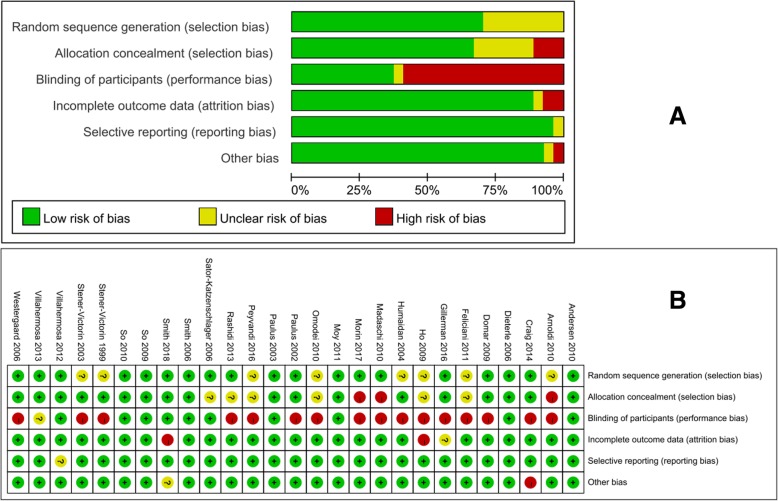
我们的分析发现,对于有既往 IVF 失败史的女性,针灸对 IVF 结局有益,且针刺治疗次数是一个潜在的影响因素。鉴于现有研究报告质量差且方法学缺陷,需要开展更大规模和方法学更好的研究来验证这些发现。