Quan Kewei, Yu Chuyi, Wen Xiaohui, Lin Qiuping, Wang Naiping, Ma Hongxia
Dongguan Hospital of Guangzhou University of Chinese Medicine, Dongguan 523127, Guangdong, China.
Guangzhou University of Chinese Medicine, Guangzhou 510405, Guangdong, China.
Evid Based Complement Alternat Med. 2022 Feb 16;2022:3595033. doi: 10.1155/2022/3595033. eCollection 2022.
The effects of acupuncture on female infertility remain controversial. Also, the variation in the participant, interventions, outcomes studied, and trial design may relate to the efficacy of adjuvant acupuncture. The aim of the study is to systematically evaluate the efficacy and safety of acupuncture for female with infertility and hopefully provide reliable guidance for clinicians and patients.
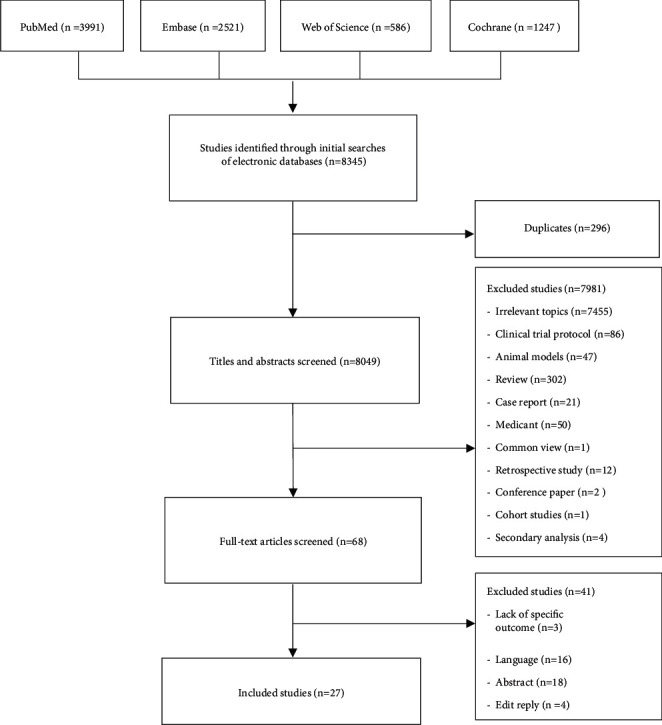
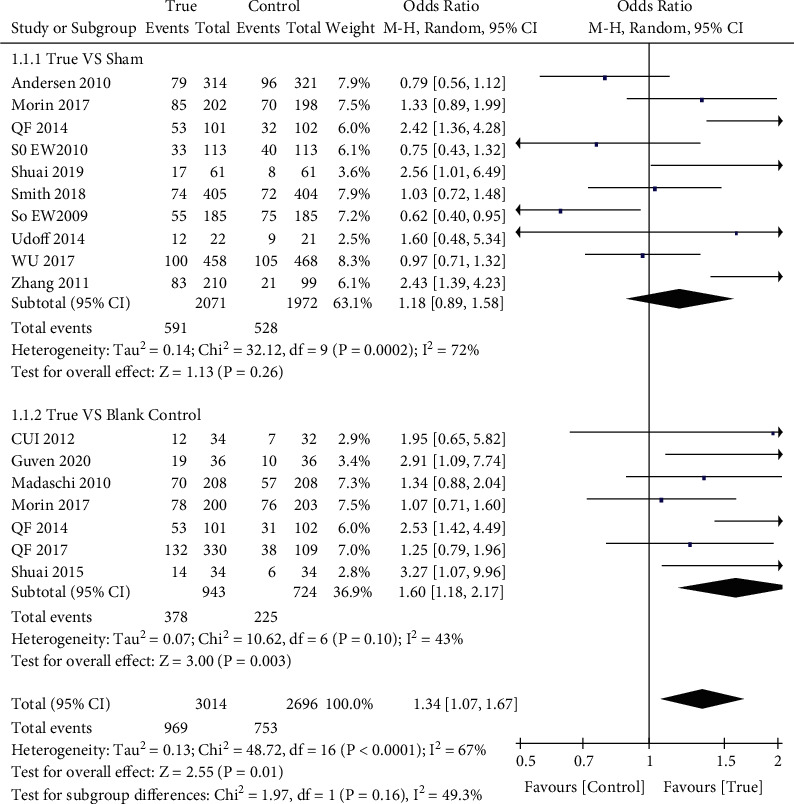
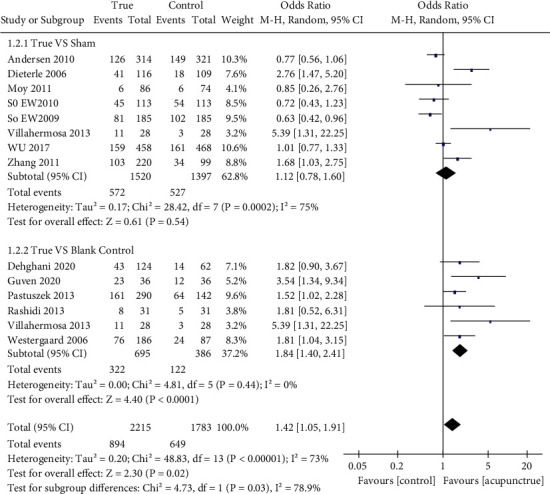
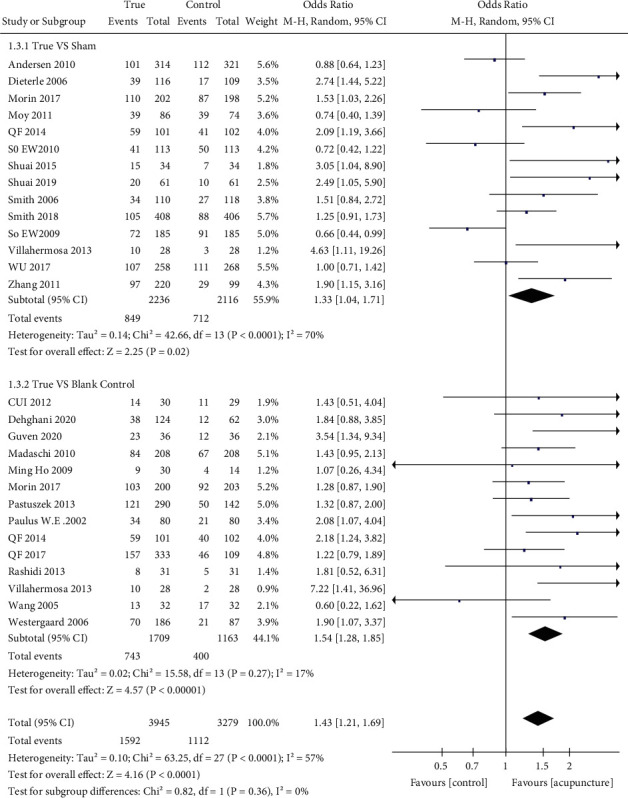
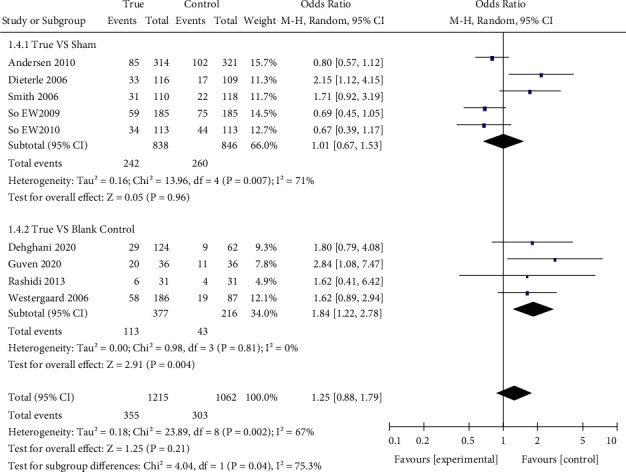
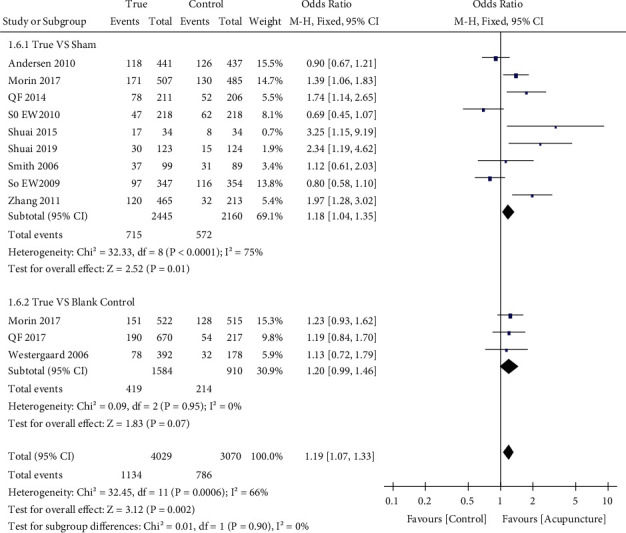
We searched digital databases for relevant studies, including EMBASE, PubMed, Cochrane Library, and Web of Science, and the Cochrane Library up to April 2021, for randomized controlled trials (RCTs) evaluating the effects of acupuncture on women undergoing IVF and other treatment. We included studies with intervention groups using acupuncture and control groups consisting of no acupuncture or sham (placebo) acupuncture. Primary outcomes were clinical pregnancy rate (CPR) and live birth rate (LBR). Meta-regression and subgroup analysis were conducted on the basis of ten prespecified covariates to investigate the variances of the effects of adjuvant acupuncture on pregnancy rates and the sources of heterogeneity. Twenty-seven studies with 7676 participants were included. The results showed that the intervention group contributes more in outcomes including live birth rate (RR = 1.34; 95% CI (1.07, 1.67); < 0.05), clinical pregnancy rate (RR = 1.43; 95% CI (1.21, 1.69); < 0.05), biochemical pregnancy rate (RR = 1.42; 95% CI (1.05, 1.91); < 0.05), ongoing pregnancy rate (RR = 1.25; 95% CI (0.88, 1.79); < 0.05), adverse events (RR = 1.65; 95% CI (1.15, 2.36); < 0.05), and implantation rate (MD = 1.19; 95% CI (1.07, 1.33); < 0.05) when compared with the control group, and the difference is statistically significant. In terms of the number of oocytes retrieved, good-quality embryo rate, miscarriages, and ectopic pregnancy rate, the difference between the acupuncture group and the control group was not statistically significant. Our analysis finds a benefit of acupuncture for outcomes in women with infertility, and the number of acupuncture treatments is a potential influential factor. Given the poor reporting and methodological flaws of existing studies, studies with larger scales and better methodologies are needed to verify these findings. More double-blind RCTs equipped with high quality and large samples are expected for the improvement of the level of evidence.
针灸对女性不孕症的影响仍存在争议。此外,参与者、干预措施、研究结果和试验设计的差异可能与辅助针灸的疗效有关。本研究的目的是系统评价针灸治疗女性不孕症的疗效和安全性,以期为临床医生和患者提供可靠的指导。
我们检索了数字数据库以查找相关研究,包括EMBASE、PubMed、Cochrane图书馆和Web of Science,以及截至2021年4月的Cochrane图书馆,以寻找评估针灸对接受体外受精和其他治疗的女性影响的随机对照试验(RCT)。我们纳入了干预组采用针灸且对照组为不进行针灸或假(安慰剂)针灸的研究。主要结局为临床妊娠率(CPR)和活产率(LBR)。基于十个预先设定的协变量进行Meta回归和亚组分析,以研究辅助针灸对妊娠率影响的差异及异质性来源。共纳入27项研究,涉及7676名参与者。结果显示,与对照组相比,干预组在活产率(RR = 1.34;95%CI(1.07,1.67);P < 0.05)、临床妊娠率(RR = 1.43;95%CI(1.21,1.69);P < 0.05)、生化妊娠率(RR = 1.42;95%CI(1.05,1.91);P < 0.05)、持续妊娠率(RR = 1.25;95%CI(0.88,1.79);P < 0.05)、不良事件(RR = 1.65;95%CI(1.15,2.36);P < 0.05)和着床率(MD = 1.19;95%CI(1.07,1.33);P < 0.05)等结局方面贡献更大,差异具有统计学意义。在获卵数、优质胚胎率、流产率和异位妊娠率方面,针灸组与对照组之间的差异无统计学意义。我们的分析发现针灸对不孕症女性的结局有益,且针灸治疗次数是一个潜在的影响因素。鉴于现有研究报告质量差和方法学缺陷,需要开展规模更大、方法更好的研究来验证这些发现。预计需要更多高质量、大样本的双盲RCT来提高证据水平。