The Affiliated Hospital of Nanjing University of Chinese Medicine, Nanjing 210023, China.
School of Materials Science and Engineering, Southwest Jiaotong University, Chengdu 610031, China.
Biomed Res Int. 2019 May 8;2019:4039472. doi: 10.1155/2019/4039472. eCollection 2019.
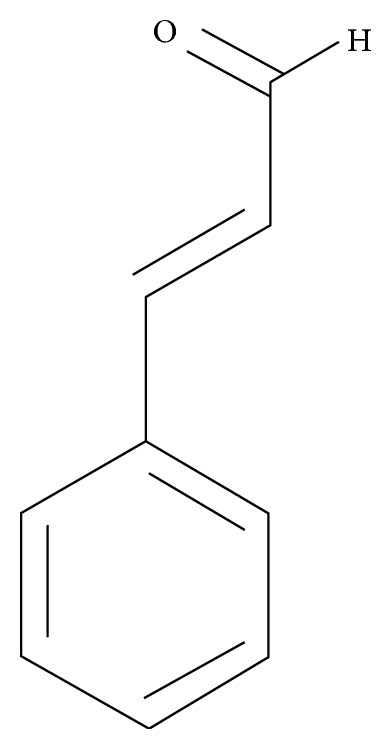
Trans-cinnamaldehyde (TCA), a compound from Cinnamomum cassia Presl, has been reported to have anti-inflammatory effect. However, its effect on cartilage degradation in osteoarthritis is unclear. This study is designed to examine the effects of TCA on cartilage in vitro and in vivo.
SW1353 cells and human primary chondrocytes were treated with varying concentrations of TCA (2-20 g/ml) for 2 h followed by IL-1 stimulation. Cell viability was examined by the MTT assay. Expression of MMP-1, MMP-3, MMP-13, ADAMTS-4, and ADAMTS-5 was examined by Western blot and RT-qPCR. Monosodium iodoacetate (MIA)-induced OA was established in rats to assess the chondrocyte protective effects of intraperitoneal injection of TCA (50 mg/kg).
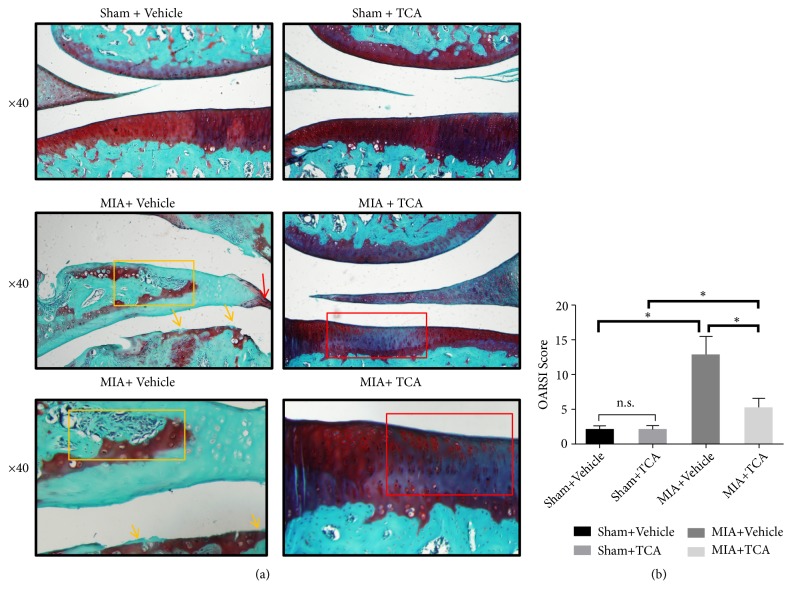
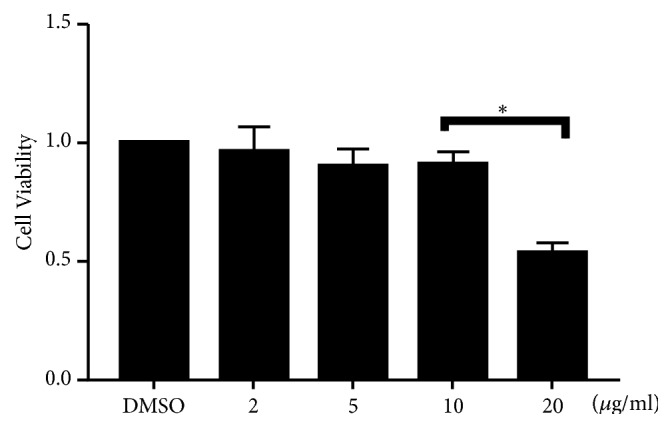
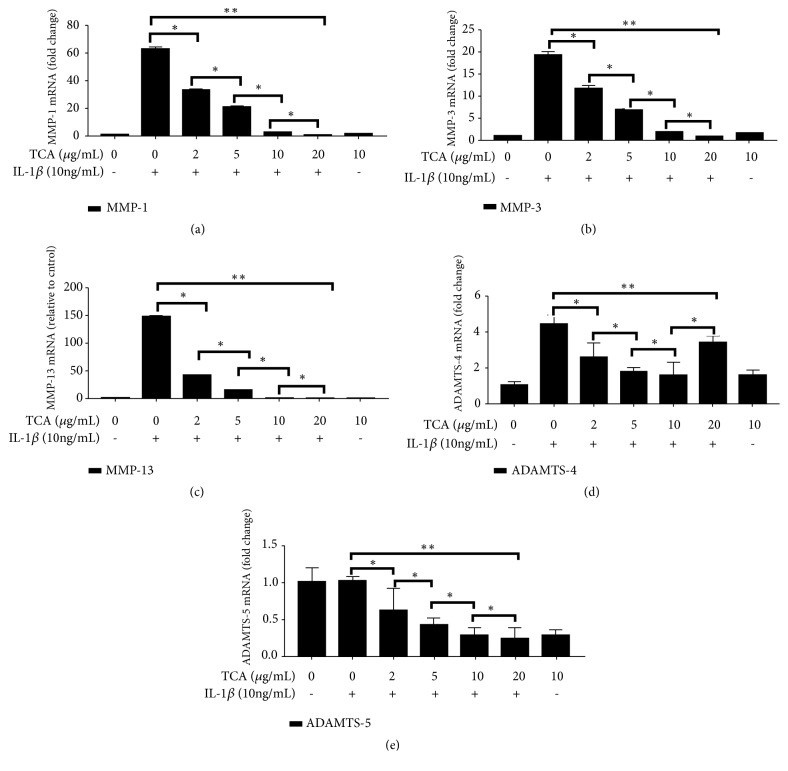
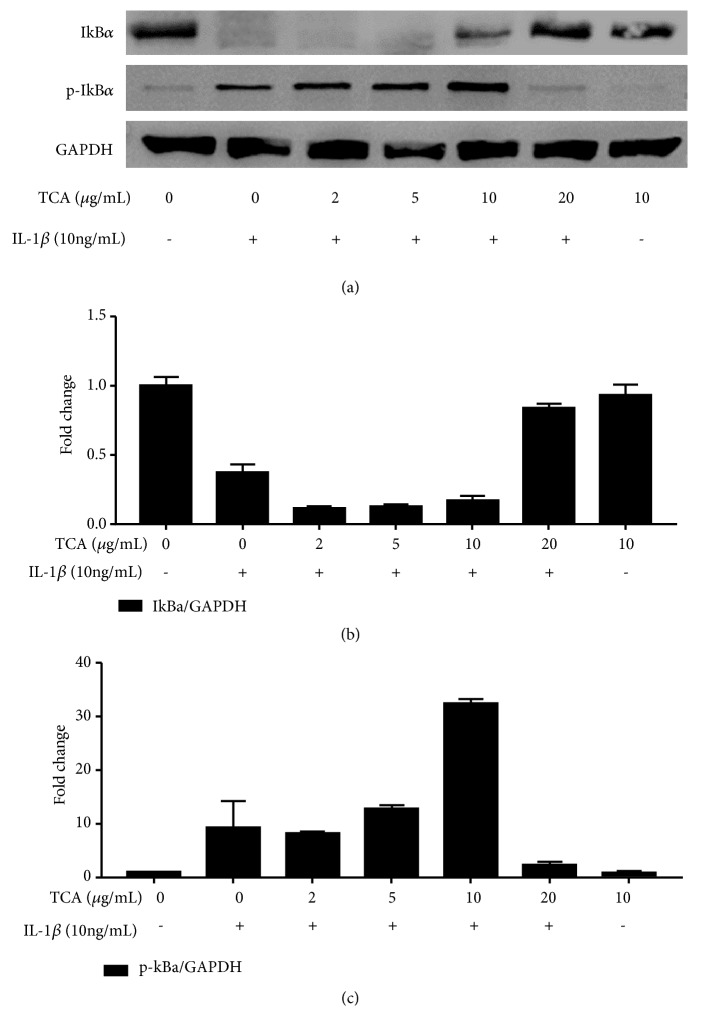
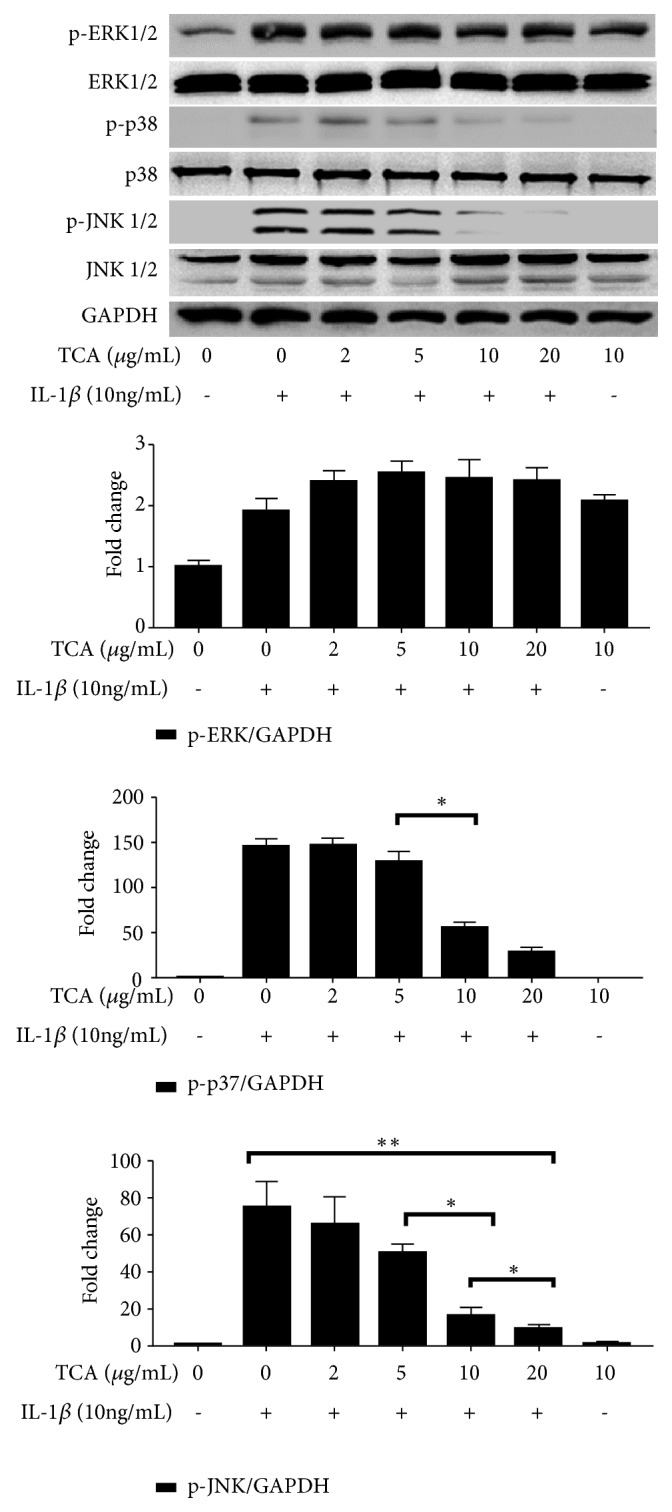
TCA at a concentration of 10 g/ml had no significant effect on cell viability. MMP-1, MMP-3, MMP-13, ADAMTS-4, and ADAMTS-5 were decreased by TCA 2-10 g/ml in a dose-dependent manner (all <0.05). Pretreatment with TCA decreased the degradation of IB and increased the expression of p-IB, indicating that NF-B inactivation was induced by TCA in IL-1-stimulated SW1353 cells. Pretreatment with TCA decreased the levels of p-p38 and p-JNK, while the levels of p-ERK were not significantly affected. TCA 10 g/ml significantly decreased expression levels of MMP-1, MMP-3, MMP-13, ADAMTS-4, and ADAMTS-5. In vivo results showed that TCA alleviated cartilage destruction and the OARSI scores.
TCA possesses anti-inflammatory effect in vitro and exerts chondrocyte protective effects in vivo, in which NF-B and p38-JNK were involved.
肉桂醛(TCA)是肉桂(Cinnamomum cassia Presl)中的一种化合物,据报道具有抗炎作用。然而,其在骨关节炎中对软骨降解的影响尚不清楚。本研究旨在体外和体内研究 TCA 对软骨的作用。
用不同浓度的 TCA(2-20μg/ml)处理 SW1353 细胞和人原代软骨细胞 2 小时,然后用 IL-1 刺激。通过 MTT 测定法检查细胞活力。通过 Western blot 和 RT-qPCR 检查 MMP-1、MMP-3、MMP-13、ADAMTS-4 和 ADAMTS-5 的表达。通过腹腔注射 TCA(50mg/kg)建立碘乙酸单钠(MIA)诱导的 OA,以评估 TCA 对软骨细胞的保护作用。
浓度为 10μg/ml 的 TCA 对细胞活力没有显著影响。TCA 2-10μg/ml 呈剂量依赖性降低 MMP-1、MMP-3、MMP-13、ADAMTS-4 和 ADAMTS-5 的表达(均<0.05)。TCA 预处理降低了 IB 的降解并增加了 p-IB 的表达,表明 TCA 在 IL-1 刺激的 SW1353 细胞中诱导了 NF-B 失活。TCA 预处理降低了 p-p38 和 p-JNK 的水平,而 p-ERK 的水平没有显著影响。TCA 10μg/ml 显著降低了 MMP-1、MMP-3、MMP-13、ADAMTS-4 和 ADAMTS-5 的表达水平。体内结果表明,TCA 减轻了软骨破坏和 OARSI 评分。
TCA 在体外具有抗炎作用,在体内具有保护软骨细胞的作用,其中涉及 NF-B 和 p38-JNK。