Chu Su H, Huang Mengna, Kelly Rachel S, Benedetti Elisa, Siddiqui Jalal K, Zeleznik Oana A, Pereira Alexandre, Herrington David, Wheelock Craig E, Krumsiek Jan, McGeachie Michael, Moore Steven C, Kraft Peter, Mathé Ewy, Lasky-Su Jessica
Channing Division of Network Medicine, Brigham and Women's Hospital and Harvard Medical School, Boston, MA 02115, USA.
Institute for Computational Biomedicine, Englander Institute for Precision Medicine, Department of Physiology and Biophysics, Weill Cornell Medicine, New York, NY 10021, USA.
Metabolites. 2019 Jun 18;9(6):117. doi: 10.3390/metabo9060117.
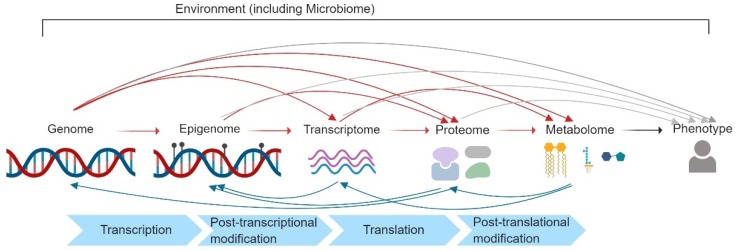
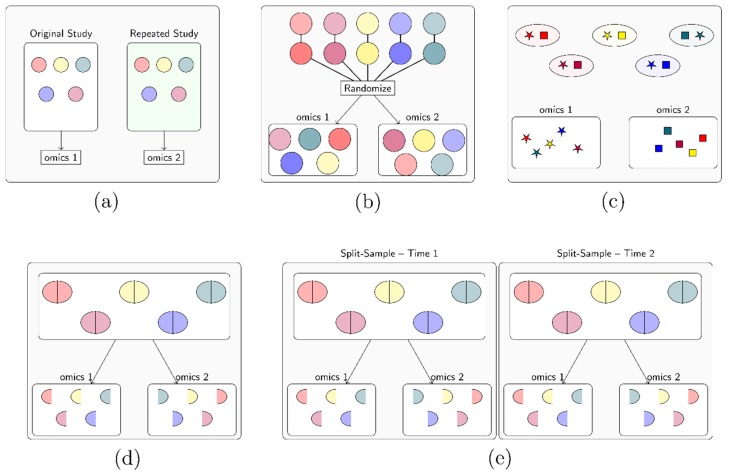
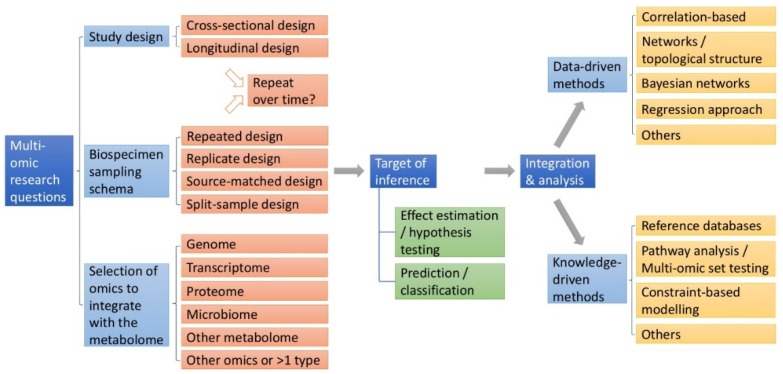
It is not controversial that study design considerations and challenges must be addressed when investigating the linkage between single omic measurements and human phenotypes. It follows that such considerations are just as critical, if not more so, in the context of multi-omic studies. In this review, we discuss (1) epidemiologic principles of study design, including selection of biospecimen source(s) and the implications of the timing of sample collection, in the context of a multi-omic investigation, and (2) the strengths and limitations of various techniques of data integration across multi-omic data types that may arise in population-based studies utilizing metabolomic data.
在研究单组学测量与人类表型之间的联系时,研究设计的考量和挑战必须得到解决,这一点并无争议。因此,在多组学研究的背景下,这些考量即便不是更关键,也同样至关重要。在本综述中,我们讨论了:(1)在多组学研究背景下,研究设计的流行病学原则,包括生物样本来源的选择以及样本采集时间的影响;(2)在利用代谢组学数据的基于人群的研究中,跨多组学数据类型的各种数据整合技术的优势和局限性。