College of Biological Sciences and Technology, Beijing Forestry University, Beijing, 100083, China.
Department of Biology, Microbial Ecology Group, Lund University, Lund, Sweden.
Sci Rep. 2019 Jun 19;9(1):8761. doi: 10.1038/s41598-019-44985-8.
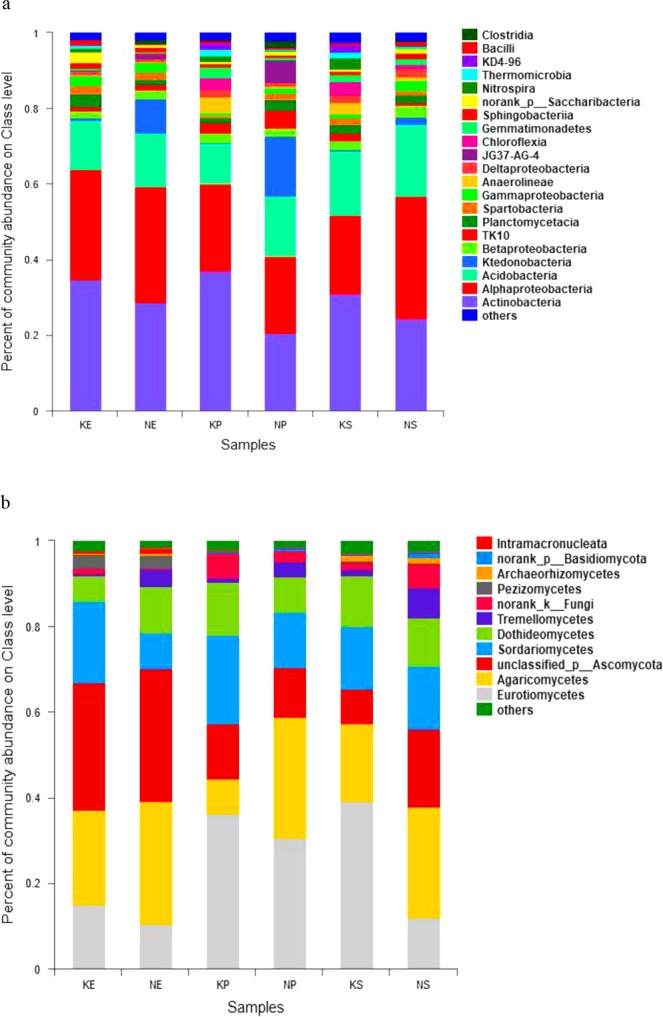
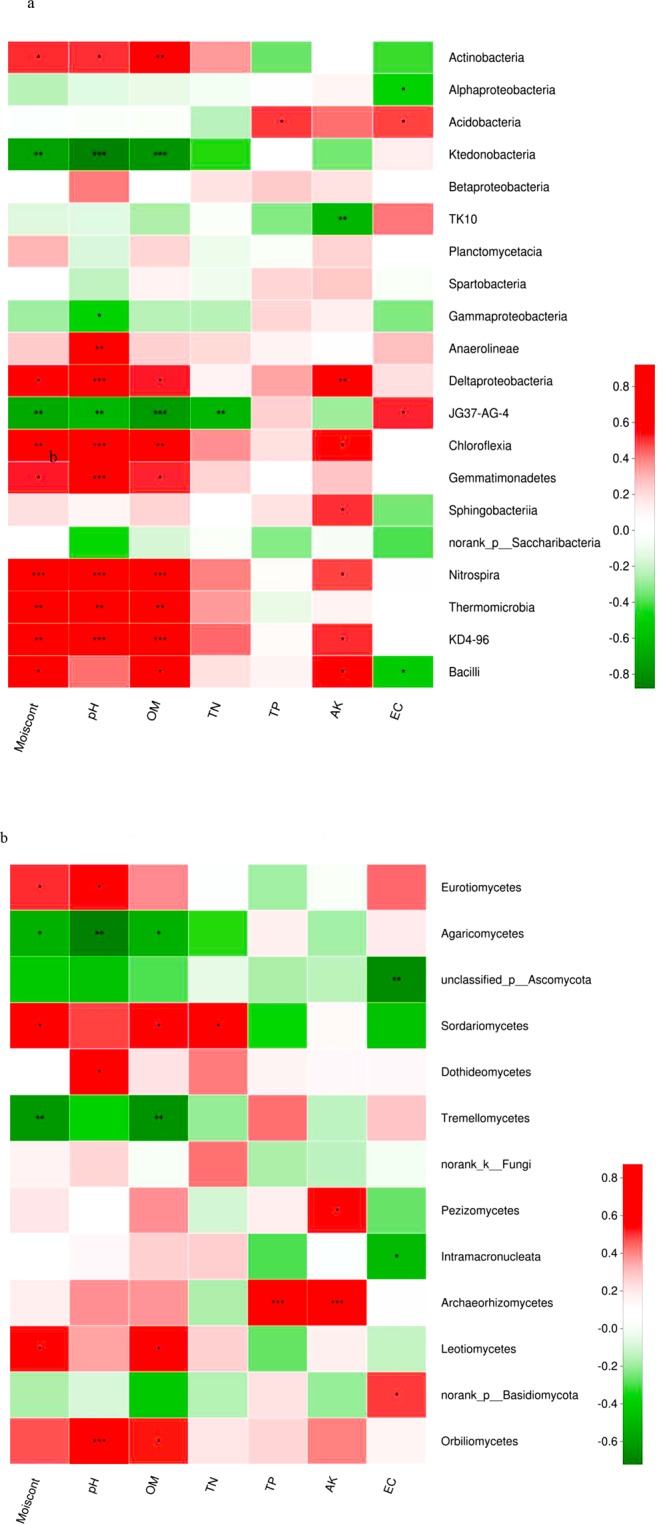
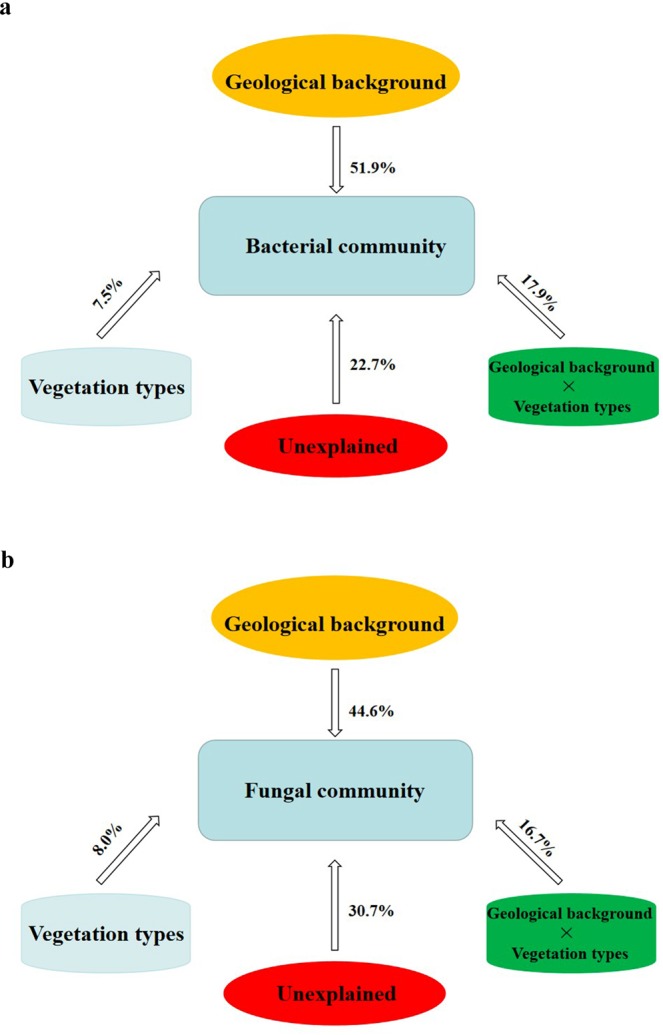
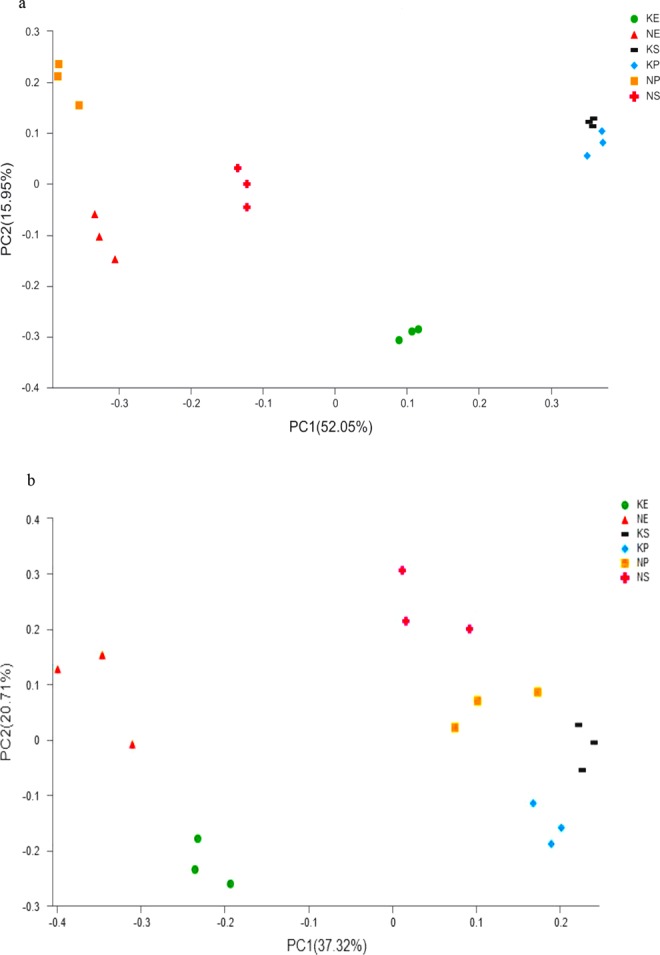
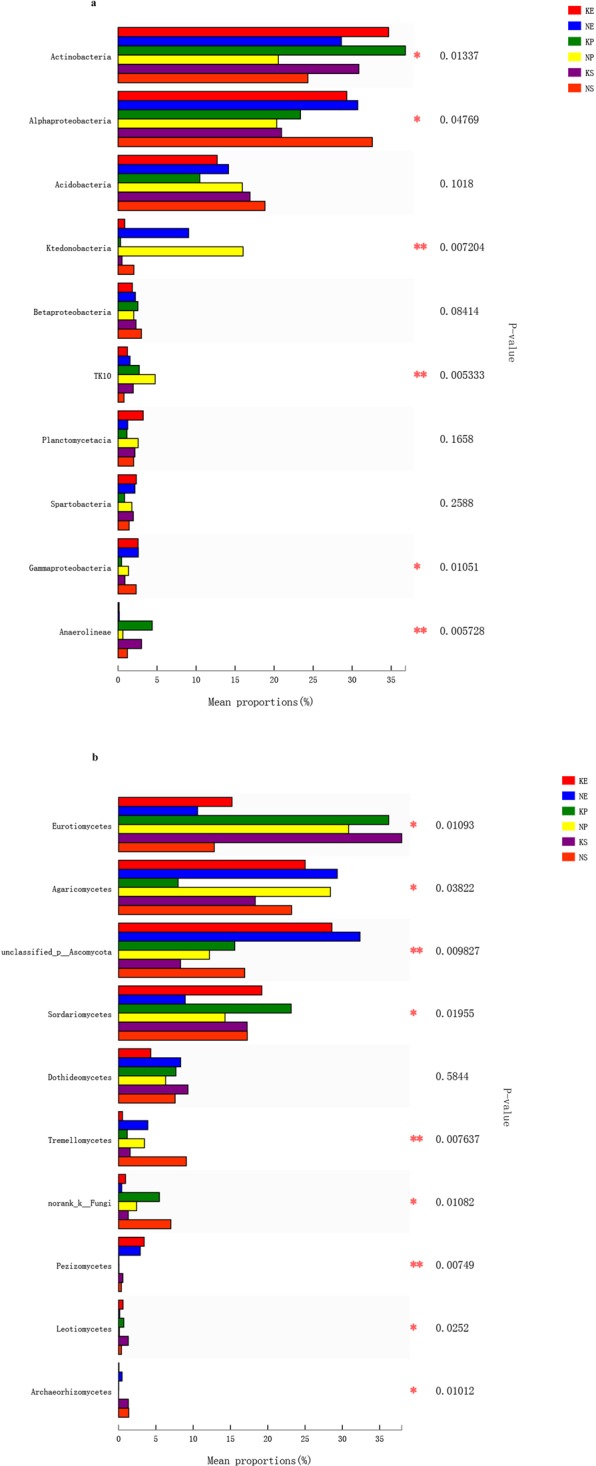
Understanding how patterns of recovery and geological conditions affect microbial communities is important for determining the stability of karst ecosystems. Here, we investigated the diversity and composition of microorganisms in karst and non-karst environments under natural restoration and artificial rehabilitation conditions. The results showed no significant differences in soil microbial diversity, but the microbial communities associated with geological conditions and tree species differed significantly. Variation partitioning analysis (VPA) showed that a total of 77.3% of the variation in bacteria and a total of 69.3% of the variation in fungi could be explained by vegetation type and geological background. There were significant differences in six bacterial classes (Actinobacteria, Alphaproteobacteria, Ktedonobacteria, TK10, Gammaproteobacteria, and Anaerolineae) and nine fungal classes (Eurotiomycetes, Agaricomycetes, unclassified _p_Ascomycota, Sordariomycetes, Tremellomycetes, norank_k_Fungi, Pezizomycetes, Leotiomycetes and Archaeorhizomycetes) among the soils collected from six plots. A Spearman correlation heatmap showed that the microbial community was affected by the major soil properties. Principal coordinates analysis indicated that the microbial community of Pinus yunnanensis in the artificial forest, which was established for the protection of the environment was most similar to that in the natural secondary forest in the karst ecosystem. These findings further our understanding of microbial responses to vegetation restoration and geological conditions.
了解恢复模式和地质条件如何影响微生物群落对于确定喀斯特生态系统的稳定性非常重要。在这里,我们调查了自然恢复和人工修复条件下喀斯特和非喀斯特环境中微生物的多样性和组成。结果表明,土壤微生物多样性没有显著差异,但与地质条件和树种相关的微生物群落存在显著差异。变异分解分析(VPA)表明,细菌的总变异中有 77.3%,真菌的总变异中有 69.3%可以用植被类型和地质背景来解释。在从六个样地采集的土壤中,有六个细菌纲(放线菌、α变形菌、Ktedonobacteria、TK10、γ变形菌和拟杆菌纲)和九个真菌纲(子囊菌门、盘菌门、未分类的 p_子囊菌门、Sordariomycetes、Tremellomycetes、未分类的 k_真菌、担子菌门、外囊菌门和古菌门)存在显著差异。Spearman 相关热图显示,微生物群落受到主要土壤性质的影响。主坐标分析表明,在喀斯特生态系统中,为保护环境而建立的人工林云南松中的微生物群落与自然次生林中的微生物群落最为相似。这些发现进一步加深了我们对微生物对植被恢复和地质条件的响应的理解。