Weill Institute for Neurosciences, University of California, San Francisco, California, United States of America.
Department of Neurology, University of California, San Francisco, California, United States of America.
PLoS One. 2019 Jun 20;14(6):e0218318. doi: 10.1371/journal.pone.0218318. eCollection 2019.
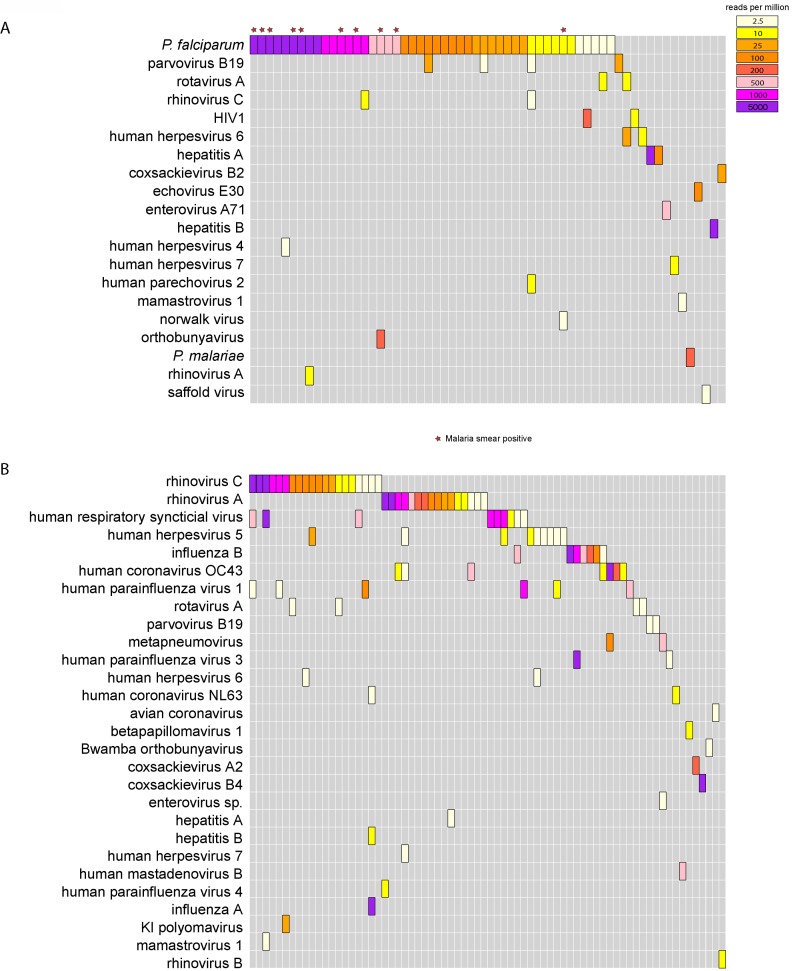
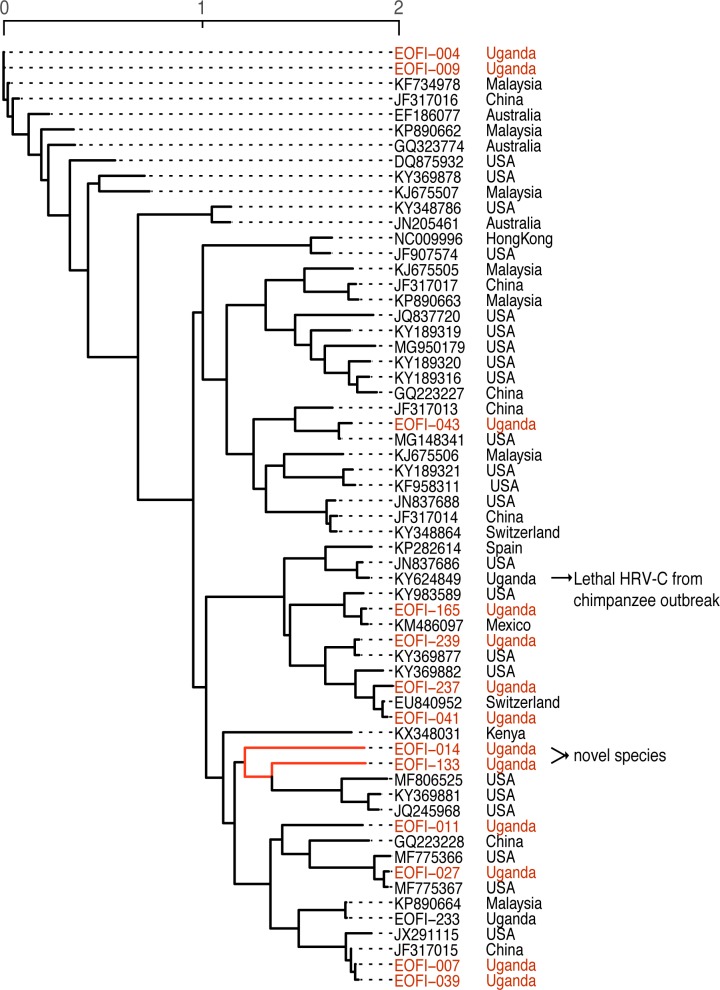
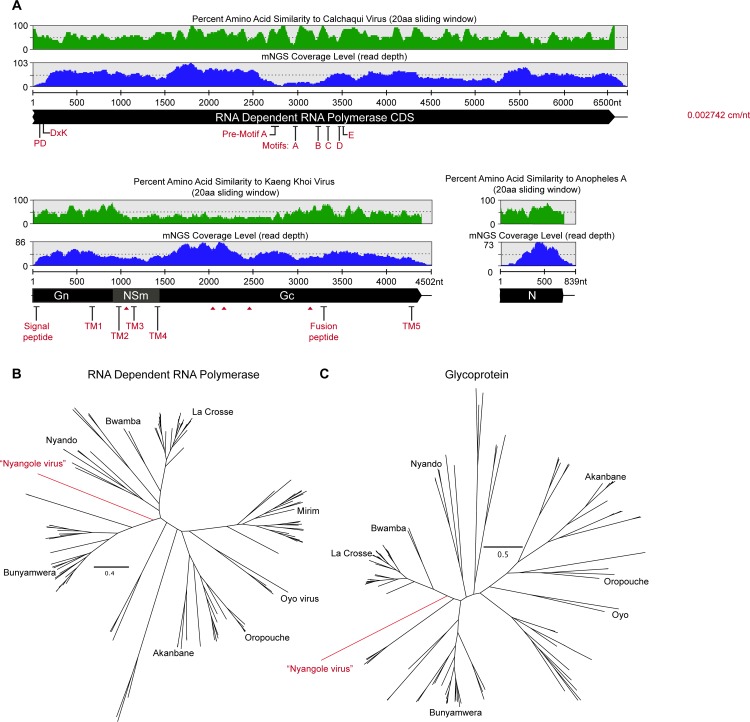
Febrile illness is a major burden in African children, and non-malarial causes of fever are uncertain. In this retrospective exploratory study, we used metagenomic next-generation sequencing (mNGS) to evaluate serum, nasopharyngeal, and stool specimens from 94 children (aged 2-54 months) with febrile illness admitted to Tororo District Hospital, Uganda. The most common microbes identified were Plasmodium falciparum (51.1% of samples) and parvovirus B19 (4.4%) from serum; human rhinoviruses A and C (40%), respiratory syncytial virus (10%), and human herpesvirus 5 (10%) from nasopharyngeal swabs; and rotavirus A (50% of those with diarrhea) from stool. We also report the near complete genome of a highly divergent orthobunyavirus, tentatively named Nyangole virus, identified from the serum of a child diagnosed with malaria and pneumonia, a Bwamba orthobunyavirus in the nasopharynx of a child with rash and sepsis, and the genomes of two novel human rhinovirus C species. In this retrospective exploratory study, mNGS identified multiple potential pathogens, including 3 new viral species, associated with fever in Ugandan children.
发热性疾病是非洲儿童的主要负担,发热的非疟疾病因尚不确定。在这项回顾性探索性研究中,我们使用宏基因组下一代测序(mNGS)来评估来自乌干达托罗罗区医院 94 名发热儿童(2-54 月龄)的血清、鼻咽和粪便标本。从血清中鉴定出最常见的微生物是疟原虫(51.1%的样本)和细小病毒 B19(4.4%);从鼻咽拭子中鉴定出人类鼻病毒 A 和 C(40%)、呼吸道合胞病毒(10%)和人类疱疹病毒 5(10%);从腹泻儿童的粪便中鉴定出轮状病毒 A(50%)。我们还报告了一种高度分化的正呼肠孤病毒的近乎完整基因组,该病毒暂命名为 Nyangole 病毒,从诊断为疟疾和肺炎的儿童的血清中鉴定出该病毒,从皮疹和败血症儿童的鼻咽中鉴定出布瓦姆巴正呼肠孤病毒,以及两种新型人类鼻病毒 C 种的基因组。在这项回顾性探索性研究中,mNGS 鉴定出了多种潜在的病原体,包括与乌干达儿童发热相关的 3 种新病毒。