Department of Comparative Pathobiology, Purdue University, West Lafayette, IN, 47907, USA.
Autoimmunity Center of Excellence, Multiple Sclerosis Center, Department of Neurology, University of Michigan Medical School, Ann Arbor, MI, 48109, USA.
Sci Rep. 2019 Jun 20;9(1):8837. doi: 10.1038/s41598-019-45311-y.
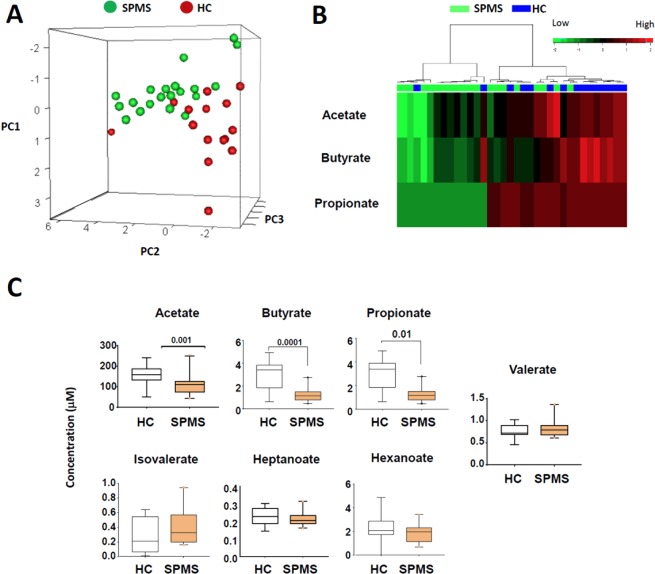
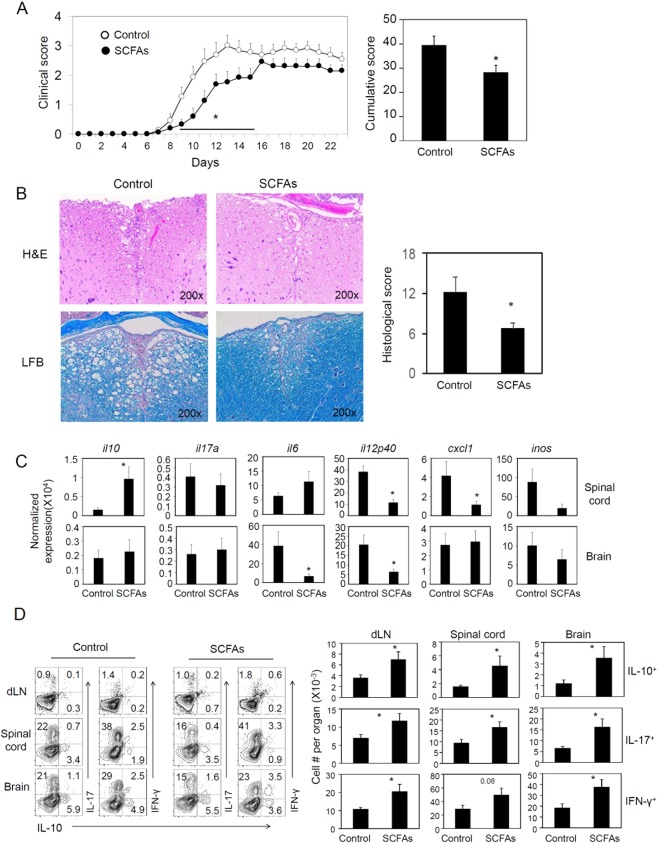
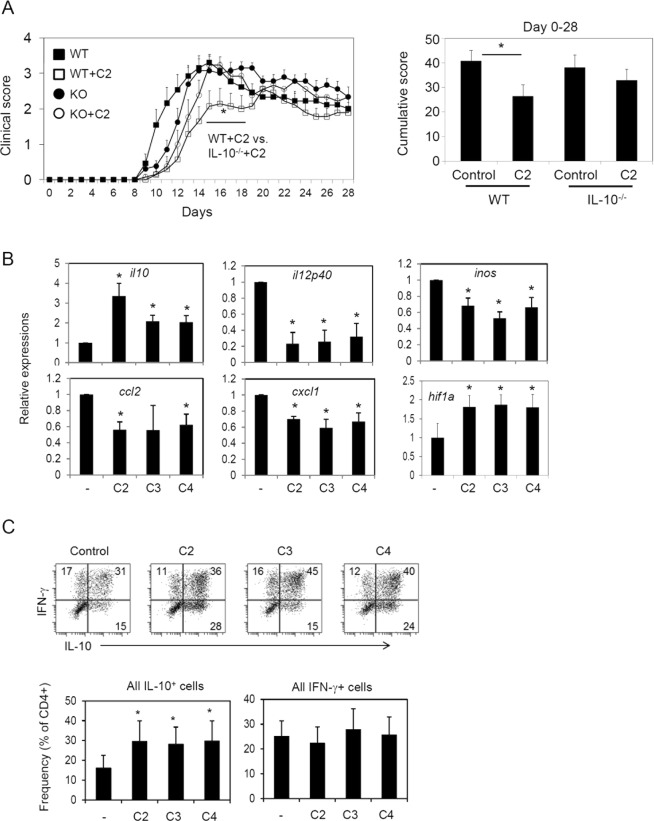
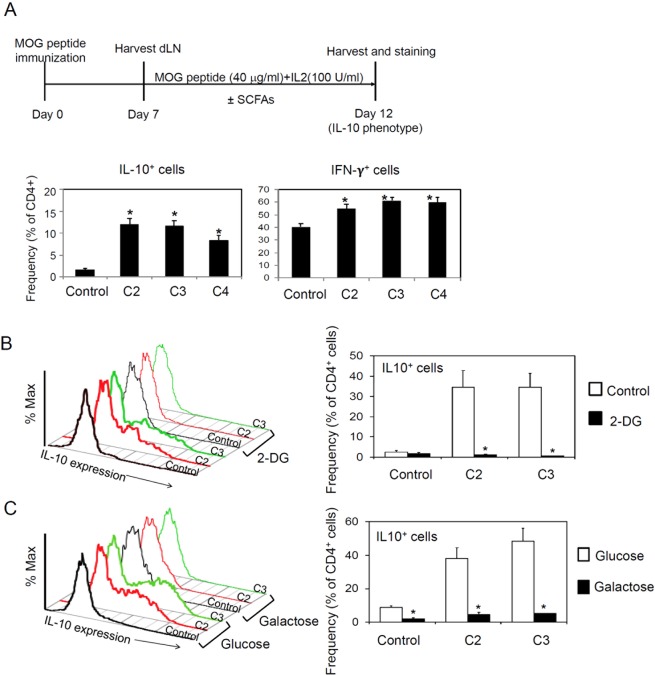
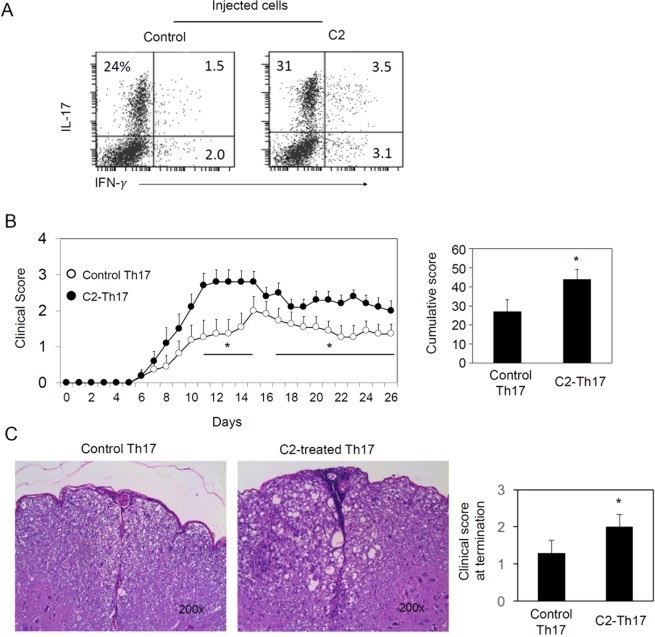
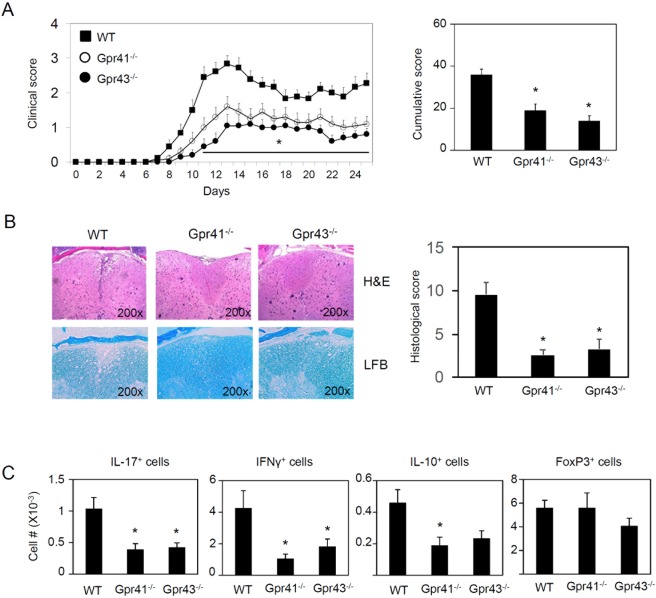
Microbial metabolites, produced in the intestine, have significant effects on inflammatory diseases throughout the body. Short-chain fatty acids (SCFAs) have protective effects on experimental autoimmune encephalitis (EAE) responses but the detailed roles of SCFAs and their receptors in regulating autoimmune CNS inflammation have been unclear. SCFAs metabolically regulate T cells and change the phenotype of antigen presenting cells to efficiently induce IL-10 regulatory T cells. In line with the overall protective effect, blood levels of major SCFAs, such as acetate, propionate and butyrate, are significantly decreased in long-term active progressive multiple sclerosis (MS) patients. Importantly, SCFAs can induce CD4 effector T cells, which are highly inflammatory when transferred into mice, suggesting that the direct effect of SCFAs on T cells can even be pro-inflammatory in the CNS. In contrast to the moderate protective effect of SCFAs, mice deficient in GPR41 or GPR43 are more resistant to EAE pathogenesis. Thus, despite the overall protective function of SCFAs, SCFAs and their receptors have the potential to regulate autoimmune CNS inflammation both positively and negatively.
肠道中产生的微生物代谢产物对全身炎症性疾病有重要影响。短链脂肪酸 (SCFA) 对实验性自身免疫性脑脊髓炎 (EAE) 反应具有保护作用,但 SCFA 及其受体在调节自身免疫性中枢神经系统炎症中的详细作用尚不清楚。SCFA 通过代谢调节 T 细胞并改变抗原呈递细胞的表型,从而有效地诱导 IL-10 调节性 T 细胞。与整体保护作用一致,在长期活动进展性多发性硬化症 (MS) 患者中,主要 SCFA(如乙酸盐、丙酸盐和丁酸盐)的血液水平显著降低。重要的是,SCFA 可以诱导 CD4 效应 T 细胞,当将这些细胞转移到小鼠中时,这些细胞具有高度炎症性,这表明 SCFA 对 T 细胞的直接作用甚至在中枢神经系统中也具有促炎作用。与 SCFA 的适度保护作用相反,缺乏 GPR41 或 GPR43 的小鼠对 EAE 发病机制的抵抗力更强。因此,尽管 SCFA 具有整体保护作用,但 SCFA 及其受体具有积极和消极调节自身免疫性中枢神经系统炎症的潜力。