Key Laboratory of Animal Virology of Ministry of Agriculture, College of Animal Sciences, Zhejiang University, Hangzhou 310058, China.
Departments of Physiology and Pharmacology, Bangabandhu Sheikh Mujibur Rahman Agricultural University, Gazipur 1706, Bangladesh.
Nutrients. 2019 Jun 23;11(6):1412. doi: 10.3390/nu11061412.
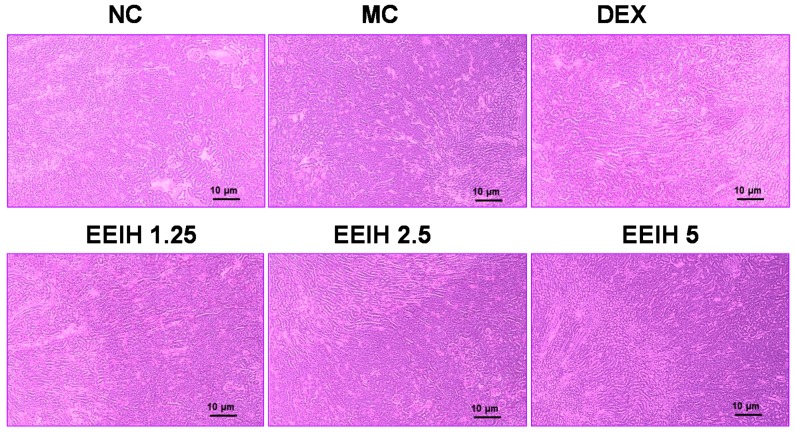
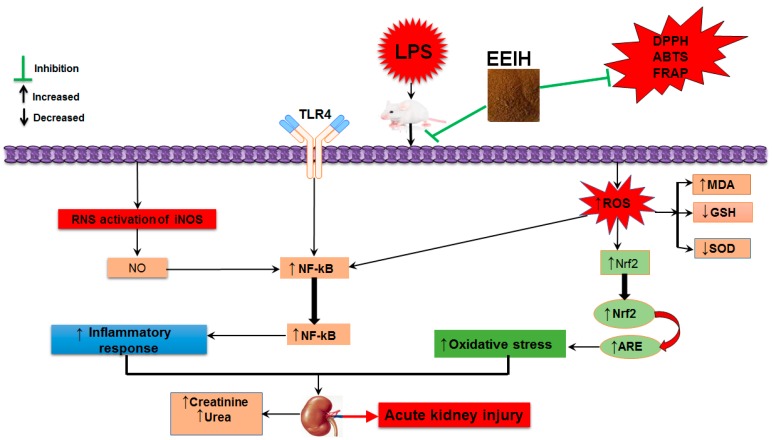
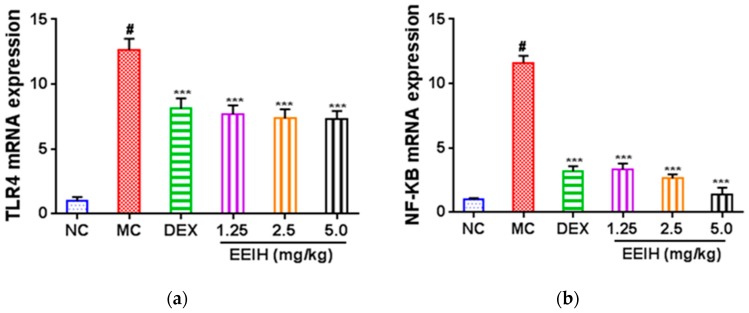
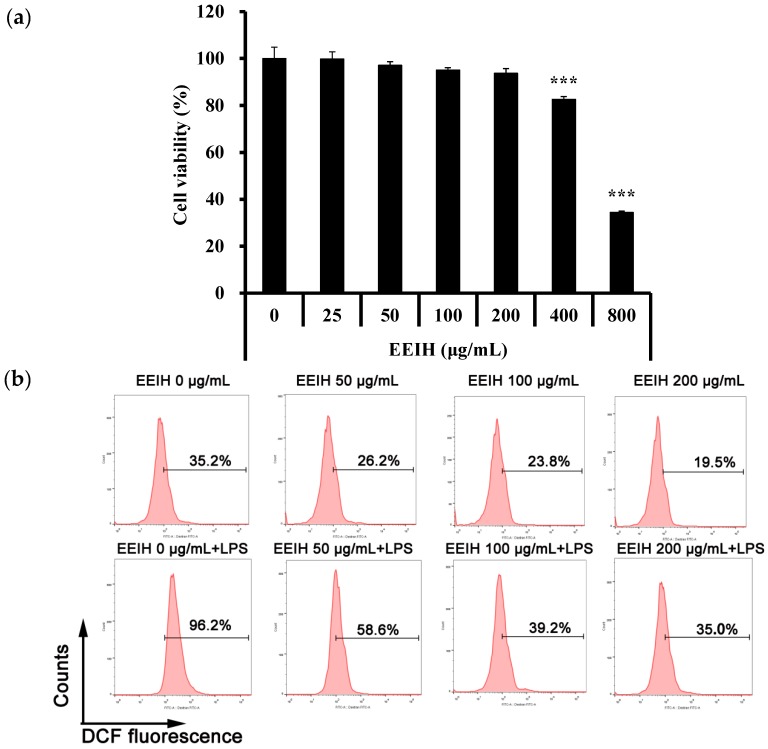
The root bark of has been used in traditional Chinese medicine to treat various diseases. Its ethanol extract (EEIH) was found to contain a large number of phenols and possess in vitro antioxidant activities. The present study aimed to investigate its protective effect against lipopolysaccharide (LPS)-induced acute kidney injury (AKI) in mice. BALB/c mice were intraperitoneally pretreated with EEIH for five days, and then LPS injection was applied to induce AKI. Blood samples and kidney tissues were collected and used for histopathology, biochemical assay, enzyme-linked immunosorbent assay (ELISA), quantitative real-time polymerase chain reaction (qRT-PCR), and Western blot analyses. EEIH not only significantly dose-dependently attenuated histological damage and reduced renal myeloperoxidase (MPO) activity (from 9.77 ± 0.73 to 0.84 ± 0.30 U/g tissue) but also decreased serum creatinine (from 55.60 ± 2.70 to 27.20 ± 2.39 µmol/L) and blood urea nitrogen (BUN) (from 29.95 ± 1.96 to 16.12 ± 1.24 mmol/L) levels in LPS-treated mice. EEIH also markedly dose-dependently inhibited mRNA expression and production of TNF-α (from 140.40 ± 5.15 to 84.74 ± 5.65 pg/mg), IL-1β (from 135.54 ± 8.20 to 77.15 ± 5.34 pg/mg), IL-6 (from 168.74 ± 7.23 to 119.16 ± 9.35 pg/mg), and COX-2 in renal tissue of LPS-treated mice via downregulating mRNA and protein expressions of toll-like receptor 4 (TLR4) and phosphorylation of nuclear factor-κB (NF-κB) p65. Moreover, EEIH significantly dose-dependently reduced malondialdehyde (MDA) (from 5.43 ± 0.43 to 2.80 ± 0.25 nmol/mg prot) and NO (from 1.01 ± 0.05 to 0.24 ± 0.05 µmol/g prot) levels and increased superoxide dismutase (SOD) (from 22.32 ± 2.92 to 47.59 ± 3.79 U/mg prot) and glutathione (GSH) (from 6.57 ± 0.53 to 16.89 ± 0.68 µmol/g prot) levels in renal tissue induced by LPS through upregulating mRNA expression of nuclear factor erythroid 2 related factor 2 (Nrf2). Furthermore, EEIH inhibited LPS-induced intracellular reactive oxygen species (ROS) production from RAW264.7 cells in a concentration-dependent manner. These results suggest that EEIH has protective effects against AKI in mice through regulating inflammation and oxidative stress.
已经从 的根皮中提取出乙醇提取物(EEIH),发现其含有大量酚类物质,具有体外抗氧化活性。本研究旨在探讨 EEIH 对脂多糖(LPS)诱导的急性肾损伤(AKI)小鼠的保护作用。BALB/c 小鼠连续 5 天腹腔内给予 EEIH 预处理,然后注射 LPS 诱导 AKI。收集血液样本和肾组织进行组织病理学、生化测定、酶联免疫吸附试验(ELISA)、实时定量聚合酶链反应(qRT-PCR)和 Western blot 分析。EEIH 不仅显著剂量依赖性地减轻了组织损伤,降低了肾髓过氧化物酶(MPO)活性(从 9.77±0.73 降至 0.84±0.30 U/g 组织),还降低了 LPS 处理小鼠的血清肌酐(从 55.60±2.70 降至 27.20±2.39 µmol/L)和血尿素氮(BUN)(从 29.95±1.96 降至 16.12±1.24 mmol/L)水平。EEIH 还显著剂量依赖性地抑制了 TNF-α(从 140.40±5.15 降至 84.74±5.65 pg/mg)、IL-1β(从 135.54±8.20 降至 77.15±5.34 pg/mg)、IL-6(从 168.74±7.23 降至 119.16±9.35 pg/mg)和 COX-2 在 LPS 处理小鼠肾组织中的表达,通过下调 TLR4 的 mRNA 和蛋白表达以及核因子-κB(NF-κB)p65 的磷酸化。此外,EEIH 还显著剂量依赖性地降低了 MDA(从 5.43±0.43 降至 2.80±0.25 nmol/mg prot)和 NO(从 1.01±0.05 降至 0.24±0.05 µmol/g prot)水平,增加了 SOD(从 22.32±2.92 升至 47.59±3.79 U/mg prot)和 GSH(从 6.57±0.53 升至 16.89±0.68 µmol/g prot)水平,通过上调核因子红细胞 2 相关因子 2(Nrf2)的 mRNA 表达。此外,EEIH 还抑制了 LPS 诱导的 RAW264.7 细胞内活性氧(ROS)的产生,呈浓度依赖性。这些结果表明,EEIH 通过调节炎症和氧化应激对 LPS 诱导的 AKI 具有保护作用。