Clinic of Maxillofacial Surgery, Pomeranian Medical University, Szczecin, Poland.
Department of Biochemistry and Human Nutrition, Pomeranian Medical University, Szczecin, Poland.
PLoS One. 2019 Jun 26;14(6):e0218246. doi: 10.1371/journal.pone.0218246. eCollection 2019.
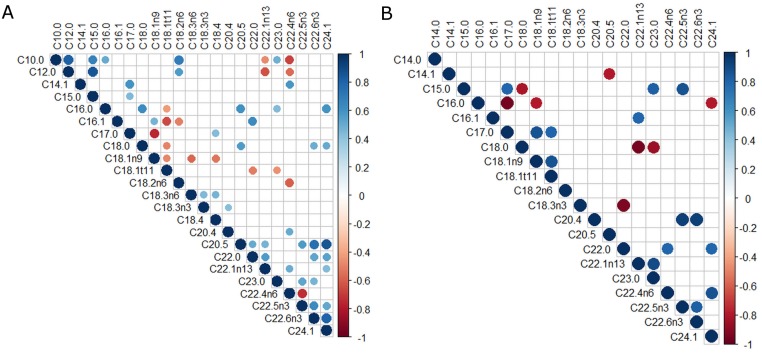
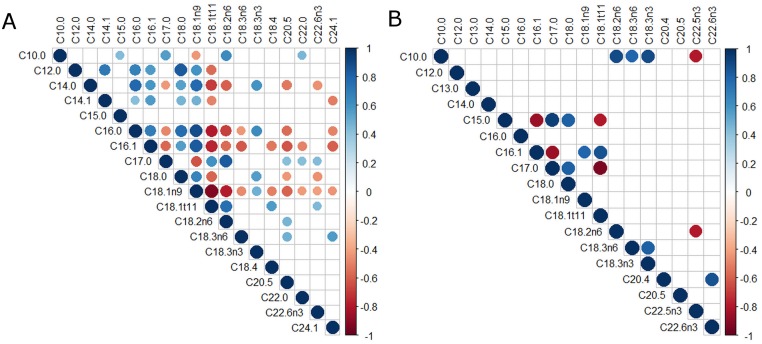
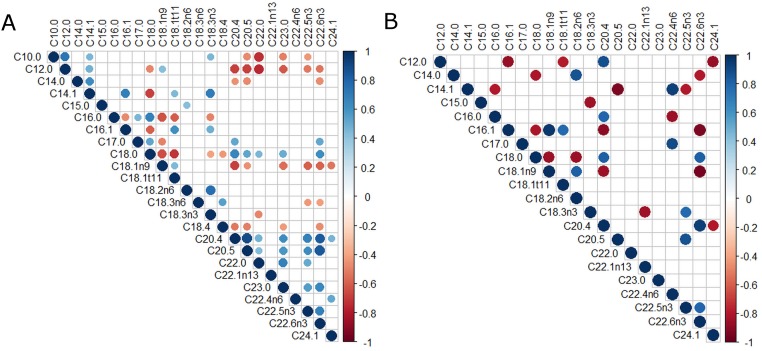
Squamous cell carcinoma of the oral cavity mucosa grows under conditions of poor oxygenation and nutrient scarcity. Reprogramming of lipid biosynthesis accompanies tumor growth, but the conditions under which it occurs are not fully understood. The fatty acid content of the serum, tumor tissue and adjacent tumor microenvironment was measured by gas chromatography in 30 patients with squamous cell carcinoma grade 1-3. Twenty-five fatty acids were identified; their frequencies and percentages in each of the environments were assessed. Nineteen of the twenty-five fatty acids were found in tumor tissue, tumor adjacent tissue and blood serum. Of them, 8 were found in all thirty patients. Percentages of C16:0 and C18:1n9 were highest in the tumor, C18:1n9 and C16:0 were highest in tumor adjacent tissue, and C16:0 and C18:0 were highest in blood serum. The frequencies and amounts of C22:1n13, C22:4n6, C22:5n3 and C24:1 in tumor adjacent tissues were higher than those in blood serum, independent of the tumor grade. The correlations between the amount of fatty acid and tumor grade were the strongest in tumor adjacent tissues. The correlations between particular fatty acids were most prevalent for grade 1+2 tumors and were strongest for grade 3 tumors. In the adjacent tumor microenvironment, lipogenesis was controlled by C22:6w3. In blood serum, C18:1trans11 limited the synthesis of long-chain fatty acids. Our research reveals intensive lipid changes in oral cavity SCC adjacent to the tumor microenvironment and blood serum of the patients. Increase in percentage of some of the FAs in the path: blood serum-tumor adjacent microenvironment-tumor, and it is dependent on tumor grade. This dependency is the most visible in the tumor adjacent environment.
口腔黏膜鳞状细胞癌在缺氧和营养匮乏的条件下生长。肿瘤生长伴随着脂质生物合成的重编程,但发生的条件尚不完全清楚。通过气相色谱法测量了 30 名 1-3 级鳞状细胞癌患者的血清、肿瘤组织和相邻肿瘤微环境中的脂肪酸含量。鉴定了 25 种脂肪酸;评估了它们在每个环境中的频率和百分比。在肿瘤组织、肿瘤相邻组织和血清中发现了 19 种脂肪酸。其中,有 8 种脂肪酸在所有 30 名患者中均被发现。在肿瘤中,C16:0 和 C18:1n9 的百分比最高,在肿瘤相邻组织中,C18:1n9 和 C16:0 的百分比最高,在血清中,C16:0 和 C18:0 的百分比最高。肿瘤相邻组织中 C22:1n13、C22:4n6、C22:5n3 和 C24:1 的频率和数量高于血清,而与肿瘤分级无关。肿瘤相邻组织中脂肪酸数量与肿瘤分级的相关性最强。特定脂肪酸之间的相关性在 1+2 级肿瘤中最为常见,在 3 级肿瘤中最强。在肿瘤相邻的微环境中,C22:6w3 控制脂肪生成。在血清中,C18:1trans11 限制长链脂肪酸的合成。我们的研究揭示了口腔鳞状细胞癌肿瘤微环境和患者血清中相邻肿瘤的脂质变化。一些 FA 的百分比增加,路径为:血清-肿瘤相邻微环境-肿瘤,并且与肿瘤分级有关。这种依赖性在肿瘤相邻环境中最为明显。