Department of Behavioural Science and Health, University College London, London, UK
Centre for Performance Science, Royal College of Music, London, UK.
BMJ Support Palliat Care. 2022 Oct;12(e4):e607-e615. doi: 10.1136/bmjspcare-2018-001642. Epub 2019 Jun 26.
Bereavement is associated with negative affective, cognitive, behavioural and physiological responses. However, factors, such as coping, self-efficacy and self-esteem, can buffer negative effects of grief, and can be increased through mutual support interventions, such as shared leisure activities. This study used a non-randomised controlled design to explore the effects of group choir singing on mental health among people who have been bereaved due to cancer.
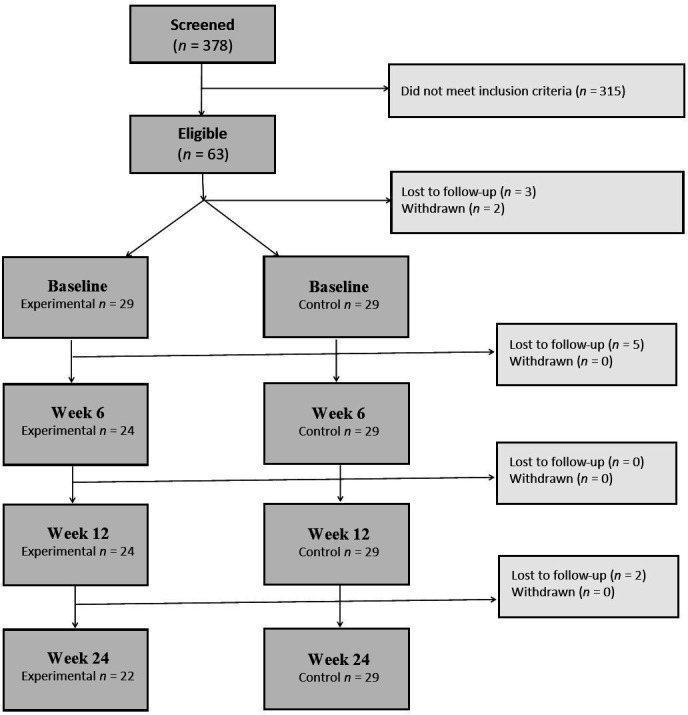
A total of 58 adults bereaved in the last 5 years who had not started psychological therapy in the last 12 weeks or medication for anxiety or depression in the last month were recruited and elected to join a choir (n=29) or participate in the non-intervention control group (n=29). Joining a choir involved engaging in 90 min weekly singing and social sessions for 12 weeks with a post-intervention assessment at week 24. We used linear mixed effects models adjusted for demographics, health-related variables, musical engagement and time since bereavement to model changes over time between the two groups in symptoms of anxiety, depression, well-being, self-efficacy and self-esteem.
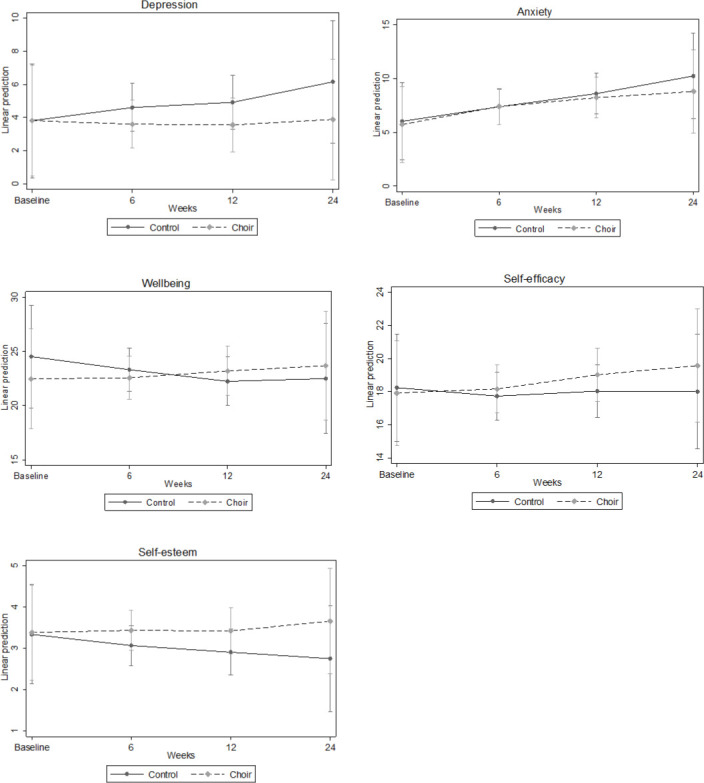
Participants who sang in a choir had more stable symptoms of depression and levels of well-being, as well as gradual improvements in their sense of self-efficacy and self-esteem over the 24 weeks. In contrast, those in the control group showed gradual increases in depressive symptoms, reductions in levels of well-being and self-esteem and no improvement in their self-efficacy. These results were independent of all covariates.
Weekly group singing could be a promising mutual support intervention for people experiencing grief.
NCT02756780.
丧亲会引起负面的情感、认知、行为和生理反应。然而,应对方式、自我效能感和自尊等因素可以缓冲悲伤的负面影响,并可以通过互助干预措施(如共同的休闲活动)来提高。本研究采用非随机对照设计,探讨了群体合唱对最近 5 年内因癌症而丧偶的人群心理健康的影响。
共招募了 58 名最近 5 年内丧偶、过去 12 周内未开始心理治疗或过去 1 个月内未服用焦虑或抑郁药物的成年人,并选择加入合唱团(n=29)或参加非干预对照组(n=29)。参加合唱团包括每周参与 90 分钟的唱歌和社交活动,共 12 周,并在 24 周时进行干预后评估。我们使用线性混合效应模型,根据人口统计学、健康相关变量、音乐参与和丧亲时间对数据进行调整,以模型化两组之间在焦虑、抑郁、幸福感、自我效能感和自尊方面的症状随时间的变化。
合唱团参与者的抑郁症状和幸福感水平更稳定,自我效能感和自尊水平逐渐提高,在 24 周内持续改善。相比之下,对照组参与者的抑郁症状逐渐加重,幸福感和自尊水平降低,自我效能感没有改善。这些结果独立于所有协变量。
每周的团体合唱可能是一种有前途的互助干预措施,适用于经历丧亲之痛的人群。
NCT02756780。