Ibrahim Alwathiqbellah, Jain Manav, Salman Emre, Willing Ryan, Towfighian Shahrzad
Binghamton University, Binghamton, NY 13902, USA.
Stony Brook University, Stony Brook, NY 11794, USA.
Smart Mater Struct. 2019 Feb;28(2). doi: 10.1088/1361-665X/aaf3f1. Epub 2019 Jan 25.
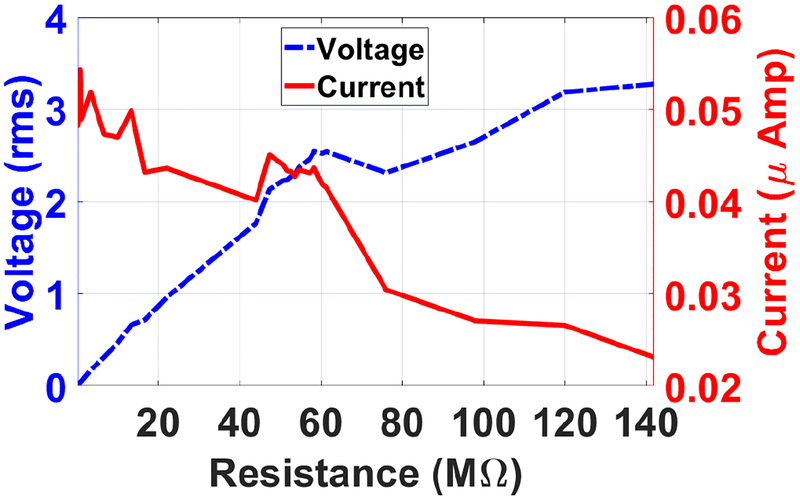
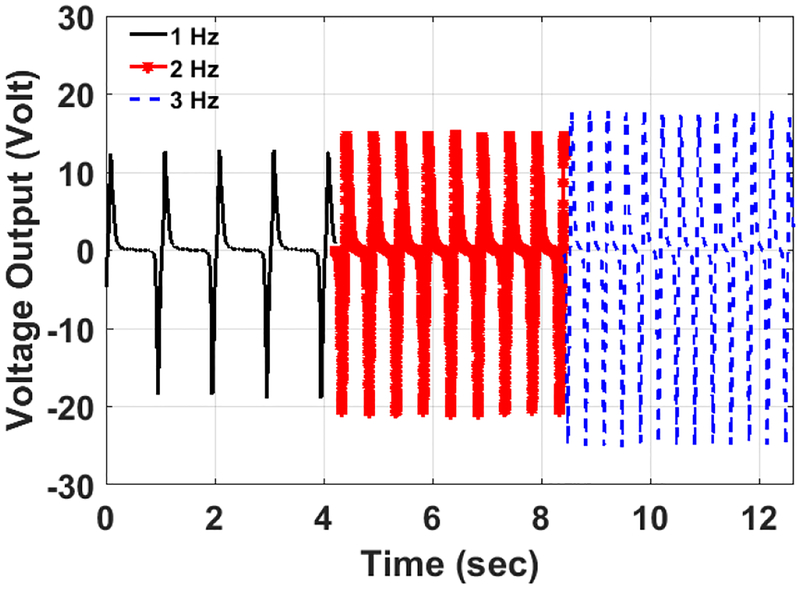
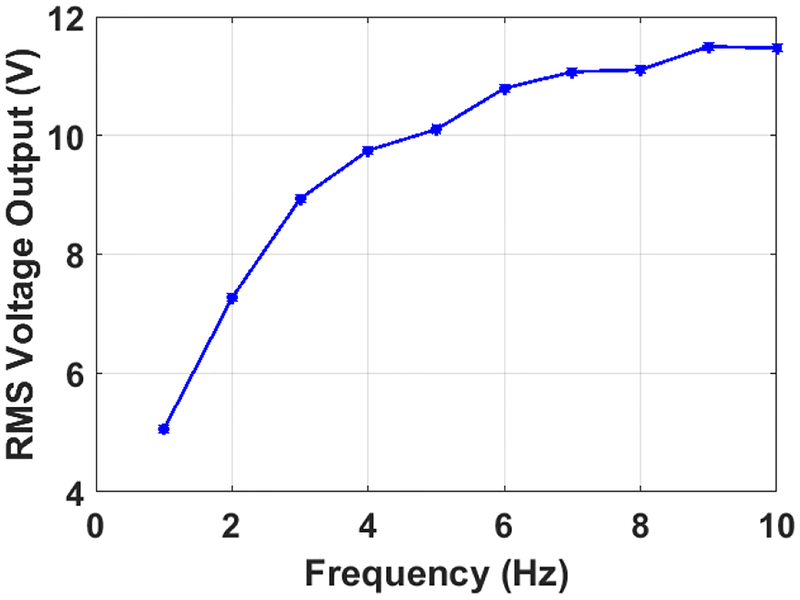
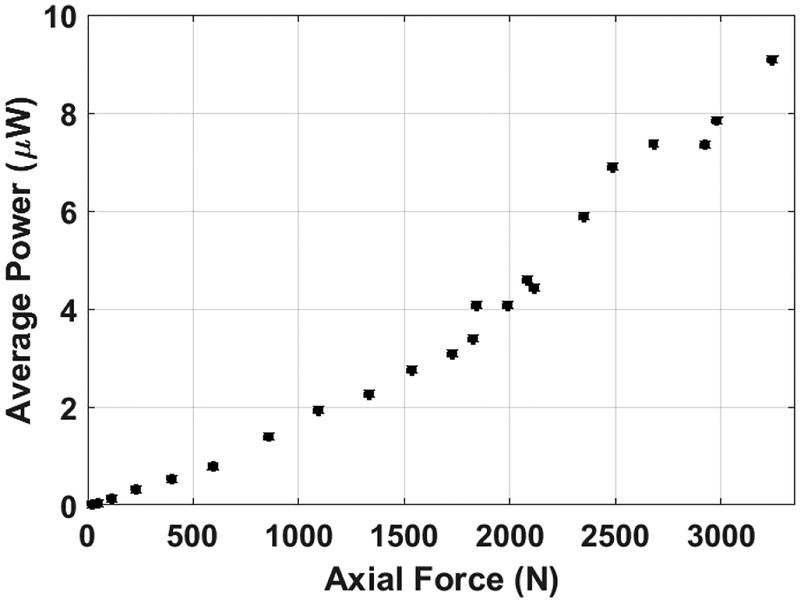
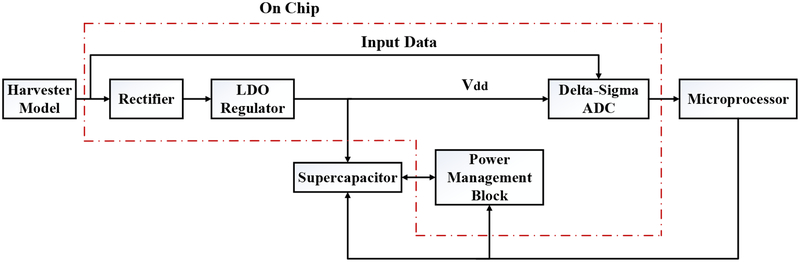
Although the number of total knee replacement (TKR) surgeries is growing rapidly, functionality and pain-reduction outcomes remain unsatisfactory for many patients. Continual monitoring of knee loads after surgery offers the potential to improve surgical procedures and implant designs. The goal of this study is to characterize a triboelectric energy harvester under body loads and to design compatible frontend electronics to digitize the load data. The harvester prototype would be placed between the tibial component and polyethylene bearing of a TKR implant. The harvester generates power from the compressive load. To examine the harvester output and the feasibility of powering a digitization circuitry, a triboelectric energy harvester prototype is fabricated and tested. An axial tibiofemoral load profile from normal walking (gait) is approximated as a 1 Hz sine wave signal and is applied to the harvester. Because the root mean square of voltages generated via this phenomenon is proportional to the applied load, the device can be simultaneously employed for energy harvesting and load sensing. With an approximated knee cyclic load of 2.3 kN at 1 Hz, the harvester generated output voltage of 18 RMS, and an average power of 6 at the optimal resistance of 58Ω. The harvested signal is rectified through a negative voltage converter rectifier and regulated through a linear-dropout regulator with a combined efficiency of 71%. The output of the regulator is used to charge a supercapacitor. The energy stored in the supercapacitor is used for low resolution sensing of the load through a peak detector and analog-to-digital converter. According to our analysis, sensing the load several times a day is feasible by relying only on harvested power. The results found from this work demonstrate that triboelectric energy harvesting is a promising technique for self-powering load sensors inside knee implants.
尽管全膝关节置换(TKR)手术的数量正在迅速增长,但对于许多患者来说,功能和疼痛减轻效果仍不尽人意。术后持续监测膝关节负荷有望改善手术程序和植入物设计。本研究的目的是表征一种在身体负荷下的摩擦电能量收集器,并设计兼容的前端电子设备以数字化负荷数据。该能量收集器原型将放置在TKR植入物的胫骨部件和聚乙烯轴承之间。能量收集器从压缩负荷中产生电能。为了检查能量收集器的输出以及为数字化电路供电的可行性,制作并测试了一个摩擦电能量收集器原型。正常行走(步态)时的轴向胫股负荷曲线近似为1 Hz的正弦波信号,并施加到能量收集器上。由于通过这种现象产生的电压均方根与施加的负荷成正比,该装置可同时用于能量收集和负荷传感。在1 Hz下近似膝关节循环负荷为2.3 kN时,能量收集器在58Ω的最佳电阻下产生的输出电压均方根为18 V,平均功率为6 μW。收集到的信号通过负电压转换器整流器进行整流,并通过线性降压调节器进行调节,综合效率为71%。调节器的输出用于为超级电容器充电。超级电容器中存储的能量通过峰值检测器和模数转换器用于低分辨率的负荷传感。根据我们的分析,仅依靠收集到的电能,每天对负荷进行几次传感是可行的。这项工作的结果表明,摩擦电能量收集是一种为膝关节植入物内部的自供电负荷传感器提供动力的有前途的技术。