Alliance for Health Policy and Systems Research, World Health Organization, Geneva, Switzerland.
Swedish Institute for Global Health Transformation, Royal Swedish Academy of Sciences, Stockholm, Sweden.
BMJ Open. 2019 Jul 1;9(7):e029407. doi: 10.1136/bmjopen-2019-029407.
Better understanding, documentation and evaluation of different refugee health interventions and their means of health system integration and intersectoral collaboration are needed.
Explore the barriers and facilitators to the integration of health services for refugees; the processes involved and the different stakeholders engaged in levaraging intersectoral approaches to protect refugees' right to health on resettlement.
Scoping review.
A search of articles from 2000 onward was done in MEDLINE, Web of Science, Global Health and PsycINFO, Embase. Two frameworks were applied in our analysis, the 'framework for analysing integration of targeted health interventions in systems' and 'Health in All Policies' framework for country action. A comprehensive description of the methods is included in our published protocol.
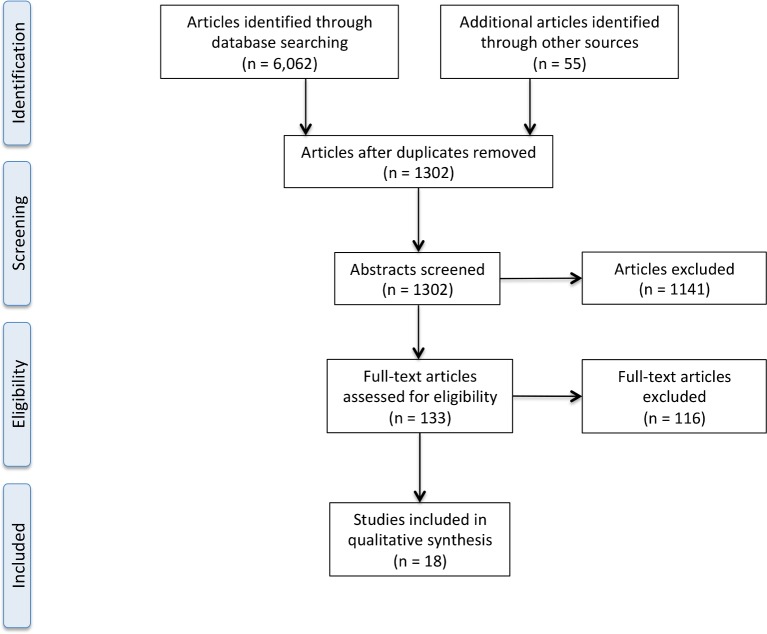
6117 papers were identified, only 18 studies met the inclusion criteria. Facilitators in implementation included: training for providers, colocation of services, transportation services to enhance access, clear role definitions and appropriate budget allocation and financing. Barriers included: lack of a participatory approach, insufficient resources for providers, absence of financing, unclear roles and insufficient coordination of interprofessional teams; low availability and use of data, and turf wars across governance stakeholders. Successful strategies to address refugee health included: networks of service delivery combining existing public and private services; system navigators; host community engagement to reduce stigma; translation services; legislative support and alternative models of care for women and children.
Limited evidence was found overall. Further research on intersectoral approaches is needed. Key policy insights gained from barriers and facilitators reported in available studies include: improving coordination between existing programmes; supporting colocation of services; establishing formal system navigator roles that connect relevant programmes; establishing formal translation services to improve access and establishing training and resources for providers.
需要更好地理解、记录和评估不同的难民健康干预措施及其融入卫生系统和部门间协作的手段。
探索为难民提供卫生服务方面的融合所面临的障碍和促进因素;所涉及的过程以及参与利用部门间方法促进难民在重新定居时的健康权的不同利益攸关方。
范围综述。
对 2000 年以来的 MEDLINE、Web of Science、全球卫生和 PsycINFO、Embase 中的文章进行了检索。我们的分析应用了两个框架,即“分析有针对性的卫生干预措施融入系统的框架”和“国家行动的健康全方位政策框架”。我们的已发表方案中包含了对方法的全面描述。
确定了 6117 篇论文,只有 18 项研究符合纳入标准。实施中的促进因素包括:为提供者提供培训、服务地点相邻、提供交通服务以增强可及性、明确角色定义和适当的预算分配和融资。障碍包括:缺乏参与式方法、提供者资源不足、缺乏资金、角色不明确以及专业人员团队之间协调不足;数据的可用性和使用性低,以及治理利益攸关方之间的地盘之争。解决难民健康问题的成功战略包括:提供服务的网络,整合现有的公共和私人服务;系统导航员;让收容社区参与以减少污名化;翻译服务;立法支持以及妇女和儿童替代护理模式。
总体而言,证据有限。需要进一步研究部门间方法。从现有研究报告的障碍和促进因素中获得的关键政策见解包括:改善现有方案之间的协调;支持服务地点相邻;建立正式的系统导航员角色,以连接相关方案;建立正式的翻译服务,以提高可及性并为提供者提供培训和资源。