Department of Genetics, Physiology and Microbiology, Faculty of Biology, Complutense University of Madrid, José Antonio Novais, 12, 28040, Madrid, Spain.
Department of Biodiversity, Ecology and Evolution, Faculty of Biology, Complutense University of Madrid, José Antonio Novais, 12, 28040, Madrid, Spain.
Sci Rep. 2019 Jul 2;9(1):9513. doi: 10.1038/s41598-019-45889-3.
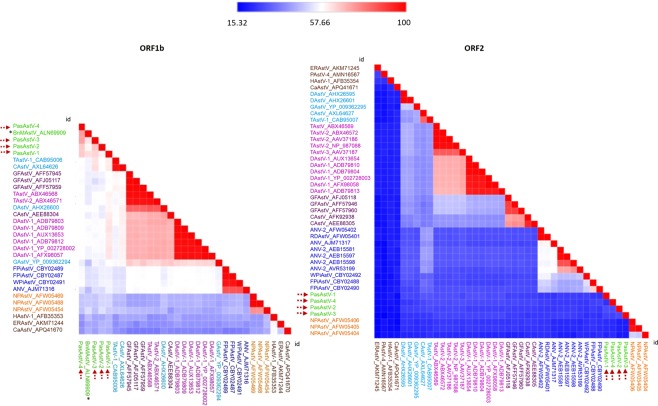
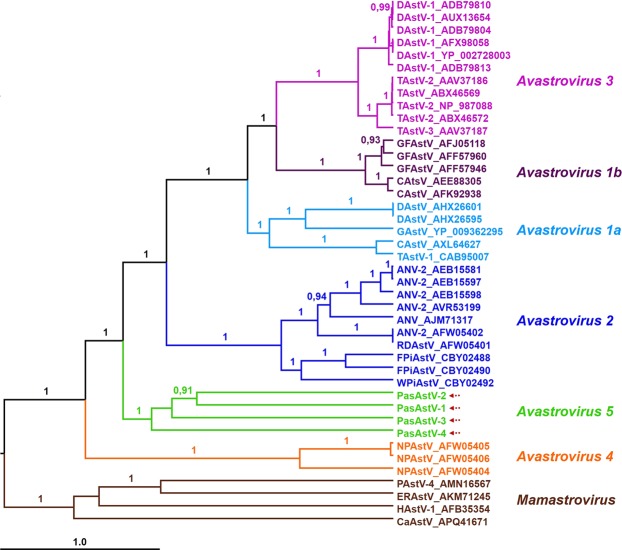
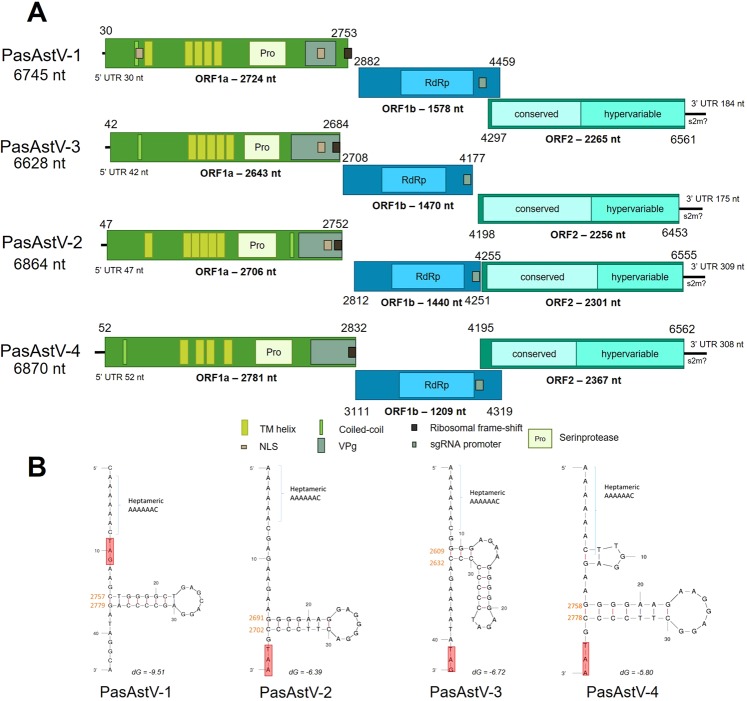
Metagenomics is helping to expand the known diversity of viruses, especially of those with poorly studied hosts in remote areas. The Neotropical region harbors a considerable diversity of avian species that may play a role as both host and short-distance vectors of unknown viruses. Viral metagenomics of cloacal swabs from 50 Neotropical birds collected in French Guiana revealed the presence of four complete astrovirus genomes. They constitute an early diverging novel monophyletic clade within the Avastrovirus phylogeny, representing a putative new astrovirus species (provisionally designated as Avastrovirus 5) according to the International Committee on Taxonomy of Viruses (ICTV) classification criteria. Their genomic organization shares some characteristics with Avastrovirus but also with Mamastrovirus. The pan-astrovirus RT-PCR analysis of the cloacal samples of 406 wild Neotropical birds showed a community-level prevalence of 4.9% (5.1% in passerines, the highest described so far in this order of birds). By screening birds of a remote region, we expanded the known host range of astroviruses to the avian families Cardinalidae, Conopophagidae, Furnariidae, Thamnophilidae, Turdidae and Tyrannidae. Our results provide important first insights into the unexplored viral communities, the ecology, epidemiology and features of host-pathogen interactions that shape the evolution of avastroviruses in a remote Neotropical rainforest.
宏基因组学有助于扩大病毒的已知多样性,特别是在偏远地区研究较少的宿主的病毒。新热带地区拥有丰富的鸟类多样性,这些鸟类可能既是宿主,也是未知病毒的短距离传播媒介。对来自法属圭亚那的 50 种新热带鸟类的泄殖腔拭子进行病毒宏基因组学分析,揭示了四种完整的星状病毒基因组的存在。它们在星状病毒系统发育中构成了一个早期分化的新单系群,根据国际病毒分类委员会(ICTV)的分类标准,代表一种假定的新星状病毒(暂定命名为星状病毒 5)。它们的基因组组织与星状病毒和哺乳动物星状病毒都有一些共同特征。对 406 只野生新热带鸟类泄殖腔样本的 pan-astrovirus RT-PCR 分析显示,病毒的社区流行率为 4.9%(雀形目鸟类为 5.1%,是迄今为止该鸟类目中描述的最高流行率)。通过对偏远地区鸟类的筛选,我们将星状病毒的已知宿主范围扩大到了雀形目科的鸟类,包括 Cardinalidae、Conopophagidae、Furnariidae、Thamnophilidae、Turdidae 和 Tyrannidae。我们的研究结果为探索性的病毒群落、生态学、流行病学以及宿主-病原体相互作用的特征提供了重要的初步见解,这些特征塑造了星状病毒在遥远的新热带雨林中的进化。