Remzova Monika, Zouzelka Radek, Brzicova Tana, Vrbova Kristyna, Pinkas Dominik, Rőssner Pavel, Topinka Jan, Rathousky Jiri
J. Heyrovsky Institute of Physical Chemistry of the CAS, Dolejskova 3, 18223 Prague, Czech Republic.
Institute of Experimental Medicine of the CAS, Videnska 1083, 14220 Prague, Czech Republic.
Nanomaterials (Basel). 2019 Jul 2;9(7):968. doi: 10.3390/nano9070968.
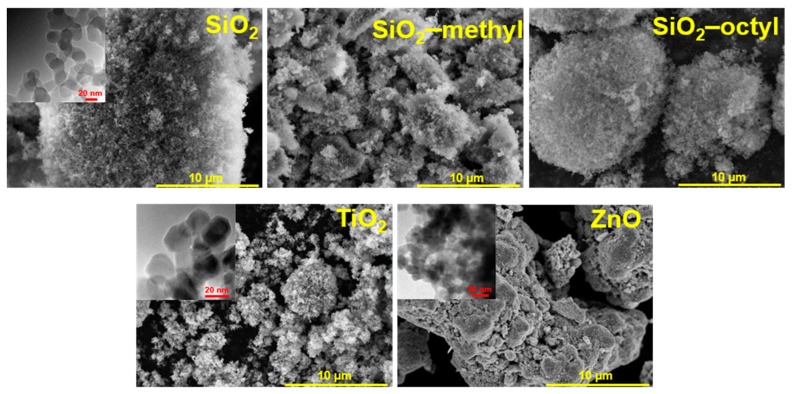
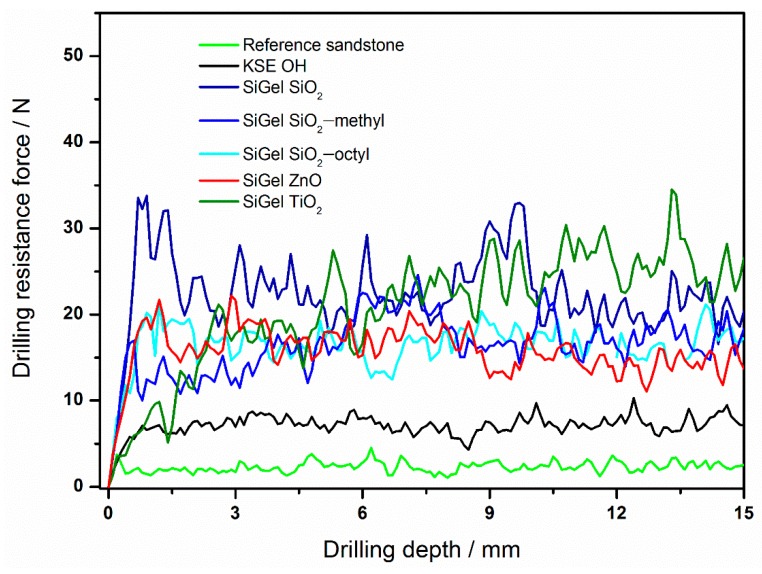
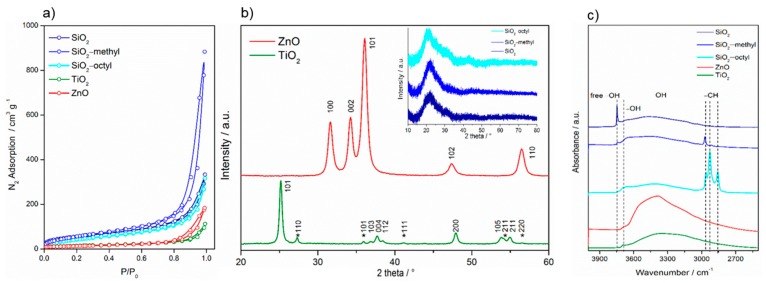
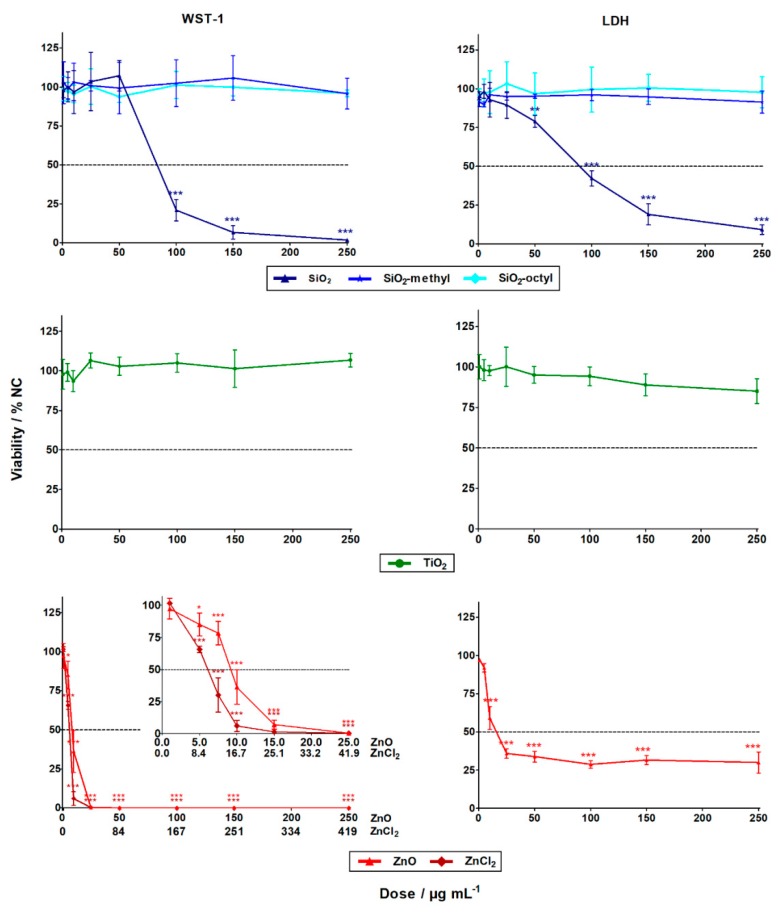
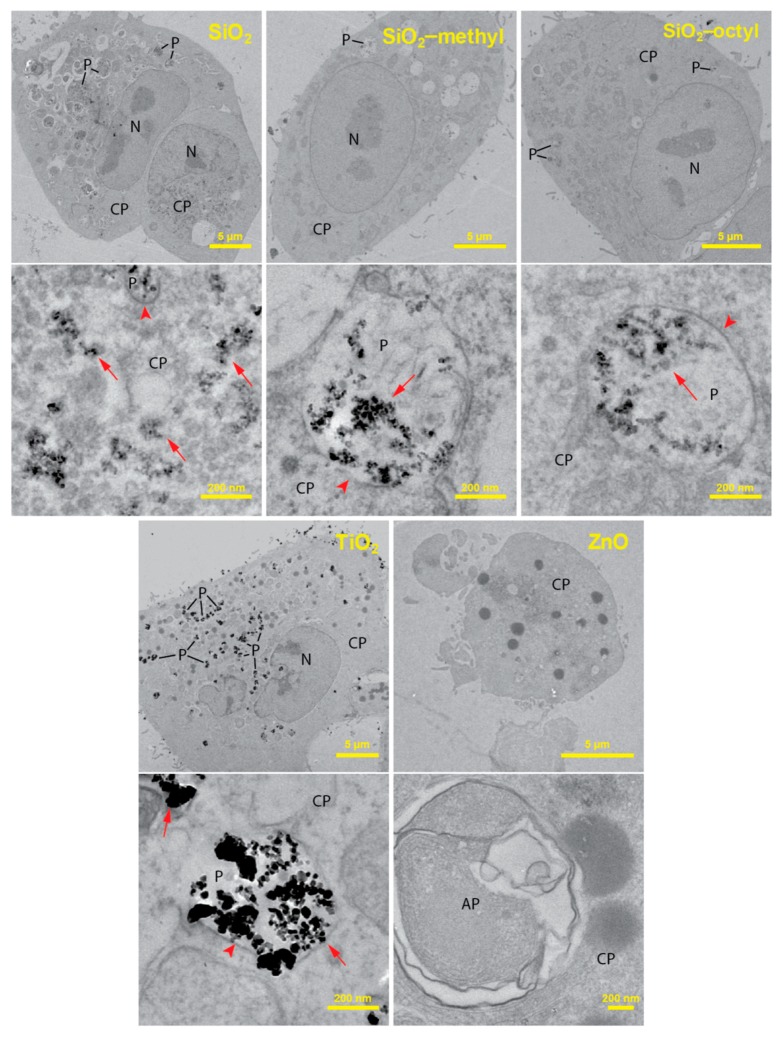
Rapid progress in the development of highly efficient nanoparticle-based construction technologies has not always been accompanied by a corresponding understanding of their effects on human health and ecosystems. In this study, we compare the toxicological effects of pristine TiO, ZnO, SiO, and coated SiO nanoparticles, and evaluate their suitability as additives to consolidants of weathered construction materials. First, water soluble tetrazolium 1 (WST-1) and lactate dehydrogenase (LDH) assays were used to determine the viability of human alveolar A549 cells at various nanoparticle concentrations (0-250 μg mL). While the pristine TiO and coated SiO nanoparticles did not exhibit any cytotoxic effects up to the highest tested concentration, the pristine SiO and ZnO nanoparticles significantly reduced cell viability. Second, as all developed nanoparticle-modified consolidants increased the mechanical strength of weathered sandstone, the decisive criterion for the selection of the most suitable nanoparticle additive was as low toxicity as possible. We believe that this approach would be of high importance in the industry, to identify materials representing top functional properties and low toxicity, at an early stage of the product development.
高效的基于纳米颗粒的建筑技术的快速发展,并不总是伴随着对其对人类健康和生态系统影响的相应理解。在本研究中,我们比较了原始TiO、ZnO、SiO以及包覆SiO纳米颗粒的毒理学效应,并评估它们作为风化建筑材料加固剂添加剂的适用性。首先,使用水溶性四氮唑盐1(WST-1)和乳酸脱氢酶(LDH)测定法来确定在各种纳米颗粒浓度(0 - 250μg/mL)下人类肺泡A549细胞的活力。虽然原始TiO和包覆SiO纳米颗粒在最高测试浓度下均未表现出任何细胞毒性作用,但原始SiO和ZnO纳米颗粒显著降低了细胞活力。其次,由于所有开发的纳米颗粒改性加固剂都提高了风化砂岩的机械强度,选择最合适纳米颗粒添加剂的决定性标准是尽可能低的毒性。我们认为,这种方法在行业中具有高度重要性,以便在产品开发的早期阶段识别出具有顶级功能特性和低毒性的材料。