Gunaratne Thejani M, Fuentes Sigfredo, Gunaratne Nadeesha M, Torrico Damir D, Gonzalez Viejo Claudia, Dunshea Frank R
University of Melbourne, School of Agriculture and Food, Faculty of Veterinary and Agricultural Sciences, VIC 3010, Australia.
Lincoln University, Department of Wine, Food and Molecular Biosciences, Faculty of Agriculture and Life Sciences, Lincoln 7647, New Zealand.
Foods. 2019 Jul 5;8(7):243. doi: 10.3390/foods8070243.
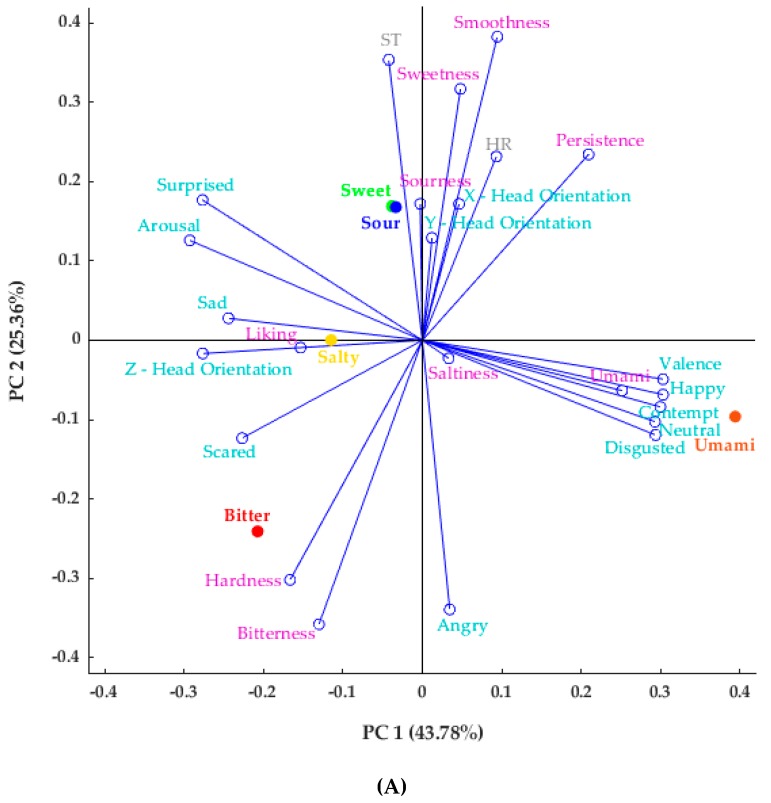
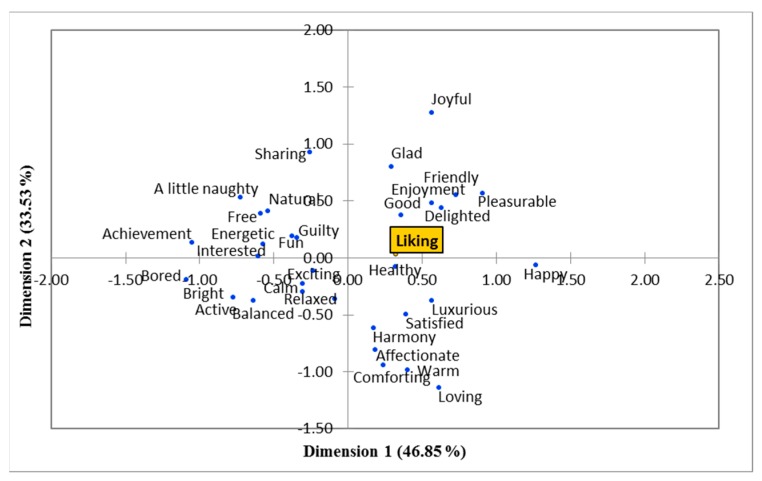
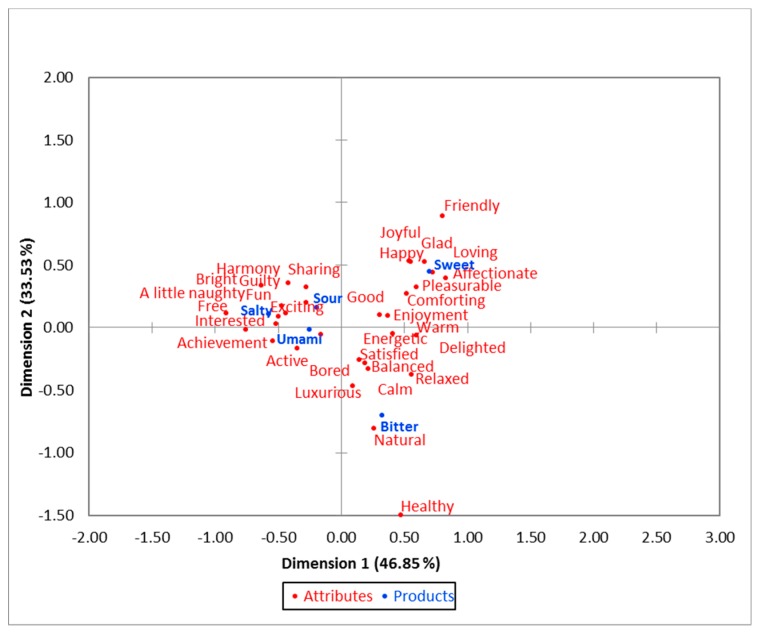
Facial expressions are in reaction to basic tastes by the response to receptor stimulation. The objective of this study was to assess the autonomic nervous system responses to basic tastes in chocolates and to identify relationships between conscious and unconscious responses from participants. Panelists ( = 45) tasted five chocolates with either salt, citric acid, sugar, or monosodium glutamate, which generated four distinctive basic tastes plus bitter, using dark chocolate. An integrated camera system, coupled with the Bio-Sensory application, was used to capture infrared thermal images, videos, and sensory responses. Outputs were used to assess skin temperature (ST), facial expressions, and heart rate (HR) as physiological responses. Sensory responses and emotions elicited during the chocolate tasting were evaluated using the application. Results showed that the most liked was sweet chocolate (9.01), while the least liked was salty chocolate (3.61). There were significant differences for overall liking ( < 0.05) but none for HR ( = 0.75) and ST ( = 0.27). Sweet chocolate was inversely associated with angry, and salty chocolate positively associated with sad. Positive emotion-terms were associated with sweet samples and liking in self-reported responses. Findings of this study may be used to assess novel tastes of chocolate in the industry based on conscious and emotional responses more objectively.
面部表情是通过对感受器刺激的反应来对基本味觉做出反应的。本研究的目的是评估自主神经系统对巧克力中基本味觉的反应,并确定参与者有意识和无意识反应之间的关系。45名小组成员品尝了五种含有盐、柠檬酸、糖或味精的巧克力,这些成分会产生四种独特的基本味觉再加上苦味,巧克力使用的是黑巧克力。一个集成摄像系统,与生物感官应用程序相结合,用于捕捉红外热图像、视频和感官反应。输出结果用于评估皮肤温度(ST)、面部表情和心率(HR)等生理反应。使用该应用程序评估巧克力品尝过程中引发的感官反应和情绪。结果显示,最喜欢的是甜巧克力(9.01),而最不喜欢的是咸巧克力(3.61)。总体喜好存在显著差异(P<0.05),但心率(P = 0.75)和皮肤温度(P = 0.27)无显著差异。甜巧克力与愤怒呈负相关,咸巧克力与悲伤呈正相关。在自我报告的反应中,积极的情绪词汇与甜的样品和喜好相关。本研究的结果可用于更客观地根据有意识和情感反应评估该行业中巧克力的新口味。