Research Institute of Child Development and Education, University of Amsterdam, Nieuwe Achtergracht 127, 1018 WS Amsterdam, The Netherlands.
Int J Environ Res Public Health. 2019 Jul 6;16(13):2404. doi: 10.3390/ijerph16132404.
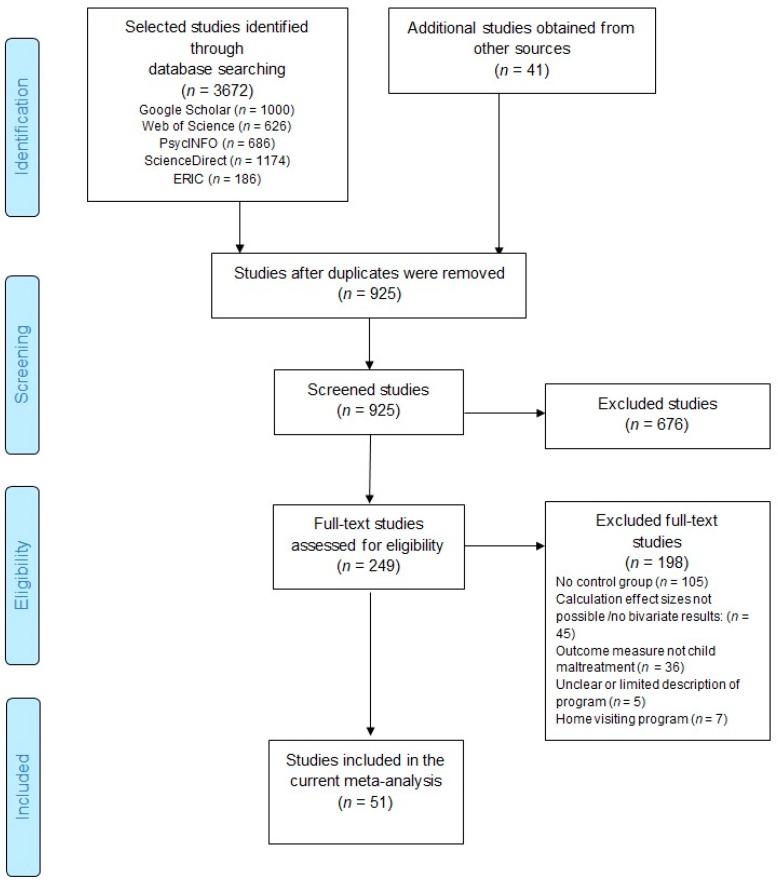
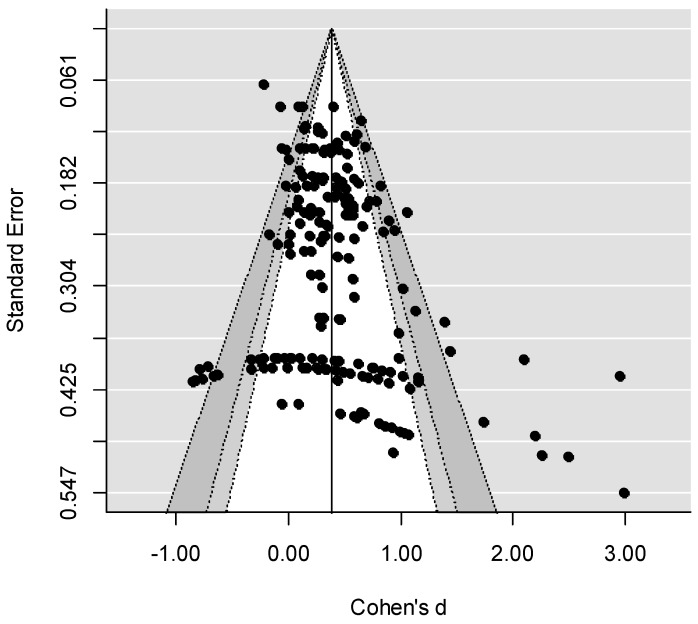
This is the first meta-analytic review investigating what components and techniques of parent training programs for preventing or reducing child maltreatment are associated with program effectiveness. A literature search yielded 51 studies ( = 6670) examining the effectiveness of parent training programs for preventing or reducing child maltreatment. From these studies, 185 effect sizes were extracted and more than 40 program components and techniques were coded. A significant and small overall effect size was found ( = 0.416, 95% CI (0.334, 0.498), < 0.001). No significant moderating effects were found for contextual factors and structural elements (i.e., program duration, delivery location, and delivery setting). Further, no significant moderating effects were found for most of the coded program components and techniques, indicating that these components are about equally effective. Only a few program components and techniques moderated program effectiveness, however these effects were negative. These results indicated that improving parental personal skills, improving problem solving skills, and stimulating children's prosocial behavior should not be the main focus of parental training programs for preventing and reducing child maltreatment. This also holds for practicing new skills by rehearsal and giving direct feedback in program sessions. Further clinical implications and directions for future research are discussed.
这是首次对预防或减少儿童虐待的父母培训计划的组成部分和技术进行元分析综述,以调查哪些因素与计划效果相关。文献检索产生了 51 项研究(=6670),这些研究调查了预防或减少儿童虐待的父母培训计划的效果。从这些研究中,提取了 185 个效应量,并对 40 多个计划组成部分和技术进行了编码。发现了一个显著的、小的总体效应量(=0.416,95%CI(0.334,0.498), < 0.001)。没有发现情境因素和结构元素(即计划持续时间、交付地点和交付环境)的调节作用。此外,编码的计划组成部分和技术中,大多数没有显著的调节作用,这表明这些组成部分的效果大致相同。然而,只有少数几个计划组成部分和技术调节了计划效果,但这些效果是负面的。这些结果表明,提高父母的个人技能、提高解决问题的技能以及激发孩子的亲社会行为不应该成为预防和减少儿童虐待的父母培训计划的主要重点。在课程中通过排练和直接反馈来练习新技能也不应作为主要关注点。进一步的临床意义和未来研究方向将进行讨论。