Wellcome Centre for Cell Biology, School of Biological Sciences, University of Edinburgh, Michael Swann Building, Max Born Crescent, Edinburgh EH9 3BF, UK.
Wellcome Centre for Cell Biology, School of Biological Sciences, University of Edinburgh, Michael Swann Building, Max Born Crescent, Edinburgh EH9 3BF, UK; Chair of Bioanalytics, Institute of Biotechnology, Technische Universität Berlin, Berlin 13355, Germany.
Curr Biol. 2019 Jul 8;29(13):2199-2207.e10. doi: 10.1016/j.cub.2019.05.058.
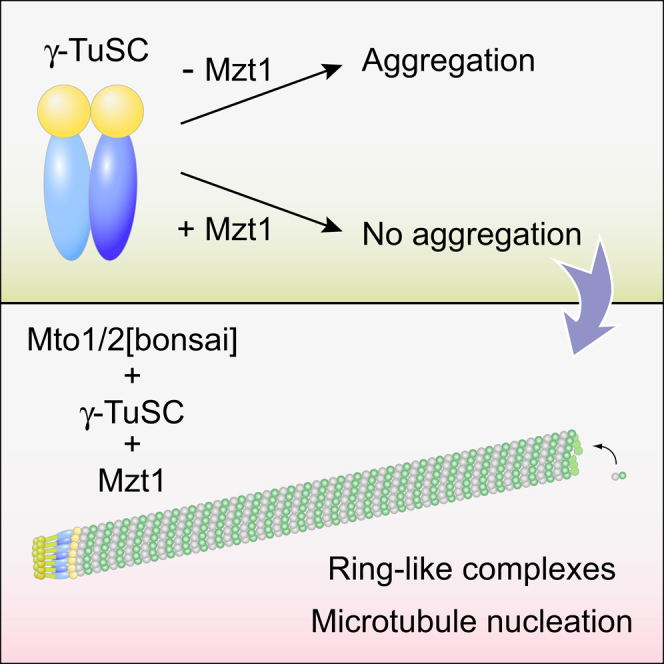
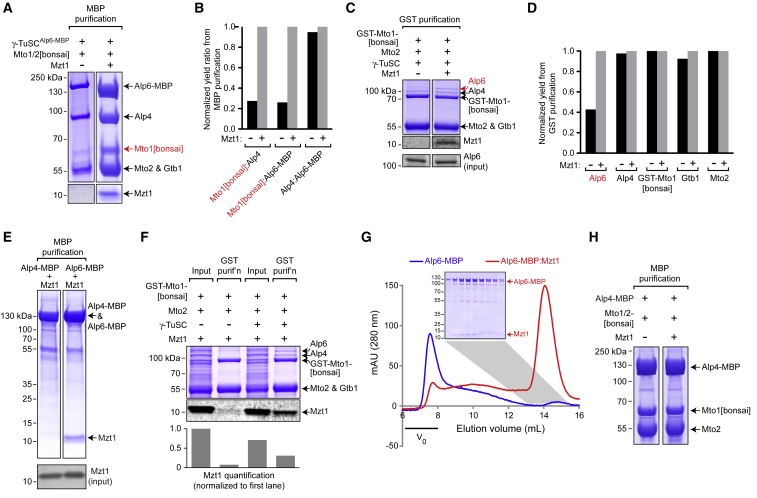
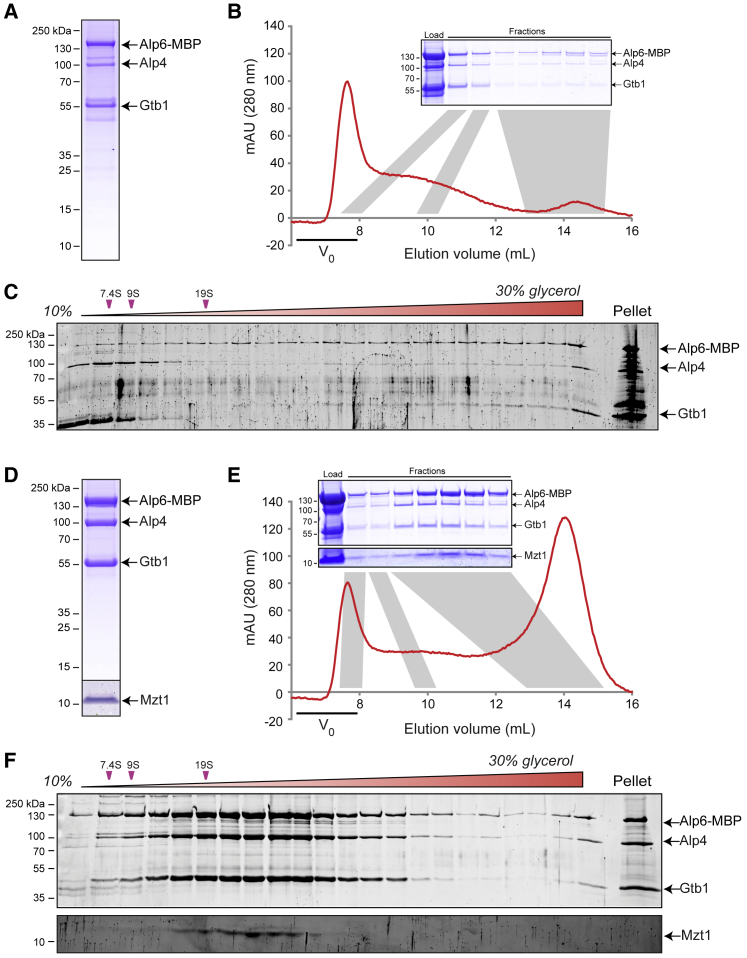
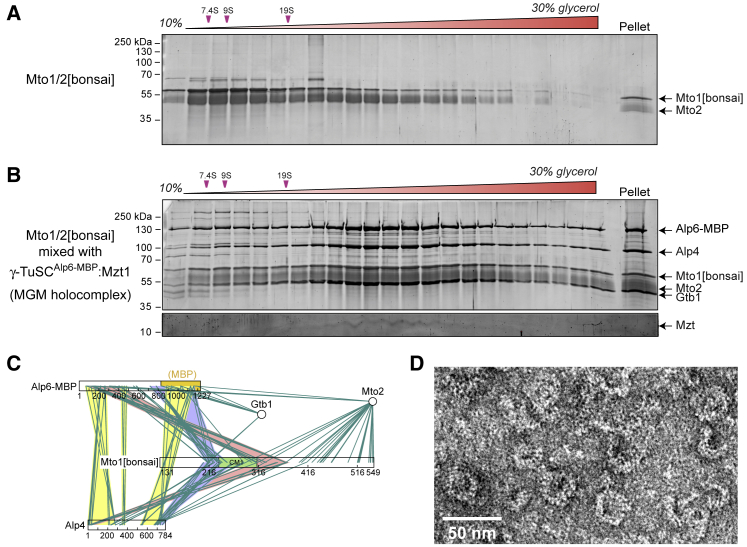
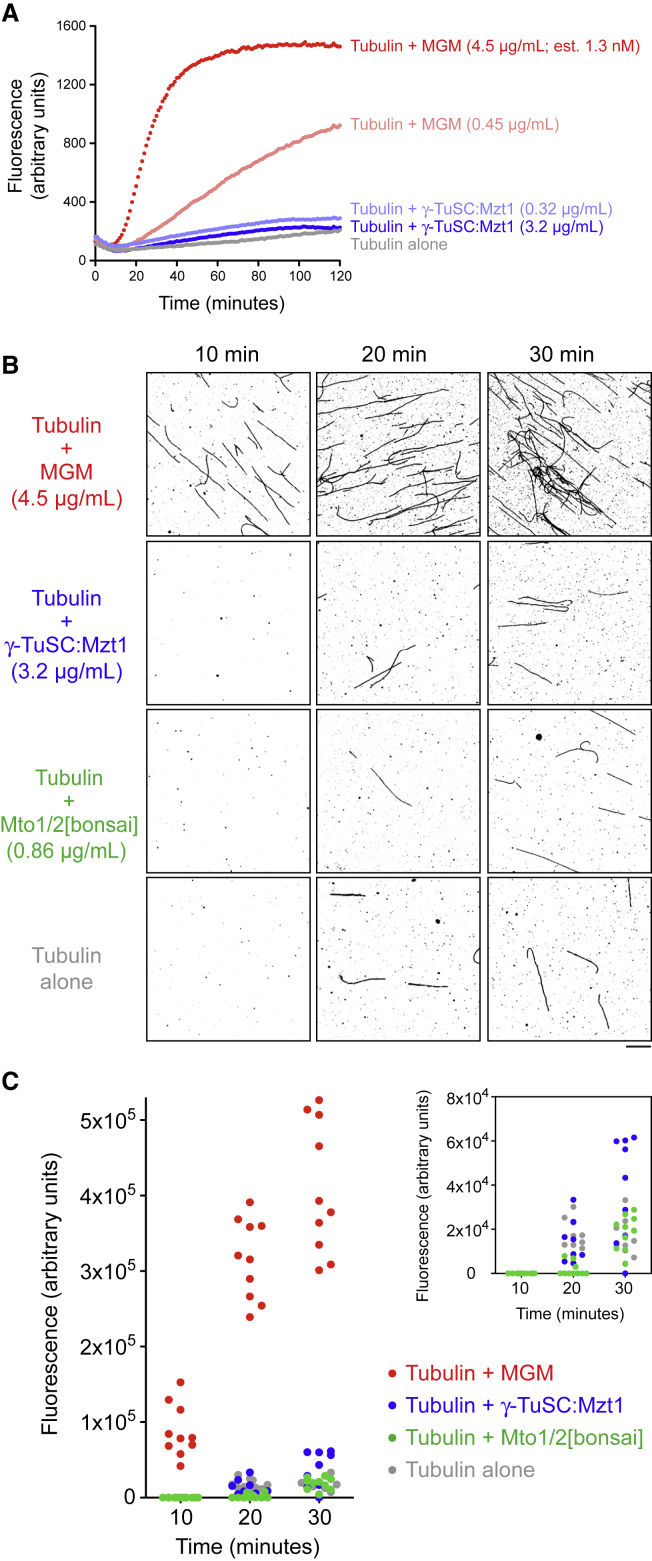
Microtubule (MT) nucleation depends on the γ-tubulin complex (γ-TuC), in which multiple copies of the heterotetrameric γ-tubulin small complex (γ-TuSC) associate to form a ring-like structure (in metazoans, γ-tubulin ring complex; γ-TuRC) [1-7]. Additional conserved regulators of the γ-TuC include the small protein Mzt1 (MOZART1 in human; GIP1/1B and GIP2/1A in plants) [8-13] and proteins containing a Centrosomin Motif 1 (CM1) domain [10, 14-19]. Many insights into γ-TuC regulators have come from in vivo analysis in fission yeast Schizosaccharomyces pombe. The S. pombe CM1 protein Mto1 recruits the γ-TuC to microtubule-organizing centers (MTOCs) [14, 20-22], and analysis of Mto1[bonsai], a truncated version of Mto1 that cannot localize to MTOCs, has shown that Mto1 also has a role in γ-TuC activation [23]. S. pombe Mzt1 interacts with γ-TuSC and is essential for γ-TuC function and localization to MTOCs [11, 12]. However, the mechanisms by which Mzt1 functions remain unclear. Here we describe reconstitution of MT nucleation using purified recombinant Mto1[bonsai], the Mto1 partner protein Mto2, γ-TuSC, and Mzt1. Multiple copies of the six proteins involved coassemble to form a 34-40S ring-like "MGM" holocomplex that is a potent MT nucleator in vitro. Using purified MGM and subcomplexes, we investigate the role of Mzt1 in MT nucleation. Our results suggest that Mzt1 is critical to stabilize Alp6, the S. pombe homolog of human γ-TuSC protein GCP3, in an "interaction-competent" form within the γ-TuSC. This is essential for MGM to become a functional nucleator.
微管(MT)的成核依赖于γ-微管蛋白复合物(γ-TuC),其中多个异四聚体γ-微管蛋白小复合物(γ-TuSC)组装形成环状结构(在后生动物中,γ-微管蛋白环复合物;γ-TuRC)[1-7]。γ-TuC 的其他保守调节因子包括小蛋白 Mzt1(人类中的 MOZART1;植物中的 GIP1/1B 和 GIP2/1A)[8-13]和含有中心体基质 1 结构域(CM1)的蛋白[10、14-19]。许多关于 γ-TuC 调节因子的认识来自裂殖酵母 Schizosaccharomyces pombe 的体内分析。裂殖酵母的 CM1 蛋白 Mto1 将 γ-TuC 募集到微管组织中心(MTOCs)[14、20-22],并且分析 Mto1[bonsai],一种不能定位到 MTOCs 的 Mto1 的截断版本,表明 Mto1 也在 γ-TuC 激活中起作用[23]。裂殖酵母 Mzt1 与 γ-TuSC 相互作用,对 γ-TuC 的功能和定位到 MTOCs 至关重要[11、12]。然而,Mzt1 发挥作用的机制仍不清楚。在这里,我们使用纯化的重组 Mto1[bonsai]、Mto1 伴侣蛋白 Mto2、γ-TuSC 和 Mzt1 重建了 MT 成核。涉及的六个蛋白质的多个拷贝共同组装形成 34-40S 环状“MGM”全复合物,在体外是一种有效的 MT 成核剂。使用纯化的 MGM 和亚复合物,我们研究了 Mzt1 在 MT 成核中的作用。我们的结果表明,Mzt1 对于稳定 Alp6(人类 γ-TuSC 蛋白 GCP3 的裂殖酵母同源物)在 γ-TuSC 中处于“相互作用能力”形式至关重要,这对于 MGM 成为功能性成核剂是必不可少的。