Department of Oral Medicine, Peking University School and Hospital of Stomatology, 22 South Zhongguancun Avenue, Haidian District, Beijing, 100081, People's Republic of China.
Department of Diagnostic Sciences, Arthur A. Dugoni School of Dentistry, University of the Pacific, 155 Fifth Street, San Francisco, CA, USA.
BMC Oral Health. 2019 Jul 10;19(1):140. doi: 10.1186/s12903-019-0841-2.
To systematically review and assess the in vivo effectiveness and safety of probiotics for prophylaxis and treating oral candidiasis.
A literature search for studies published in English until August 1, 2018 was conducted in the following databases: PubMed, EMBASE, Cochrane Library, and Web of Science. Randomized controlled clinical trials and experimental mouse animal model studies comparing probiotics (at any dosage and in any form) with control groups (placebo, blank control or other agents) and reporting outcomes of the prophylactic and therapeutic effects were considered for inclusion. A descriptive study and, potentially, a meta-analysis were planned.
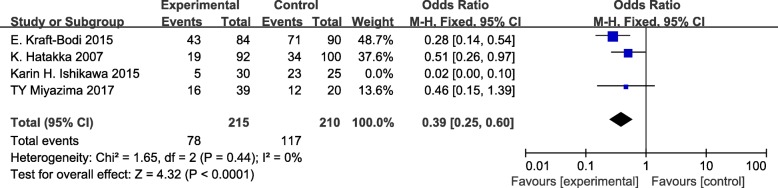
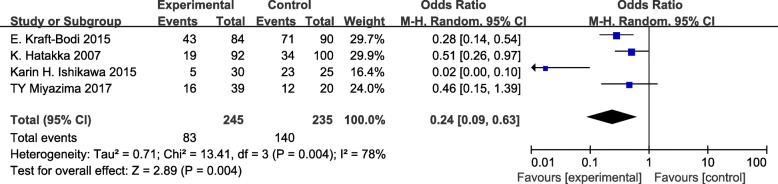
Six randomized controlled clinical trials and 5 controlled experiments of mouse animal models were included in the systematic review. Four randomized controlled clinical trials comparing a probiotics group with a placebo/blank control group in 480 elderly and denture wearers were included in the meta-analysis. The overall combined odds ratio of the (random effects) meta-analysis was 0.24 (95% CI =0.09-0.63, P < 0.01). The overall combined odds ratio of the (fixed effects) sensitivity analysis was 0.39 (95% CI =0.25-0.60, P < 0.01) by excluding a study with the smallest sample size. These analyses showed that there was a statistically significant difference in the effect of probiotics compared with the control groups in elderly and denture wearers. The remaining 2 studies compared probiotics with other agents in a population aged 18-75 years and children aged 6-14 years respectively, and were analyzed descriptively. Meta-analysis and descriptive analyses indicated that probiotics were potentially effective in reducing morbidity, improving clinical symptoms and reducing oral Candida counts in oral candidiasis. The biases of the included studies were low or uncertain. The relatively common complaints reported were gastrointestinal discomfort and unpleasant taste, and no severe adverse events were reported.
Probiotics were superior to the placebo and blank control in preventing and treating oral candidiasis in the elderly and denture wearers. Although probiotics showed a favorable effect in treating oral candidiasis, more evidence is required to warrant their effectiveness when compared with conventional antifungal treatments. Moreover, data on the safety of probiotics are still insufficient, and further research is needed.
系统回顾和评估益生菌预防和治疗口腔念珠菌病的体内有效性和安全性。
在以下数据库中进行了截至 2018 年 8 月 1 日发表的英文文献检索:PubMed、EMBASE、Cochrane 图书馆和 Web of Science。纳入了比较益生菌(任何剂量和任何形式)与对照组(安慰剂、空白对照或其他药物)并报告预防和治疗效果的随机对照临床试验和实验性小鼠动物模型研究。计划进行描述性研究和(潜在)荟萃分析。
系统评价纳入了 6 项随机对照临床试验和 5 项小鼠动物模型对照实验。荟萃分析纳入了 4 项比较益生菌组与安慰剂/空白对照组在 480 名老年和义齿佩戴者中的随机对照临床试验。(随机效应)荟萃分析的总合并优势比为 0.24(95%CI=0.09-0.63,P<0.01)。通过排除样本量最小的一项研究进行(固定效应)敏感性分析的总合并优势比为 0.39(95%CI=0.25-0.60,P<0.01)。这些分析表明,益生菌与对照组在老年和义齿佩戴者中的效果存在统计学显著差异。其余 2 项研究分别在 18-75 岁人群和 6-14 岁儿童中比较了益生菌与其他药物的效果,进行了描述性分析。荟萃分析和描述性分析表明,益生菌在降低口腔念珠菌病的发病率、改善临床症状和减少口腔念珠菌计数方面具有潜在疗效。纳入研究的偏倚较低或不确定。报告的相对常见的不良反应是胃肠道不适和味觉不佳,未报告严重不良事件。
益生菌在预防和治疗老年和义齿佩戴者的口腔念珠菌病方面优于安慰剂和空白对照。虽然益生菌在治疗口腔念珠菌病方面显示出良好的效果,但与常规抗真菌治疗相比,还需要更多的证据来证明其有效性。此外,益生菌安全性的数据仍然不足,需要进一步研究。