Instituto de Investigaciones Biológicas del Trópico, Universidad de Córdoba, Montería, Córdoba, Colombia.
Clínica Salud Social, Sincelejo, Sucre, Colombia.
Sci Rep. 2019 Jul 10;9(1):9970. doi: 10.1038/s41598-019-45981-8.
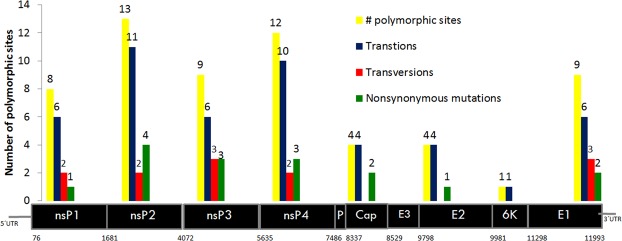
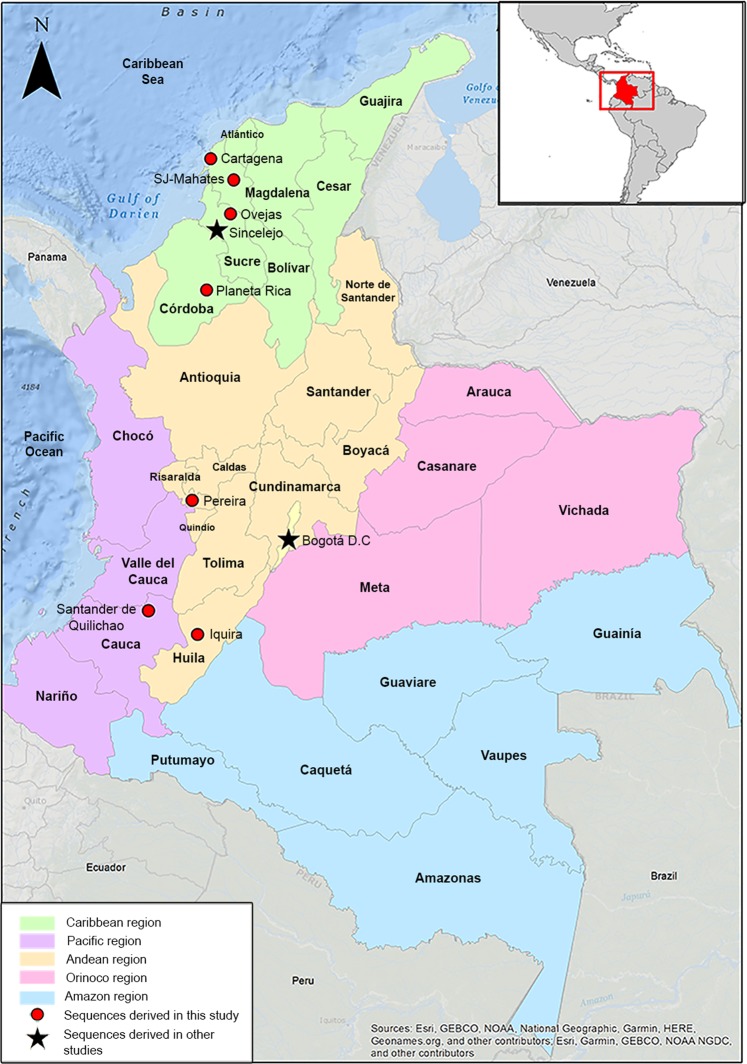
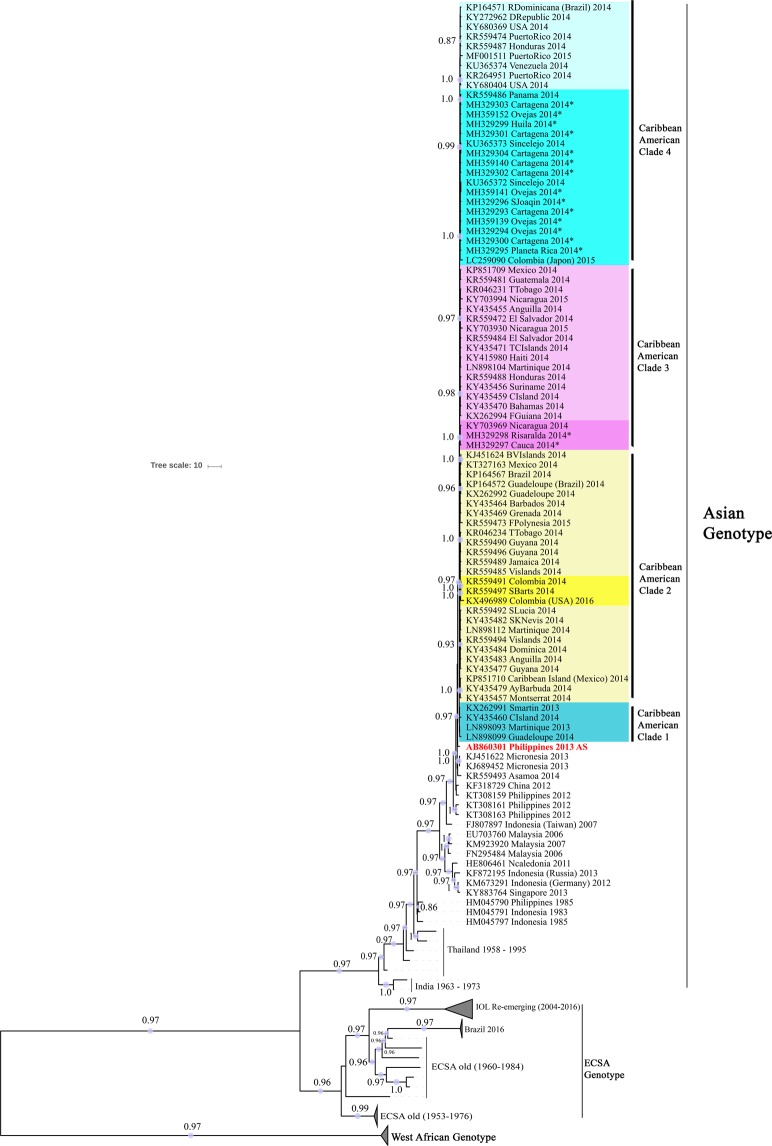
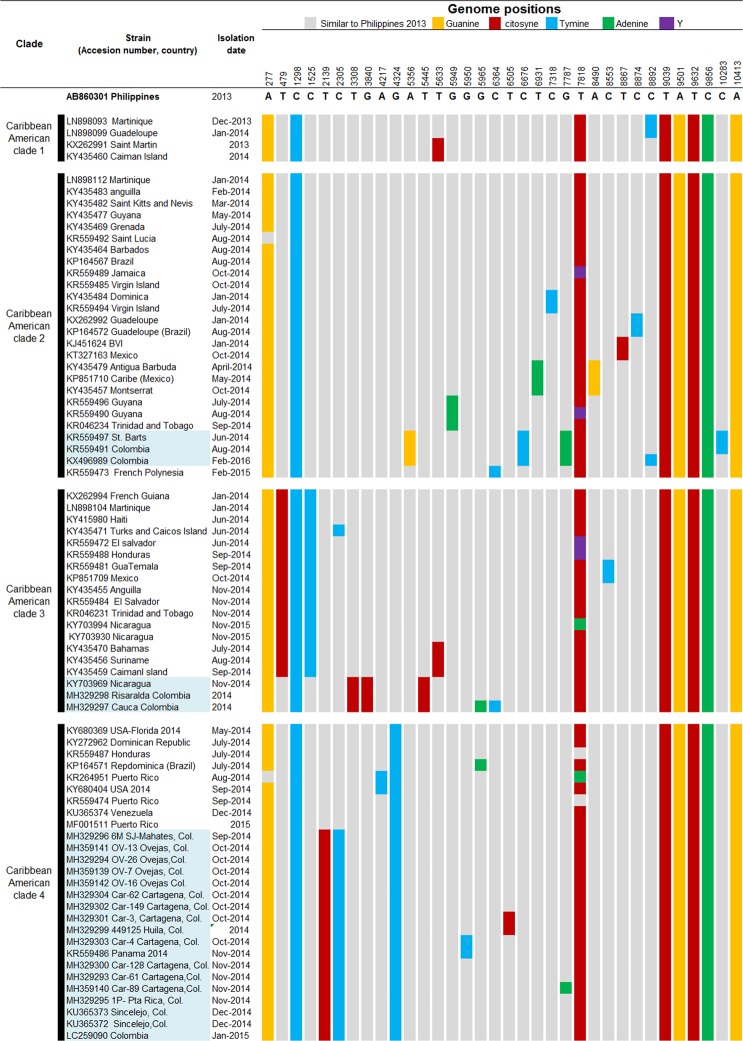
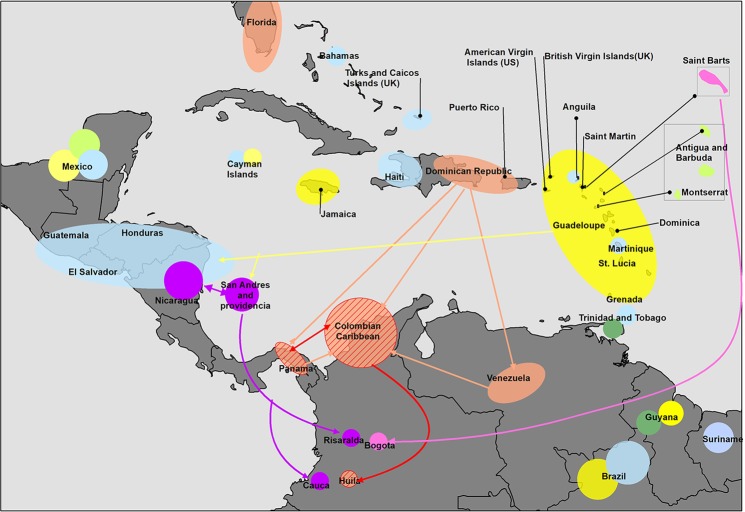
Chikungunya virus (CHIKV) is considered a public health problem due to its rapid spread and high morbidity. This study aimed to determine the genetic diversity and phylogenetic relationships of CHIKVs in Colombia. A descriptive and retrospective study was carried out using sera of patients infected with Chikungunya during the outbreak in Colombia. The whole genomes of CHIKV (n = 16) were sequenced with an Illumina Hi-seq 2500 and were assembled using the Iterative Virus Assembler software. A Bayesian inference phylogenetic analysis was carried out with 157 strains of worldwide origin. The Colombian CHIKV sequences were grouped in the Asian genotype; however, three independent phylogenetic subclades were observed, probably the result of three separate introductions from Panama, Nicaragua, and St. Barts. Each subclade showed several different non-synonymous mutations (nsP2-A153V; nsp2-Y543H; nsp2-G720A; nsP3-L458P; Capside R78Q), that may have functional consequences for CHIKV biology and pathogenesis. These same mutations may affect the efficacy of potential CHIKV vaccines.
基孔肯雅热病毒(CHIKV)因其传播迅速和高发病率而被视为公共卫生问题。本研究旨在确定哥伦比亚 CHIKV 的遗传多样性和系统发育关系。使用哥伦比亚基孔肯雅热爆发期间感染基孔肯雅热的患者的血清进行了描述性和回顾性研究。使用 Illumina Hi-seq 2500 对 CHIKV(n=16)的全基因组进行测序,并使用迭代病毒组装软件进行组装。使用来自全球的 157 株进行贝叶斯推断系统发育分析。哥伦比亚 CHIKV 序列被分组为亚洲基因型;然而,观察到三个独立的系统发育亚分支,可能是巴拿马、尼加拉瓜和圣巴茨三次独立传入的结果。每个亚分支显示出几个不同的非同义突变(nsP2-A153V;nsp2-Y543H;nsp2-G720A;nsP3-L458P;衣壳 R78Q),这可能对 CHIKV 生物学和发病机制有功能影响。这些相同的突变可能会影响潜在的 CHIKV 疫苗的效果。