Peng Yan, Singh Mukesh Kumar, Mereacre Valeriu, Anson Christopher E, Rajaraman Gopalan, Powell Annie K
Institute of Inorganic Chemistry , Karlsruhe Institute of Technology , Engesserstrasse 15 , 76131 Karlsruhe , Germany . Email:
Institute of Nanotechnology , Karlsruhe Institute of Technology , Postfach 3640 , 76021 Karlsruhe , Germany.
Chem Sci. 2019 Apr 16;10(21):5528-5538. doi: 10.1039/c8sc05362f. eCollection 2019 Jun 7.
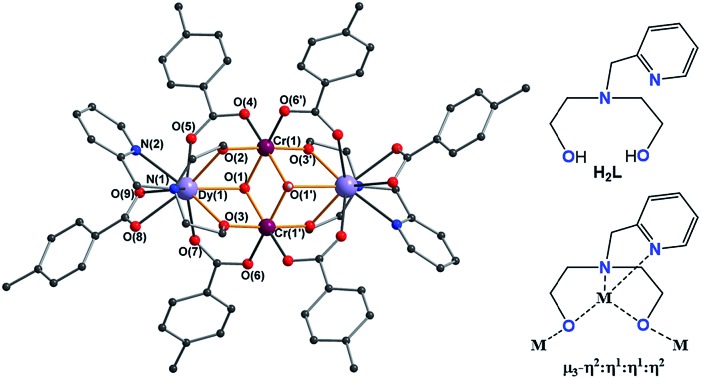
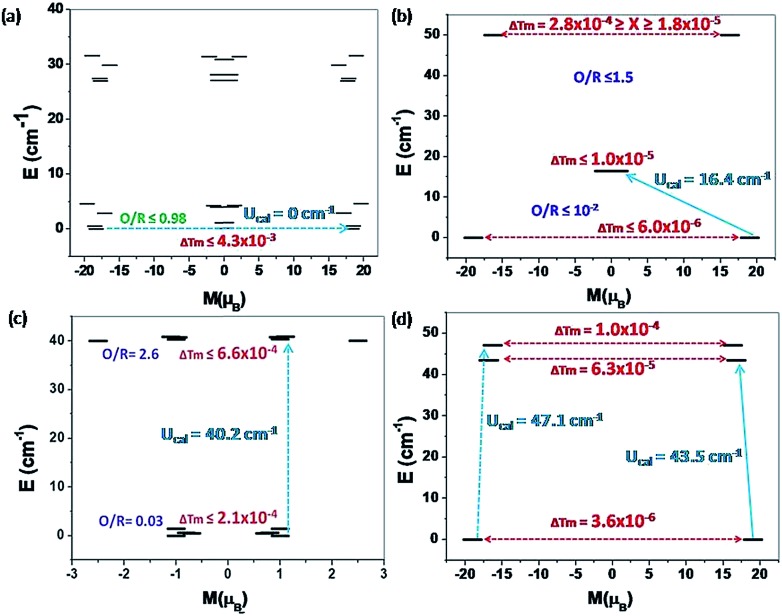
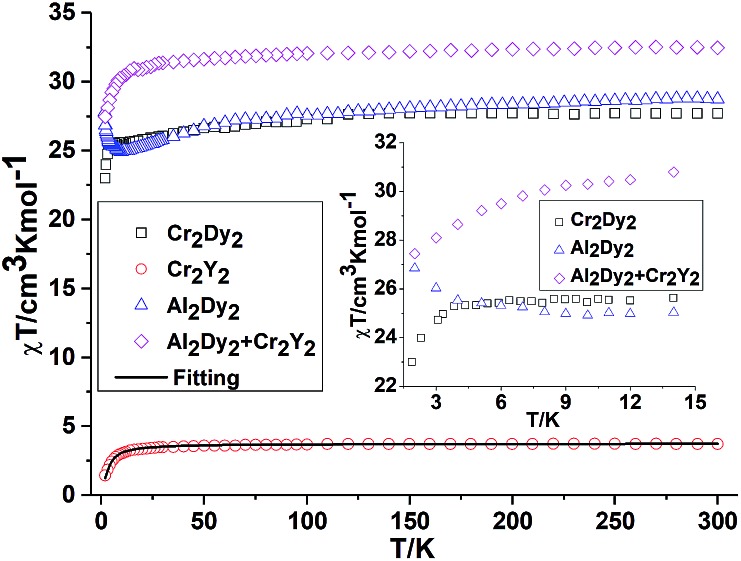
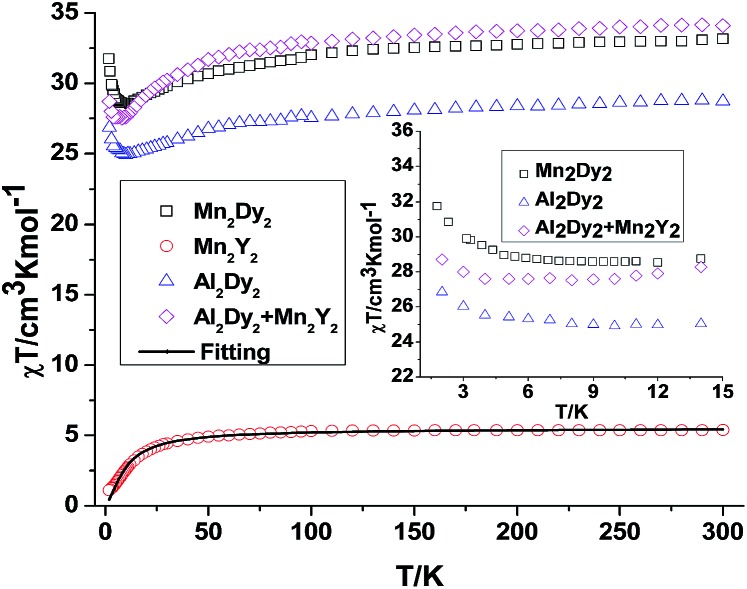
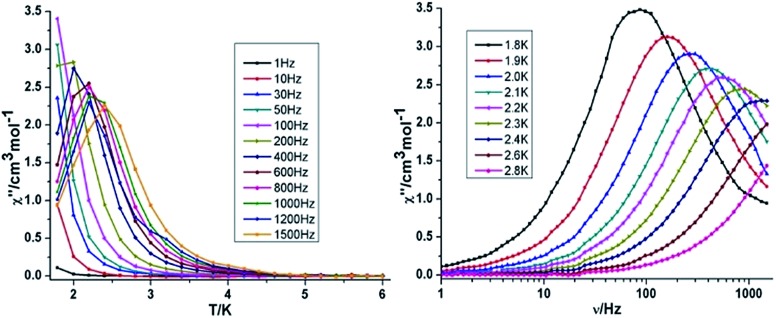
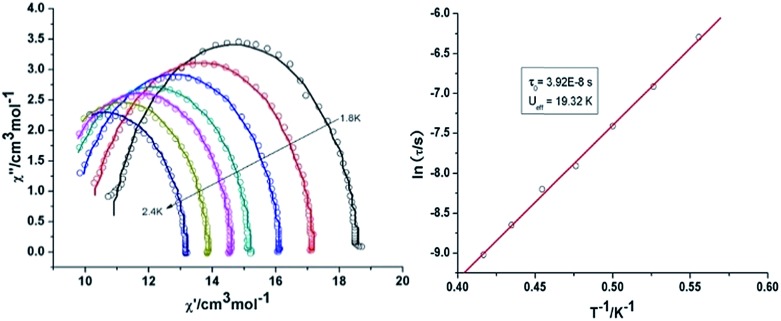
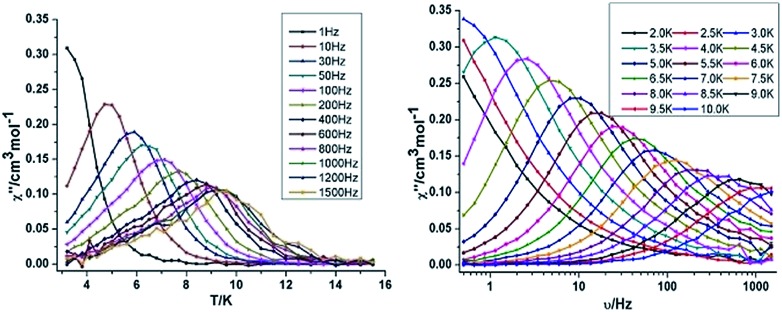
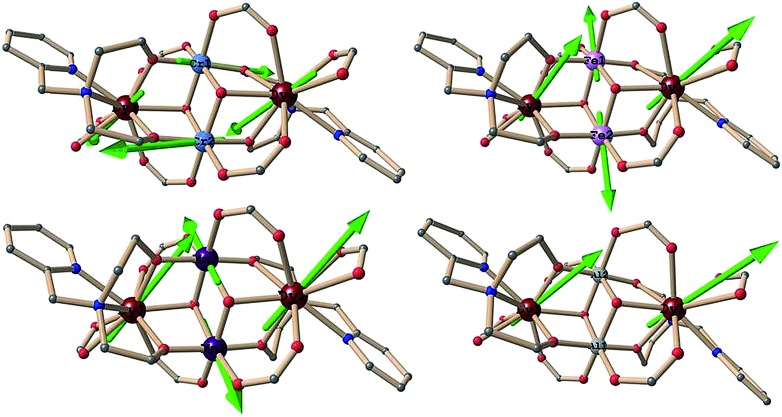
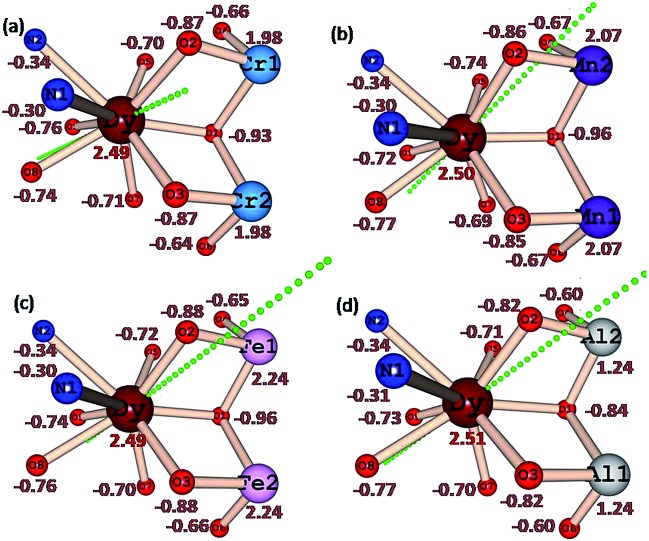
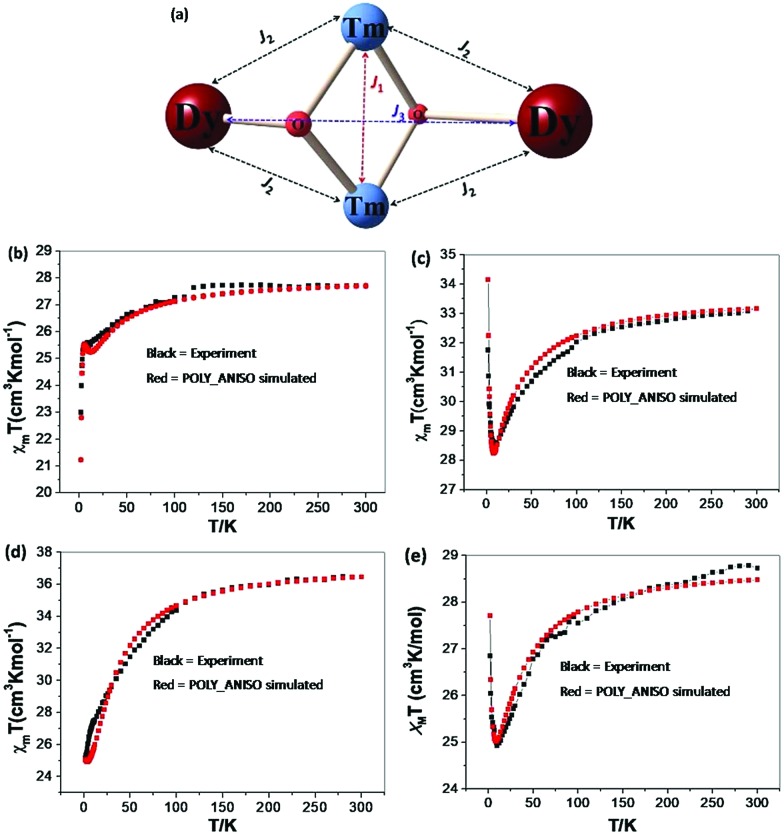
We describe the synthesis, characterisation and magnetic studies of four tetranuclear, isostructural "butterfly" heterometallic complexes: [MIII2LnIII2(μ-OH)(-Me-PhCO)(L)] (HL = 2,2'-((pyridin-2-ylmethyl)azanediyl)bis(ethan-1-ol), M = Cr, Ln = Dy (), Y (), M = Mn, Ln = Dy (), Y ()), which extend our previous study on the analogous {FeDy}, {FeY} and {AlDy} compounds. We also present data on the yttrium diluted {AlDy}: {AlDyY}. Compounds dc and ac magnetic susceptibility data reveal single-molecule magnet (SMM) behaviour for complex {MnDy}, in the absence of an external magnetic field, with an anisotropy barrier of 19.2 K, while complex {CrDy}, shows no ac signals even under applied dc field, indicating absence of SMM behaviour. The diluted sample {AlDyY} shows field induced SMM behaviour with an anisotropy barrier of 69.3 K. Furthermore, the theoretical magnetic properties of [MIII2LnIII2(μ-OH)(-Me-PhCO)(L)] (M = Cr, or Mn, ) and their isostructural complexes: [MIII2DyIII2(μ-OH)(-Me-PhCO)(L)] (M = Fe, or Al, ) are discussed and compared. To understand the experimental observations for this family, DFT and CASSCF + RASSI-SO calculations were performed. The experimental and theoretical calculations suggest that altering the 3d ions can affect the single-ion properties and the nature and the magnitude of the 3d-3d, 3d-Dy and Dy-Dy magnetic coupling, thus quenching the quantum tunneling of magnetisation (QTM) significantly, thereby improving the SMM properties within this motif. This is the first systematic study looking at variation and therefore role of trivalent transition metal ions, as well as the diamgnetic Al ion, on slow relaxation of magnetisation within a series of isostructural 3d-4f butterfly compounds.
我们描述了四种四核、同构的“蝴蝶”异金属配合物的合成、表征及磁性研究:[MIII2LnIII2(μ - OH)( - Me - PhCO)(L)](HL = 2,2'-((吡啶 - 2 - 基甲基)氮杂二基)双(乙醇),M = Cr,Ln = Dy (),Y (),M = Mn,Ln = Dy (),Y ()),这扩展了我们之前对类似的{FeDy}、{FeY}和{AlDy}化合物的研究。我们还给出了钇稀释的{AlDy}: {AlDyY}的数据。化合物的直流和交流磁化率数据表明,在没有外部磁场的情况下,配合物{MnDy}具有单分子磁体(SMM)行为,各向异性势垒为19.2 K,而配合物{CrDy}即使在施加直流磁场的情况下也没有交流信号,表明不存在SMM行为。稀释样品{AlDyY}表现出磁场诱导的SMM行为,各向异性势垒为69.3 K。此外,还讨论并比较了[MIII2LnIII2(μ - OH)( - Me - PhCO)(L)](M = Cr, 或Mn, )及其同构配合物:[MIII2DyIII2(μ - OH)( - Me - PhCO)(L)](M = Fe, 或Al, )的理论磁性。为了理解该系列化合物的实验观察结果,进行了密度泛函理论(DFT)和完全活性空间自洽场(CASSCF)+ 限制活性空间态相互作用(RASSI - SO)计算。实验和理论计算表明,改变3d离子会影响单离子性质以及3d - 3d、3d - Dy和Dy - Dy磁耦合的性质和大小,从而显著淬灭磁化的量子隧穿(QTM),进而改善该结构基元内的SMM性质。这是首次对一系列同构的3d - 4f蝴蝶化合物中三价过渡金属离子以及抗磁性Al离子的变化及其在磁化缓慢弛豫中的作用进行系统研究。