Espíndola Kaio Murilo Monteiro, Ferreira Roseane Guimarães, Narvaez Luis Eduardo Mosquera, Silva Rosario Amanda Caroline Rocha, da Silva Agnes Hanna Machado, Silva Ana Gabrielle Bispo, Vieira Ana Paula Oliveira, Monteiro Marta Chagas
Laboratory of In Vitro Tests, Immunology and Microbiology-LABEIM, Exact and Natural Sciences Institute, Federal University of Pará/UFPA, Belém, Brazil.
Laboratory of In Vitro Tests, Immunology and Microbiology-LABEIM, Biological Sciences Institute, Federal University of Pará/UFPA, Belém, Brazil.
Front Oncol. 2019 Jun 21;9:541. doi: 10.3389/fonc.2019.00541. eCollection 2019.
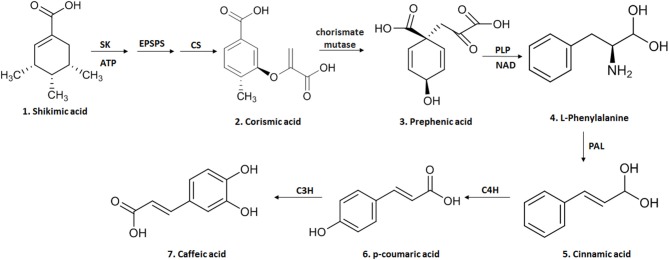
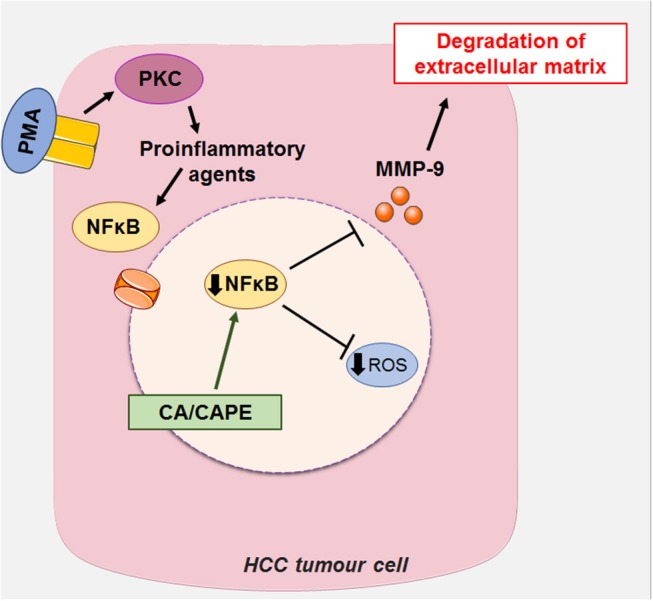
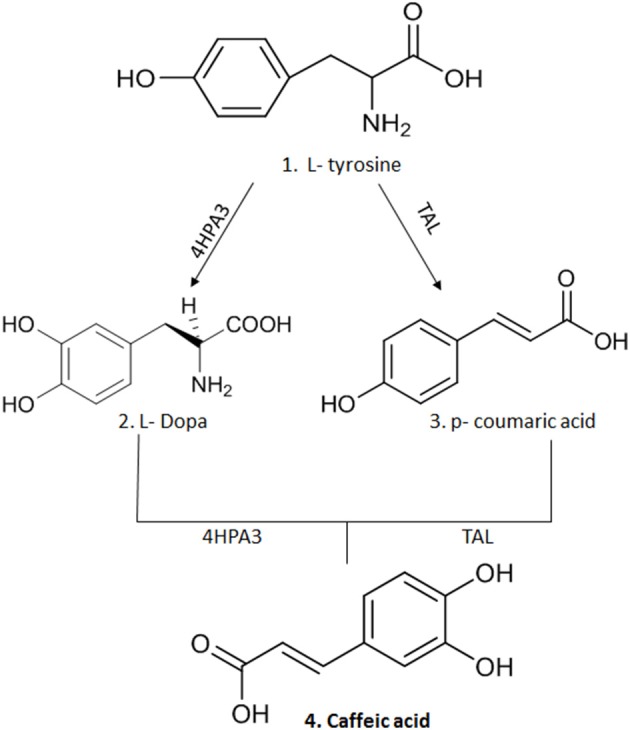
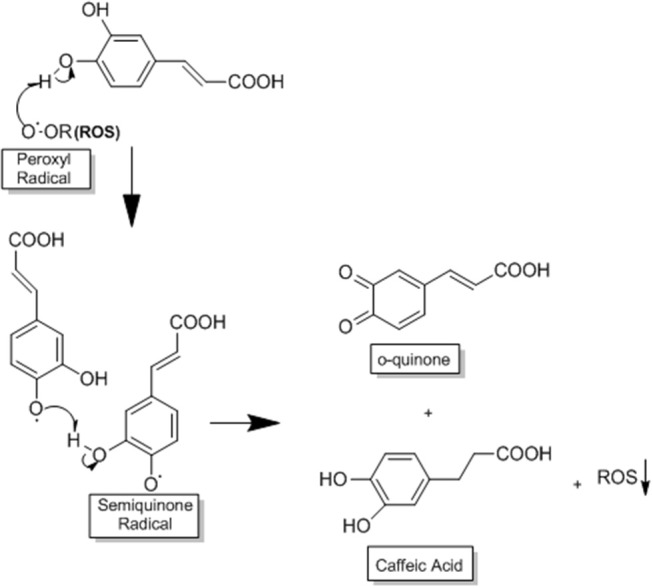
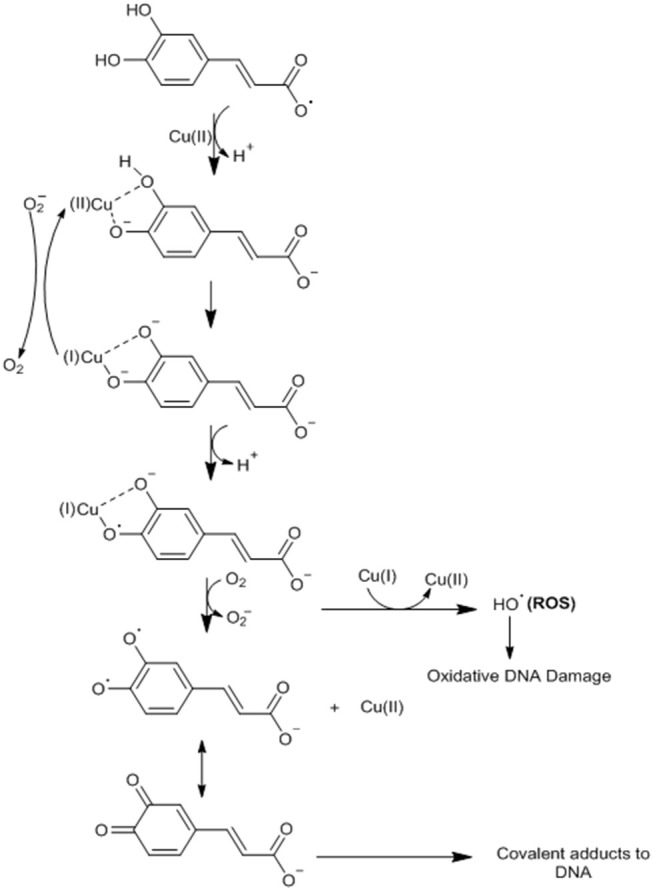
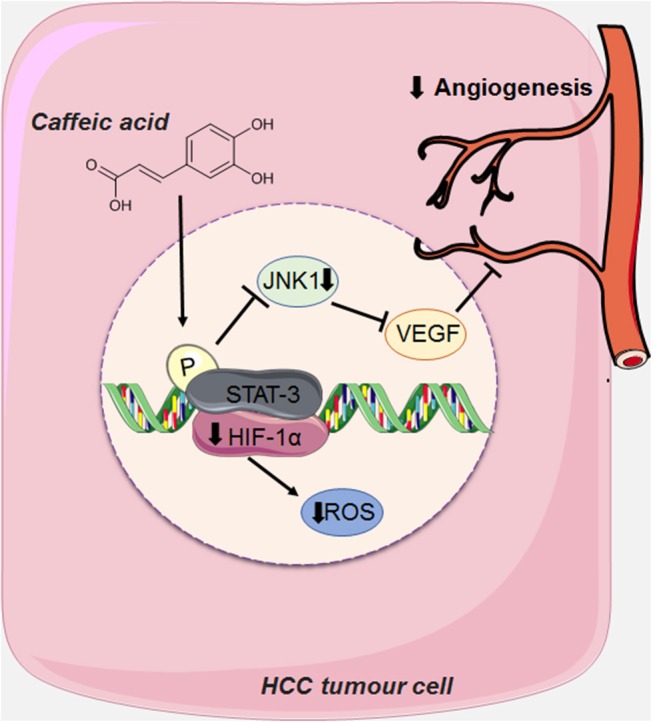
Caffeic acid (CA) is a phenolic compound synthesized by all plant species and is present in foods such as coffee, wine, tea, and popular medicines such as propolis. This phenolic acid and its derivatives have antioxidant, anti-inflammatory and anticarcinogenic activity. and studies have demonstrated the anticarcinogenic activity of this compound against an important type of cancer, hepatocarcinoma (HCC), considered to be of high incidence, highly aggressive and causing considerable mortality across the world. The anticancer properties of CA are associated with its antioxidant and pro-oxidant capacity, attributed to its chemical structure that has free phenolic hydroxyls, the number and position of OH in the catechol group and the double bond in the carbonic chain. Pharmacokinetic studies indicate that this compound is hydrolyzed by the microflora of colonies and metabolized mainly in the intestinal mucosa through phase II enzymes, submitted to conjugation and methylation processes, forming sulphated, glucuronic and/or methylated conjugates by the action of sulfotransferases, UDP-glucotransferases, and o-methyltransferases, respectively. The transmembrane flux of CA in intestinal cells occurs through active transport mediated by monocarboxylic acid carriers. CA can act by preventing the production of ROS (reactive oxygen species), inducing DNA oxidation of cancer cells, as well as reducing tumor cell angiogenesis, blocking STATS (transcription factor and signal translation 3) and suppression of MMP2 and MMP-9 (collagen IV metalloproteases). Thus, this review provides an overview of the chemical and pharmacological parameters of CA and its derivatives, demonstrating its mechanism of action and pharmacokinetic aspects, as well as a critical analysis of its action in the fight against hepatocarcinoma.
咖啡酸(CA)是所有植物物种都能合成的一种酚类化合物,存在于咖啡、葡萄酒、茶等食物以及蜂胶等常用药物中。这种酚酸及其衍生物具有抗氧化、抗炎和抗癌活性。多项研究已证明该化合物对一种重要的癌症——肝癌(HCC)具有抗癌活性,肝癌在全球范围内发病率高、侵袭性强且致死率相当高。CA的抗癌特性与其抗氧化和促氧化能力有关,这归因于其化学结构,该结构具有游离酚羟基、儿茶酚基团中OH的数量和位置以及碳链中的双键。药代动力学研究表明,该化合物会被菌落中的微生物群水解,主要在肠黏膜中通过II期酶进行代谢,经历结合和甲基化过程,分别通过磺基转移酶、UDP - 葡萄糖醛酸转移酶和O - 甲基转移酶的作用形成硫酸化、葡萄糖醛酸化和/或甲基化结合物。CA在肠道细胞中的跨膜转运是通过单羧酸载体介导的主动转运发生的。CA可以通过阻止活性氧(ROS)的产生、诱导癌细胞的DNA氧化以及减少肿瘤细胞血管生成、阻断信号转导与转录激活因子3(STAT3)(转录因子和信号转导3)以及抑制基质金属蛋白酶2(MMP2)和基质金属蛋白酶9(MMP - 9)(IV型胶原金属蛋白酶)来发挥作用。因此,本综述概述了CA及其衍生物的化学和药理学参数,展示了其作用机制和药代动力学方面,以及对其在对抗肝癌中的作用的批判性分析。