Department of Pathology and Immunology, Washington University School of Medicine, St. Louis, MO.
Department of Pathology and Immunology, Washington University School of Medicine, St. Louis, MO
J Exp Med. 2019 Oct 7;216(10):2231-2241. doi: 10.1084/jem.20180549. Epub 2019 Jul 11.
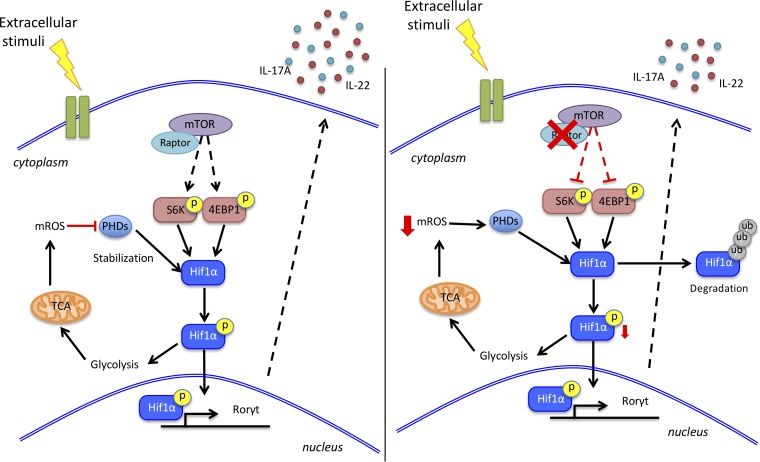
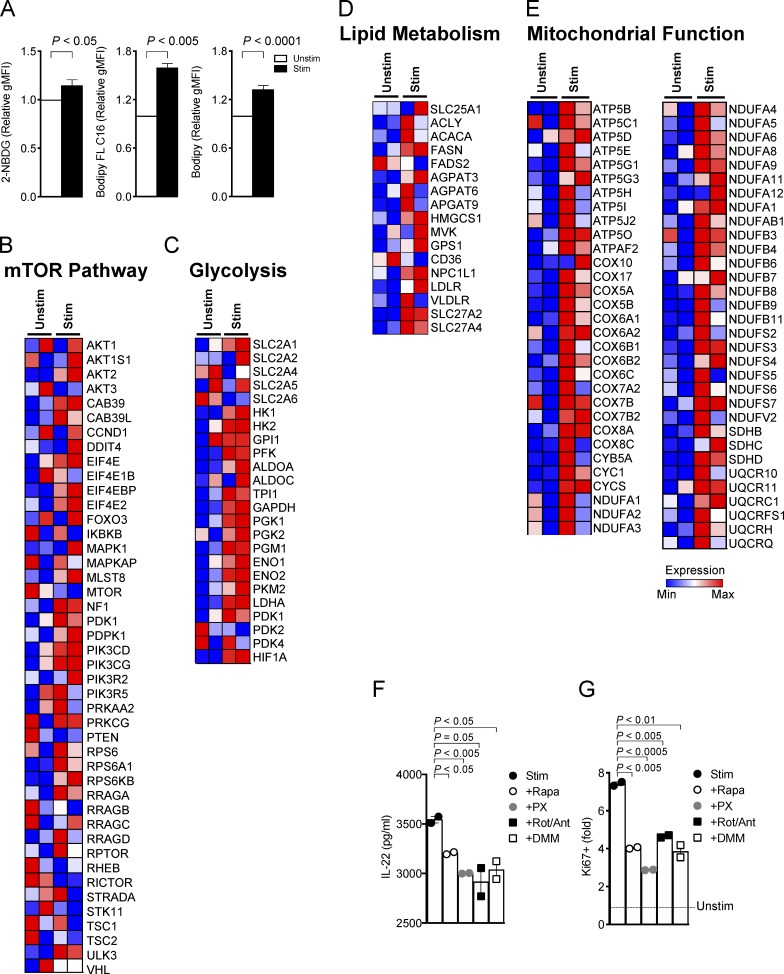
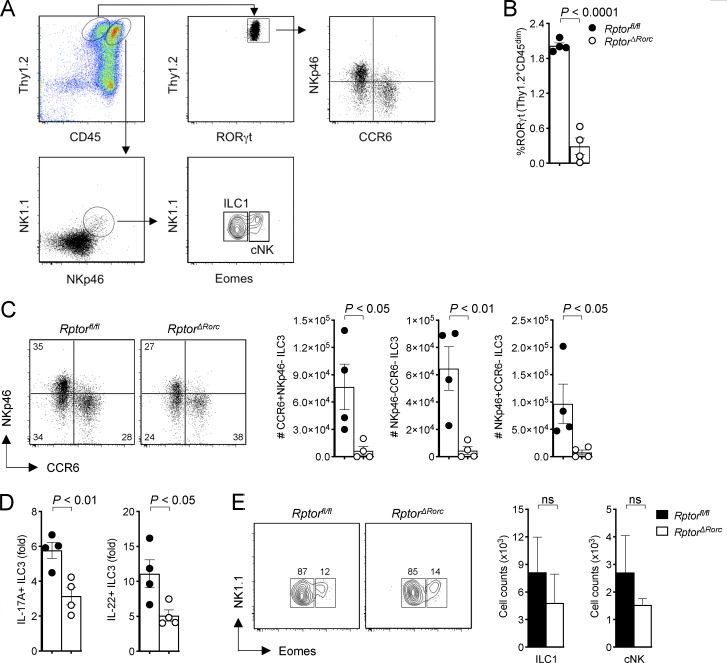
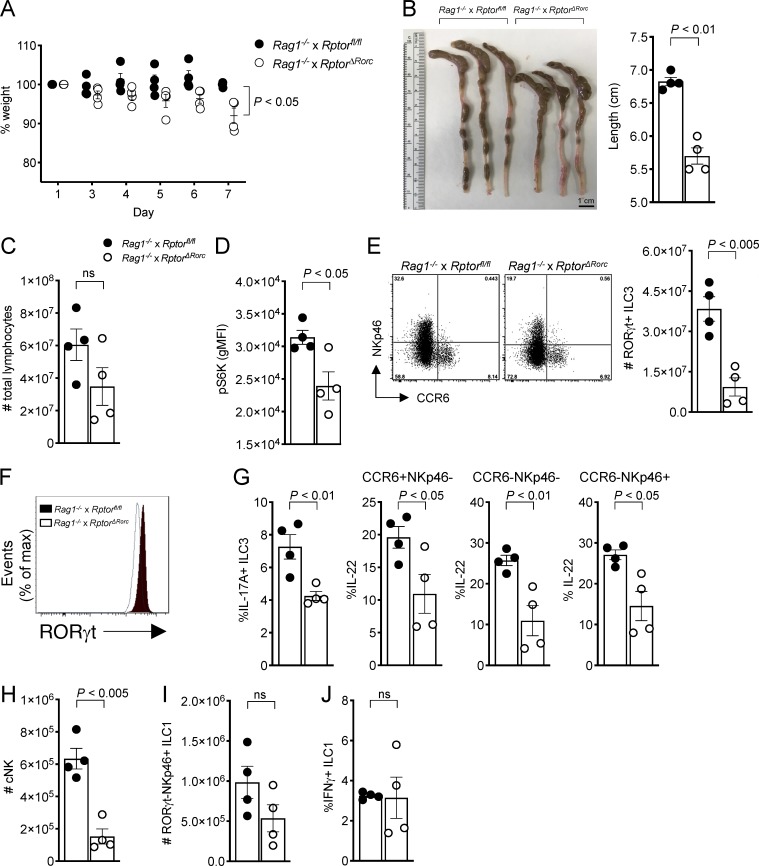
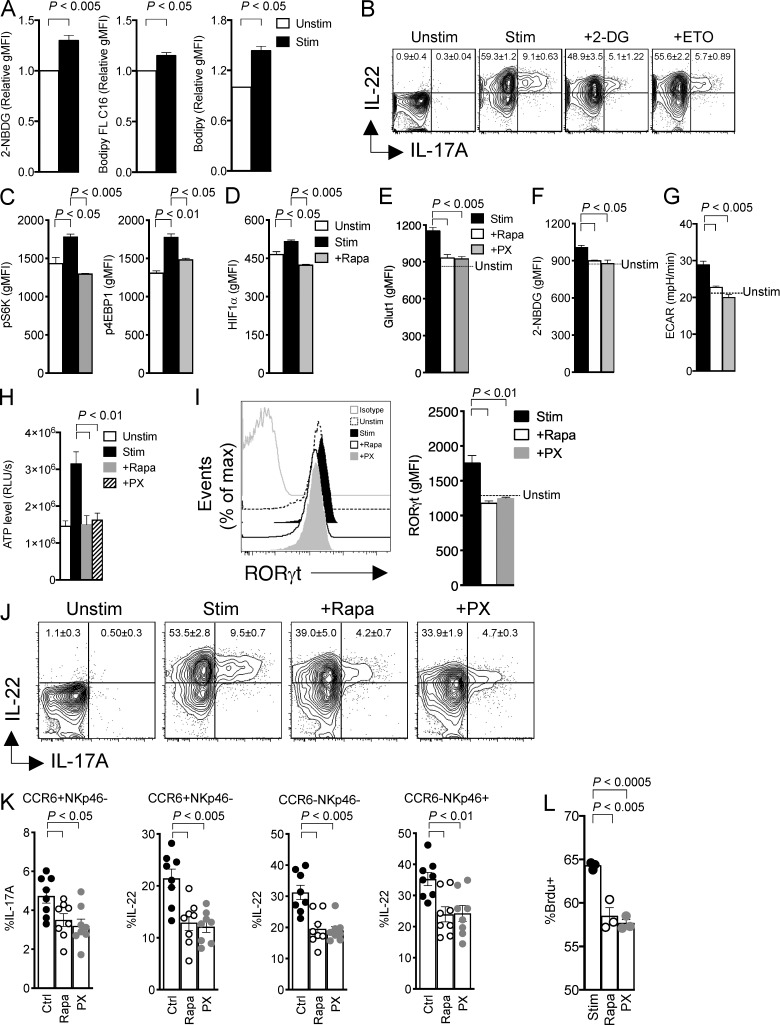
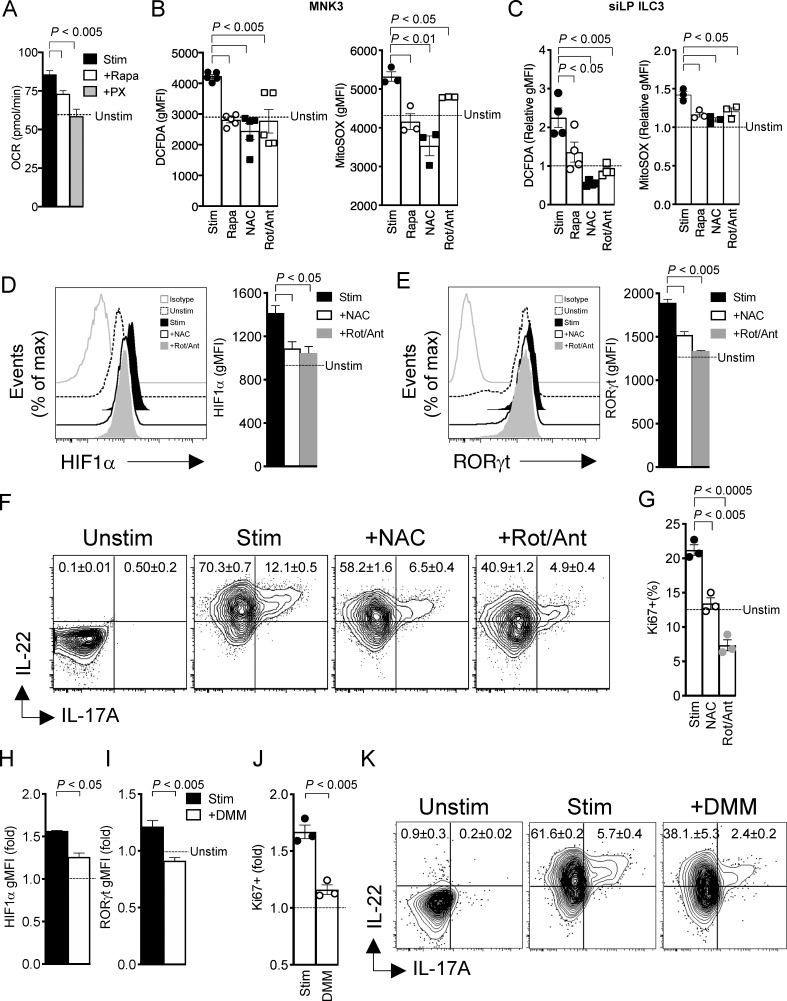
Group 3 innate lymphoid cells (ILC3s) are the innate counterparts of Th17 that require the transcription factor RORγt for development and contribute to the defense against pathogens through IL-22 and IL-17 secretion. Proliferation and effector functions of Th17 require a specific mTOR-dependent metabolic program that utilizes high-rate glycolysis, while mitochondrial lipid oxidation and production of reactive oxygen species (mROS) support alternative T reg cell differentiation. Whether ILC3s employ a specific metabolic program is not known. Here, we find that ILC3s rely on mTOR complex 1 (mTORC1) for proliferation and production of IL-22 and IL-17A after in vitro activation and infection. mTORC1 induces activation of HIF1α, which reprograms ILC3 metabolism toward glycolysis and sustained expression of RORγt. However, in contrast to Th17, ILC3 activation requires mROS production; rather than inducing an alternative regulatory fate as it does in CD4 T cells, mROS stabilizes HIF1α and RORγt in ILC3s and thereby promotes their activation. We conclude that ILC3 activation relies on a metabolic program that integrates glycolysis with mROS production.
第 3 组天然淋巴细胞(ILC3)是 Th17 的先天对应物,其发育需要转录因子 RORγt,并通过分泌 IL-22 和 IL-17 来抵御病原体。Th17 的增殖和效应功能需要特定的 mTOR 依赖性代谢程序,该程序利用高糖酵解率,而线粒体脂质氧化和活性氧物质(mROS)的产生则支持替代的 Treg 细胞分化。ILC3 是否采用特定的代谢程序尚不清楚。在这里,我们发现 ILC3 在体外激活和感染后依赖 mTOR 复合物 1(mTORC1)来增殖并产生 IL-22 和 IL-17A。mTORC1 诱导 HIF1α 的激活,从而将 ILC3 代谢重编程为糖酵解,并持续表达 RORγt。然而,与 Th17 不同的是,ILC3 的激活需要产生 mROS;mROS 并没有像在 CD4 T 细胞中那样诱导替代的调节命运,而是在 ILC3 中稳定 HIF1α 和 RORγt,从而促进它们的激活。我们得出结论,ILC3 的激活依赖于一种代谢程序,该程序将糖酵解与 mROS 的产生结合在一起。