Orssatto Lucas Bet da Rosa, Detanico Daniele, Kons Rafael Lima, Sakugawa Raphael Luiz, da Silva Jorge Nelson, Diefenthaeler Fernando
School of Exercise and Nutrition Sciences, Institute of Health and Biomedical Innovation, Faculty of Health, Queensland University of Technology, Brisbane, QLD, Australia.
Laboratório de Biomecânica, Departamento de Educação Física, Universidade Federal de Santa Catarina, Florianópolis, Brazil.
Front Physiol. 2019 Jun 26;10:811. doi: 10.3389/fphys.2019.00811. eCollection 2019.
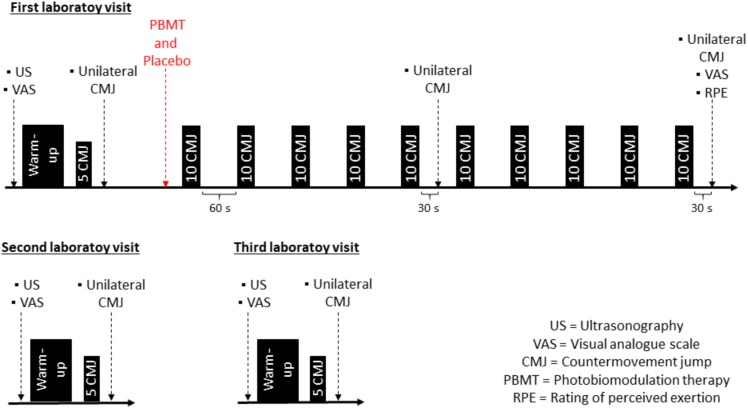
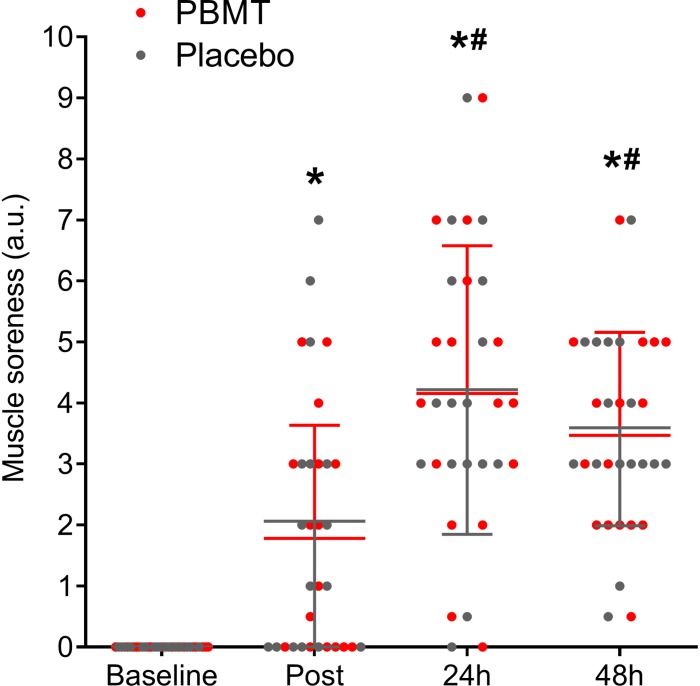
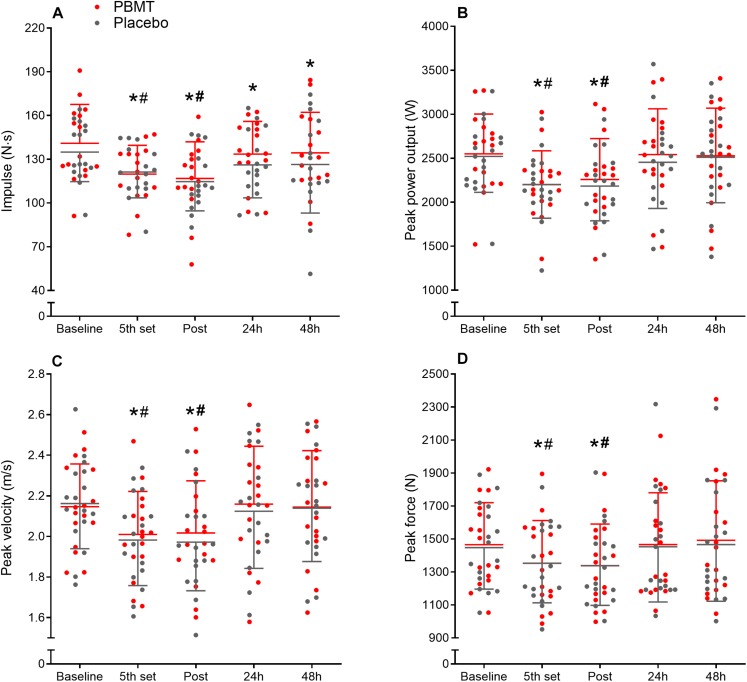
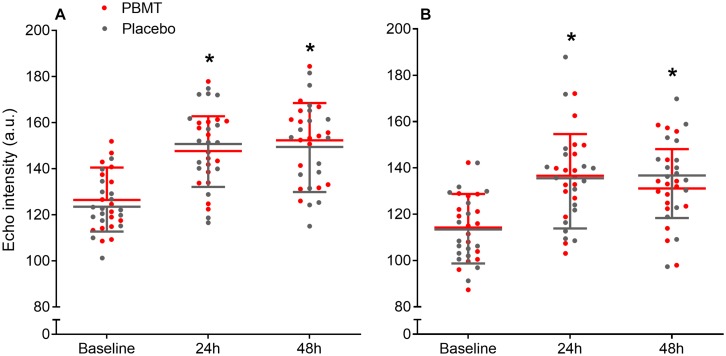
Fatigue and muscle damage negatively affect performance in lower limb exercises involving the stretch-shortening cycle in judo athletes during competition and training sessions. Photobiomodulation therapy has emerged as an effective non-invasive strategy to attenuate fatigue and muscle damage when applied before different types of exercises. Our objective was to investigate the effects of photobiomodulation therapy on fatigue and muscle damage in judo athletes. Sixteen judo athletes participated in the study (23.1 ± 3.8 years, 77.9 ± 14.9 kg, 173.1 ± 8.9 cm, 17.5 ± 7.3 body fat%, 12.9 ± 5.0 years of practice). Each participant received, in a randomized manner, photobiomodulation in one limb and placebo in the contralateral limb on the same day. Thereafter, subjects performed a stretch-shortening cycle protocol to induce muscle fatigue and damage. Countermovement jump (impulse, peak power, peak velocity, and peak force), echo intensity ( and ), and muscle soreness were assessed at different time points before, during, immediately post, and 24 and 48 h after the protocol. Muscle fatigue was detected due to reductions in countermovement jump impulse (14.7 ± 9.8 and 15.9 ± 15.5%), peak power (12.9 ± 8.5 and 11.9 ± 6.9%), peak velocity (8.6 ± 8.1 and 6.5 ± 6.0%), and peak force (7.0 ± 5.3 and 8.0 ± 6.1%) after the protocol ( < 0.001), for placebo and photobiomodulation therapy, respectively. Muscle damage was detected due to reductions in countermovement jump impulse (-6.1 ± 19.2% and -4.5 ± 9.2%, < 0.05), increases in echo intensity (, 21.0 ± 11.9 and 20.8 ± 9.0%; and , 22.4 ± 23.2%; and 16.7 ± 23.8%; < 0.001), and muscle soreness (3.6 ± 1.6 and 3.5 ± 1.7 a.u; < 0.011), 48 h after the protocol, for placebo and photobiomodulation therapy, respectively. No differences were observed between photobiomodulation therapy and placebo at any time points for any variables ( > 0.05), indicating no positive effect favoring photobiomodulation therapy. In conclusion, our findings suggest no effect of photobiomodulation therapy applied before exercise to reduce lower limb muscle fatigue and damage during and following a stretch-shortening cycle protocol in judo athletes.
在柔道运动员的比赛和训练中,疲劳和肌肉损伤会对涉及拉伸-缩短周期的下肢运动表现产生负面影响。光生物调节疗法已成为一种有效的非侵入性策略,在不同类型的运动前应用可减轻疲劳和肌肉损伤。我们的目的是研究光生物调节疗法对柔道运动员疲劳和肌肉损伤的影响。16名柔道运动员参与了该研究(年龄23.1±3.8岁,体重77.9±14.9千克,身高173.1±8.9厘米,体脂率17.5±7.3%,训练年限12.9±5.0年)。每位参与者在同一天,随机接受一侧肢体的光生物调节治疗,对侧肢体接受安慰剂治疗。此后,受试者进行拉伸-缩短周期方案以诱导肌肉疲劳和损伤。在方案实施前、期间、刚结束后以及结束后24小时和48小时的不同时间点,评估反向运动跳跃(冲量、峰值功率、峰值速度和峰值力)、回声强度(和)以及肌肉酸痛情况。方案实施后,安慰剂组和光生物调节治疗组均检测到肌肉疲劳,表现为反向运动跳跃冲量分别降低(14.7±9.8%和15.9±15.5%)、峰值功率分别降低(12.9±8.5%和11.9±6.9%)、峰值速度分别降低(8.6±8.1%和6.5±6.0%)以及峰值力分别降低(7.0±5.3%和8.0±6.1%)(<0.001)。方案实施48小时后,安慰剂组和光生物调节治疗组均检测到肌肉损伤,表现为反向运动跳跃冲量分别降低(-6.1±19.2%和-4.5±9.2%,<0.05)、回声强度增加(,21.0±11.9%和20.8±9.0%;以及,22.4±23.2%;以及16.7±23.8%;<0.001)以及肌肉酸痛(3.6±1.6和3.5±1.7任意单位;<0.011)。在任何时间点,光生物调节治疗组和安慰剂组在任何变量上均未观察到差异(>0.05),表明光生物调节治疗没有积极效果。总之,我们的研究结果表明,在柔道运动员进行拉伸-缩短周期方案期间及之后,运动前应用光生物调节疗法对减轻下肢肌肉疲劳和损伤没有效果。