Department of Physiology and Medical Physics, Royal College of Surgeons in Ireland, Dublin, Ireland; FutureNeuro Research Centre, Royal College of Surgeons in Ireland, Dublin, Ireland.
Department of Physiology and Medical Physics, Royal College of Surgeons in Ireland, Dublin, Ireland; FutureNeuro Research Centre, Royal College of Surgeons in Ireland, Dublin, Ireland.
EBioMedicine. 2019 Jul;45:646-654. doi: 10.1016/j.ebiom.2019.07.008. Epub 2019 Jul 9.
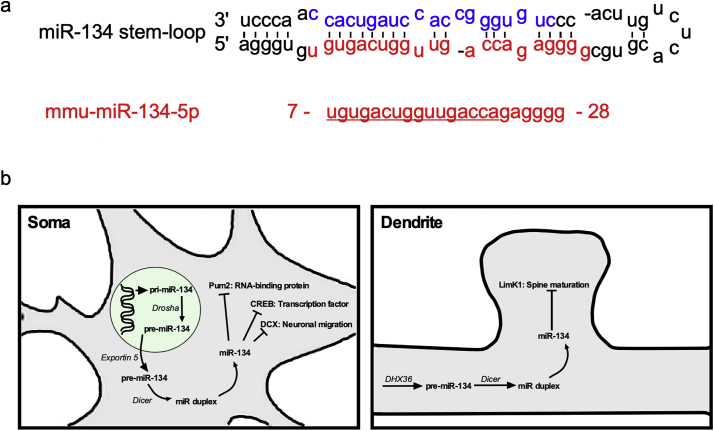
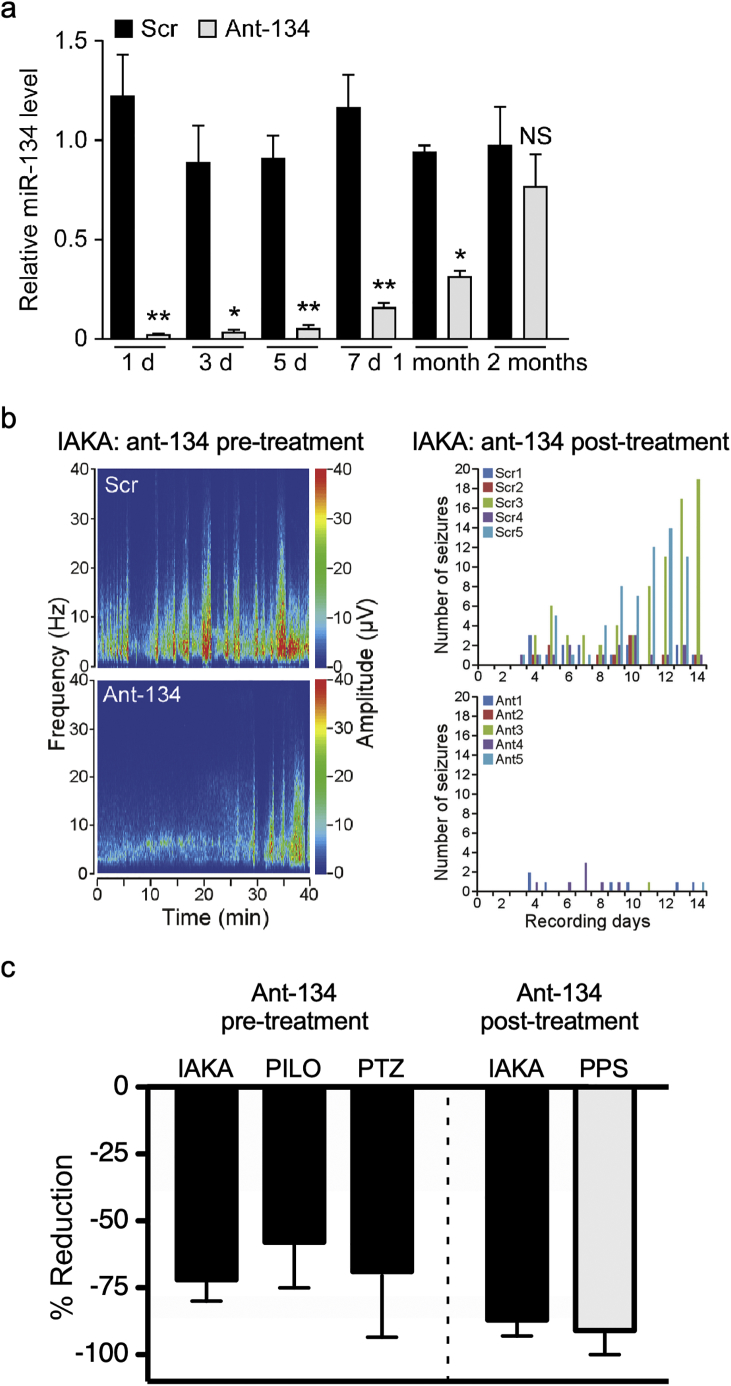
MicroRNA-134 is a brain-enriched small noncoding RNA that has been implicated in diverse neuronal functions, including regulating network excitability. Increased expression of microRNA-134 has been reported in several experimental epilepsy models and in resected brain tissue from temporal lobe epilepsy patients. Rodent studies have demonstrated that reducing microRNA-134 expression in the brain using antisense oligonucleotides can increase seizure thresholds and attenuate status epilepticus. Critically, inhibition of microRNA-134 after status epilepticus can potently reduce the occurrence of spontaneous recurrent seizures. Altered plasma levels of microRNA-134 have been reported in epilepsy patients, suggesting microRNA-134 may have diagnostic value as a biomarker. This review summarises findings on the cellular functions of microRNA-134, as well as the preclinical evidence supporting anti-seizure and disease-modifying effects of targeting microRNA-134 in epilepsy. Finally, we draw attention to unanswered questions and some of the challenges and opportunities involved in preclinical development of a microRNA-based oligonucleotide treatment for epilepsy.
miRNA-134 是一种富含于大脑的小型非编码 RNA,其与多种神经元功能有关,包括调节网络兴奋性。在几种实验性癫痫模型和颞叶癫痫患者的切除脑组织中均报告 miRNA-134 的表达增加。啮齿动物研究表明,使用反义寡核苷酸减少大脑中的 miRNA-134 表达可以增加癫痫发作阈值并减轻癫痫持续状态。关键的是,癫痫持续状态后抑制 miRNA-134 可以有效地减少自发性反复发作的发生。在癫痫患者中已经报道了血浆 miRNA-134 水平的改变,这表明 miRNA-134 作为生物标志物可能具有诊断价值。本文综述了 miRNA-134 的细胞功能的研究结果,以及靶向 miRNA-134 在癫痫中的抗惊厥和疾病修饰作用的临床前证据。最后,我们提请注意尚未解决的问题,以及在基于 miRNA 的寡核苷酸治疗癫痫的临床前开发中所涉及的一些挑战和机遇。