Zhuang Yan, Bai Ying, Hu Yan, Guo Yueqin, Xu Lingyuan, Hu Wanle, Yang Lehe, Zhao Chengguang, Li Xiaokun, Zhao Haiyang
The Institute of Life Sciences, Wenzhou University, Wenzhou, Zhejiang 325035, People's Republic of China.
School of Pharmaceutical Sciences, Wenzhou Medical University, Wenzhou, Zhejiang 325035, People's Republic of China.
Onco Targets Ther. 2019 Jul 3;12:5281-5291. doi: 10.2147/OTT.S206833. eCollection 2019.
Activation of epidermal growth factor receptor (EGFR) has been reported in a variety of cancer types, including colorectal cancer (CRC), and represents a potential chemotherapeutic drug target. EGFR tyrosine kinase inhibitors (EGFR-TKIs) have been increasingly applied in the clinical treatment of CRC, but development of drug resistance during the treatment has greatly limited their application. Signal transducer and activator of transcription 3 (STAT3) and its mediated signal transduction pathway play an important role in the occurrence, development and metastasis of CRC, and are related to the development of EGFR-TKI resistance in CRC.
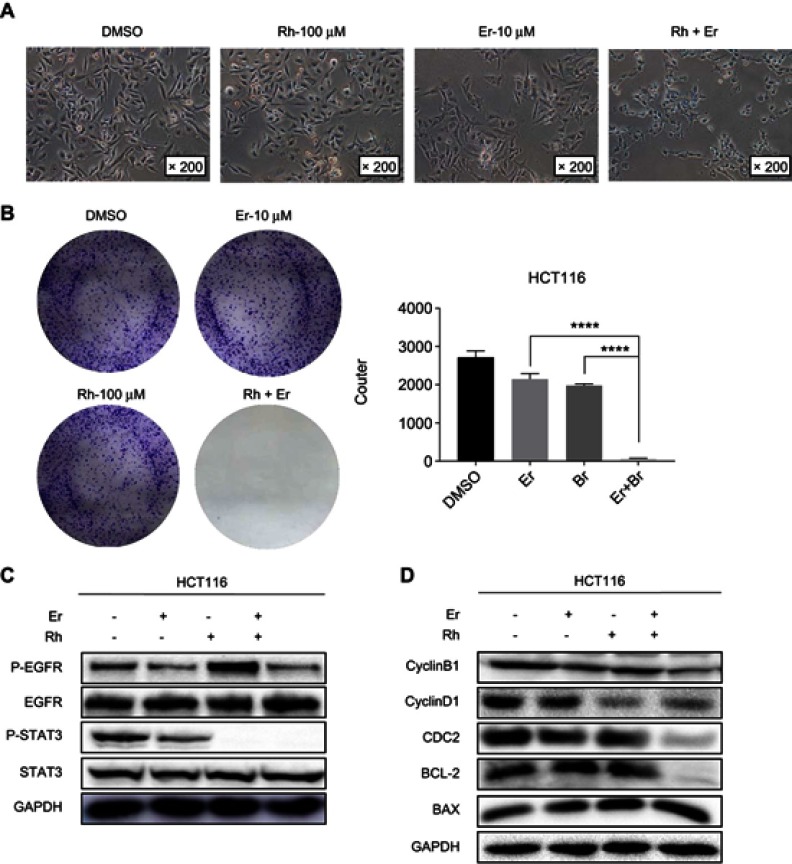
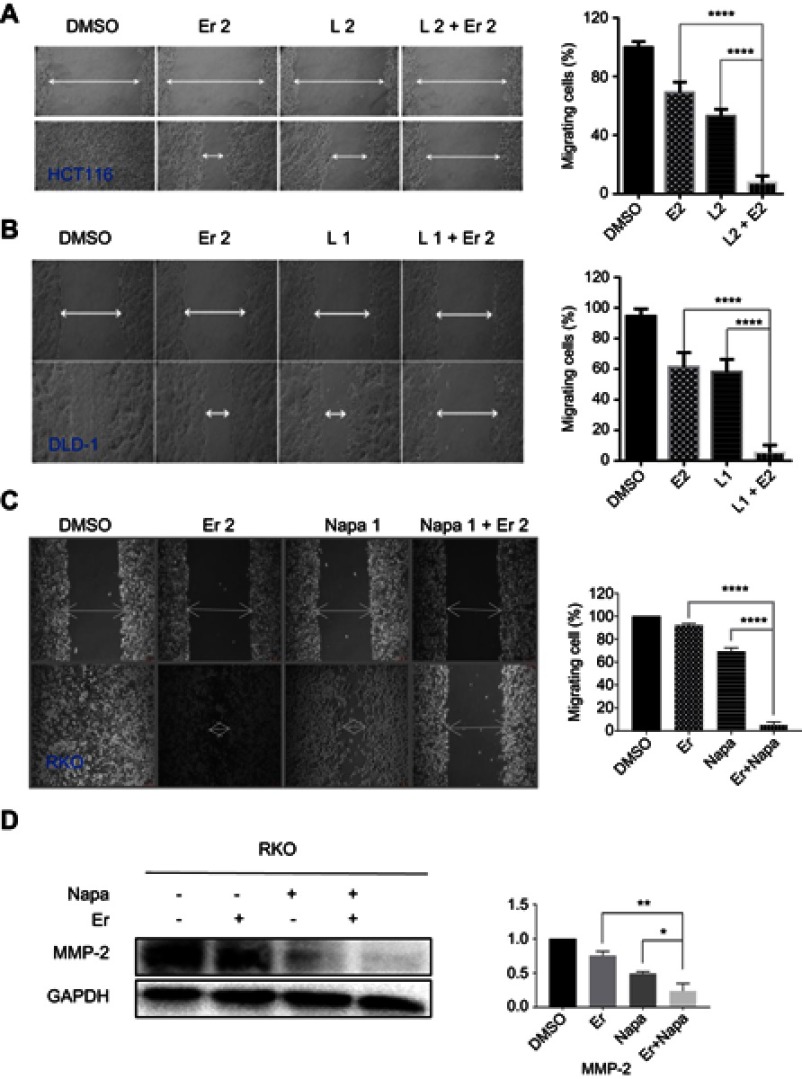
Cell viability, colony formation and cellular morphology were examined to evaluate the potent antiproliferative effect of the STAT3 inhibitor napabucasin, LY5 and rhein on the human CRC cell lines HCT116, SW620, RKO and DLD-1. Flow cytometry-based analysis was employed to determine whether rhein can affect the cell cycle and apoptosis. The expression level of phosphorylated STAT3 (P-STAT3), and cell cycle- and apoptosis-related proteins BCL2, CDC2 BAX, Cyclin D1 and Cyclin B1 were detected by Western blot analysis.
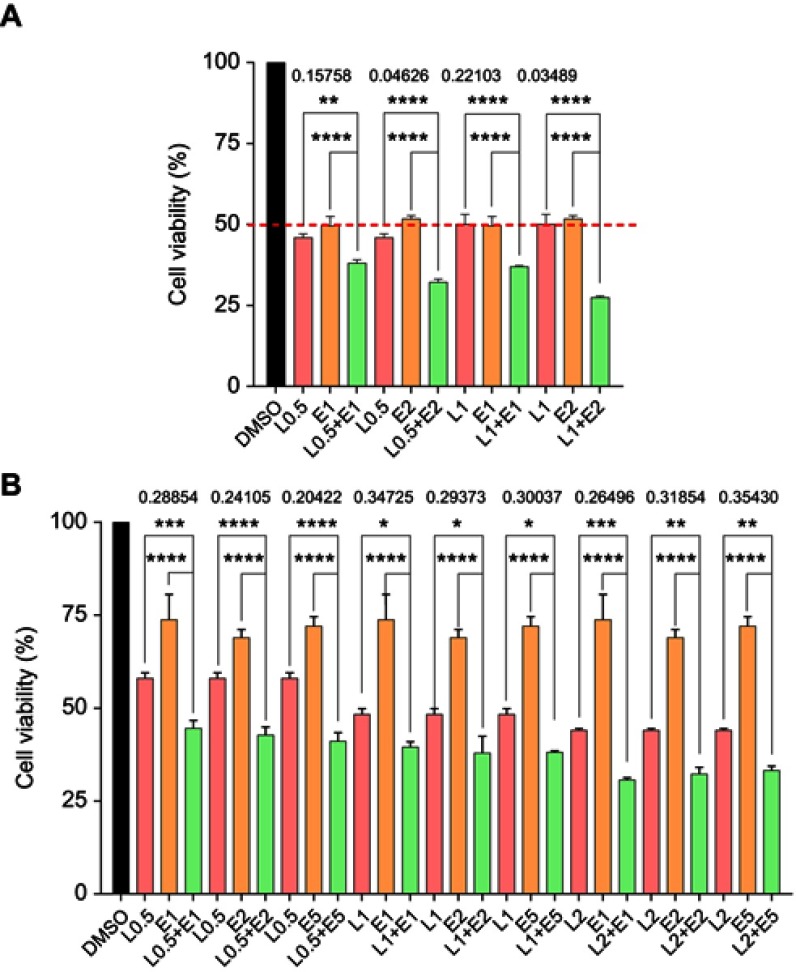
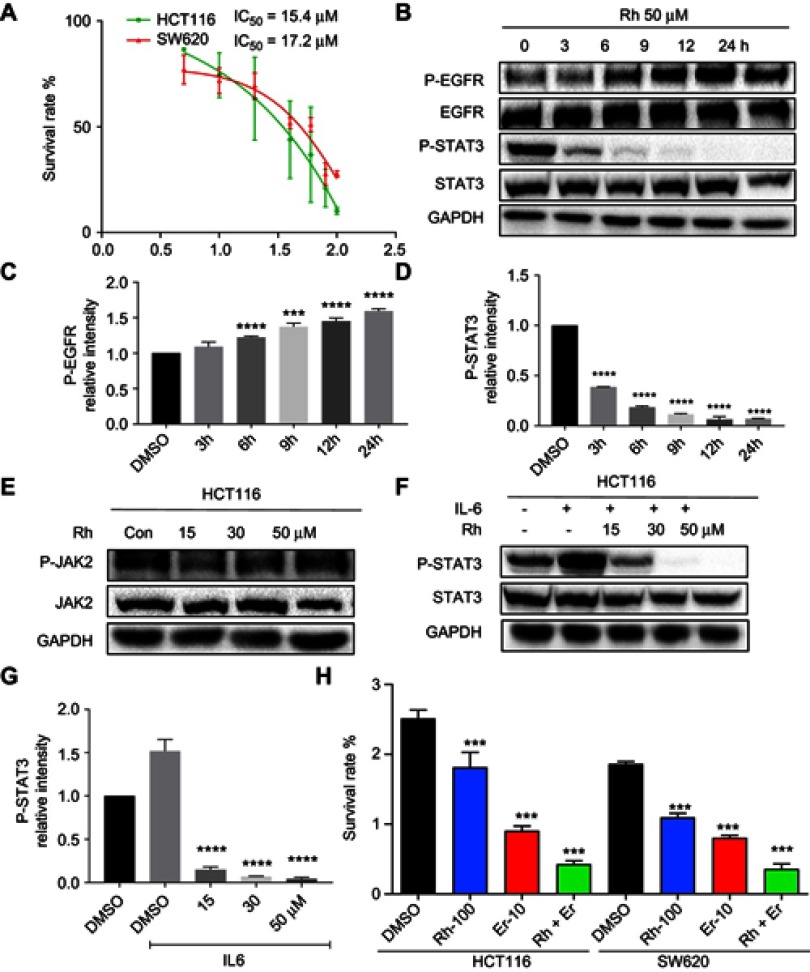
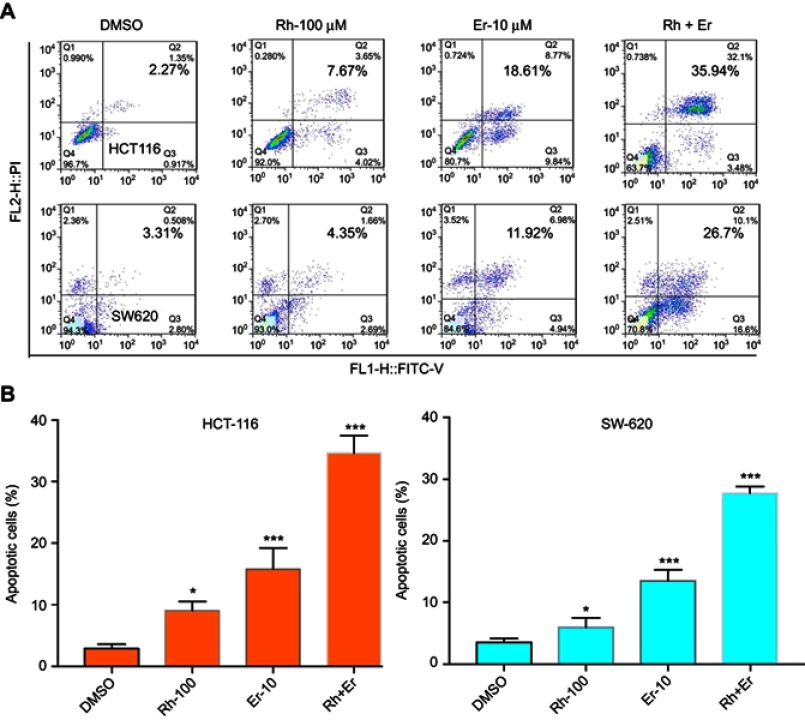
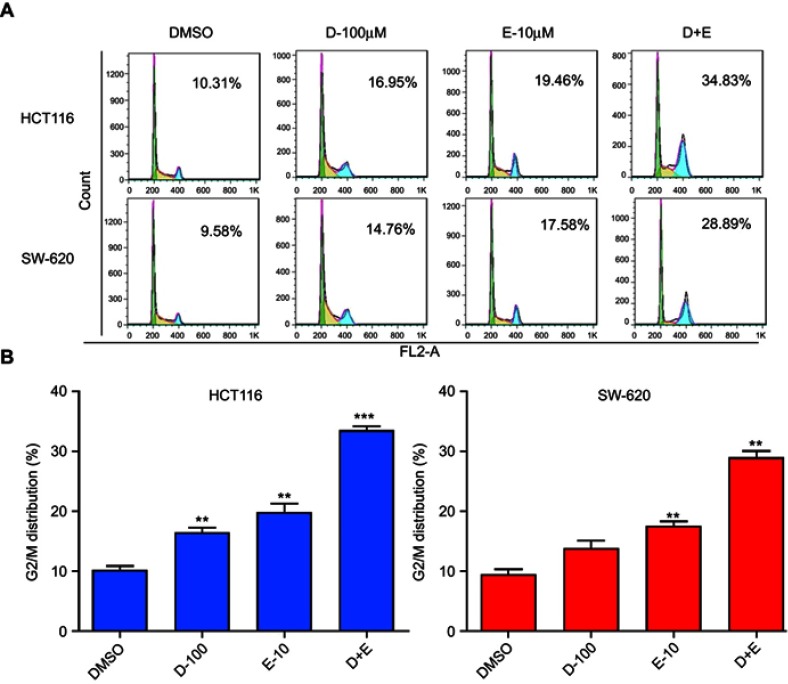
This study revealed that rhein can significantly reduce cell viability and stimulate apoptosis in human CRC cells in a dose-dependent manner. In addition, rhein induced cell cycle arrest at the G2/M phase in CRC cells and dose-dependently inhibited the expression of cell cycle-related proteins. Additionally, it was found that napabucasin, LY5 and rhein considerably sensitized cells to the EGFR-TKI erlotinib, thus suppressing CRC cell proliferation. Rhein also inhibited the phosphorylation of its downstream target STAT3. Inhibition of STAT3 and EGFR phosphorylation was also observed after treatment with a combination of rhein and EGFR inhibitors.
This study confirmed the synergistic effect of STAT3 inhibitor and EGFR inhibitor in CRC cell lines. Additionally, we found that rhein sensitizes human CRC cells to EGFR-TKIs by inhibiting STAT3 pathway. When combined with EGFR-TKIs, rhein may be a novel STAT3 inhibitor in CRC.
表皮生长因子受体(EGFR)的激活已在包括结直肠癌(CRC)在内的多种癌症类型中被报道,并且是一个潜在的化疗药物靶点。EGFR酪氨酸激酶抑制剂(EGFR-TKIs)已越来越多地应用于CRC的临床治疗,但治疗期间耐药性的产生极大地限制了它们的应用。信号转导和转录激活因子3(STAT3)及其介导的信号转导通路在CRC的发生、发展和转移中起重要作用,并且与CRC中EGFR-TKI耐药性的产生有关。
检测细胞活力、集落形成和细胞形态,以评估STAT3抑制剂萘布西明、LY5和大黄酸对人CRC细胞系HCT-116、SW620、RKO和DLD-1的有效抗增殖作用。采用基于流式细胞术的分析来确定大黄酸是否能影响细胞周期和凋亡。通过蛋白质免疫印迹分析检测磷酸化STAT3(P-STAT3)以及细胞周期和凋亡相关蛋白BCL2、CDC2、BAX、细胞周期蛋白D1和细胞周期蛋白B1的表达水平。
本研究表明,大黄酸能以剂量依赖的方式显著降低人CRC细胞的活力并诱导其凋亡。此外,大黄酸诱导CRC细胞在G2/M期发生细胞周期阻滞,并剂量依赖性地抑制细胞周期相关蛋白的表达。此外,发现萘布西明、LY5和大黄酸可使细胞对EGFR-TKI厄洛替尼显著敏感,从而抑制CRC细胞增殖。大黄酸还抑制其下游靶点STAT3的磷酸化。在用大黄酸和EGFR抑制剂联合处理后,也观察到STAT3和EGFR磷酸化受到抑制。
本研究证实了STAT3抑制剂和EGFR抑制剂在CRC细胞系中的协同作用。此外,我们发现大黄酸通过抑制STAT3通路使人CRC细胞对EGFR-TKIs敏感。与EGFR-TKIs联合使用时,大黄酸可能是CRC中一种新型的STAT3抑制剂。