Integrated Mathematical Oncology Department, H. Lee Moffitt Cancer Center & Research Institute, Tampa, FL, United States of America.
Department of Oncologic Sciences, Morsani College of Medicine, University of South Florida, Tampa, FL, United States of America.
PLoS Comput Biol. 2019 Jul 16;15(7):e1007214. doi: 10.1371/journal.pcbi.1007214. eCollection 2019 Jul.
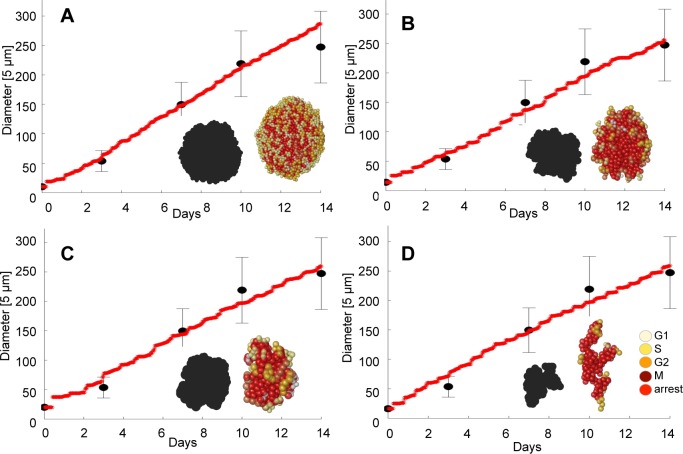
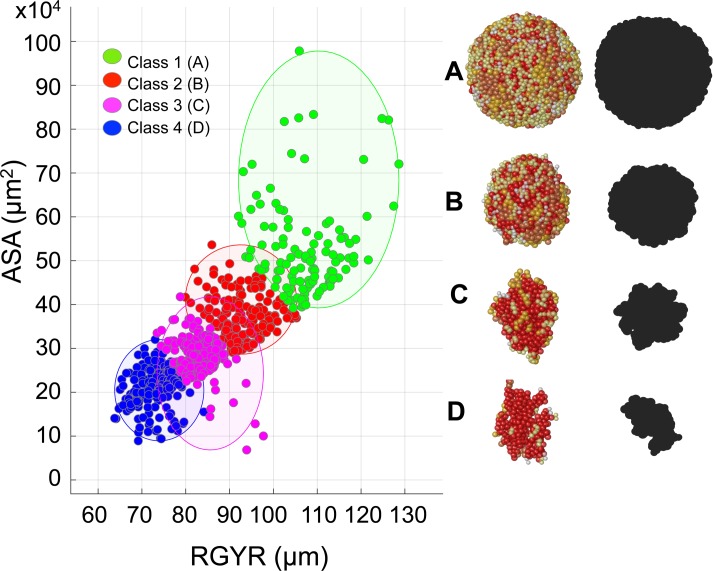
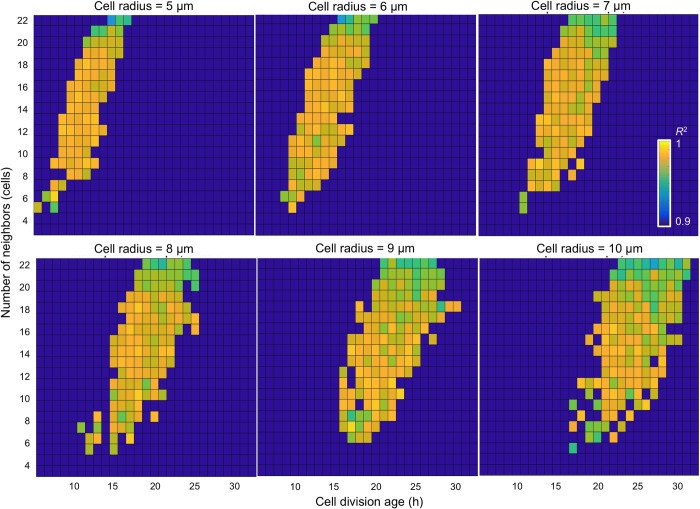
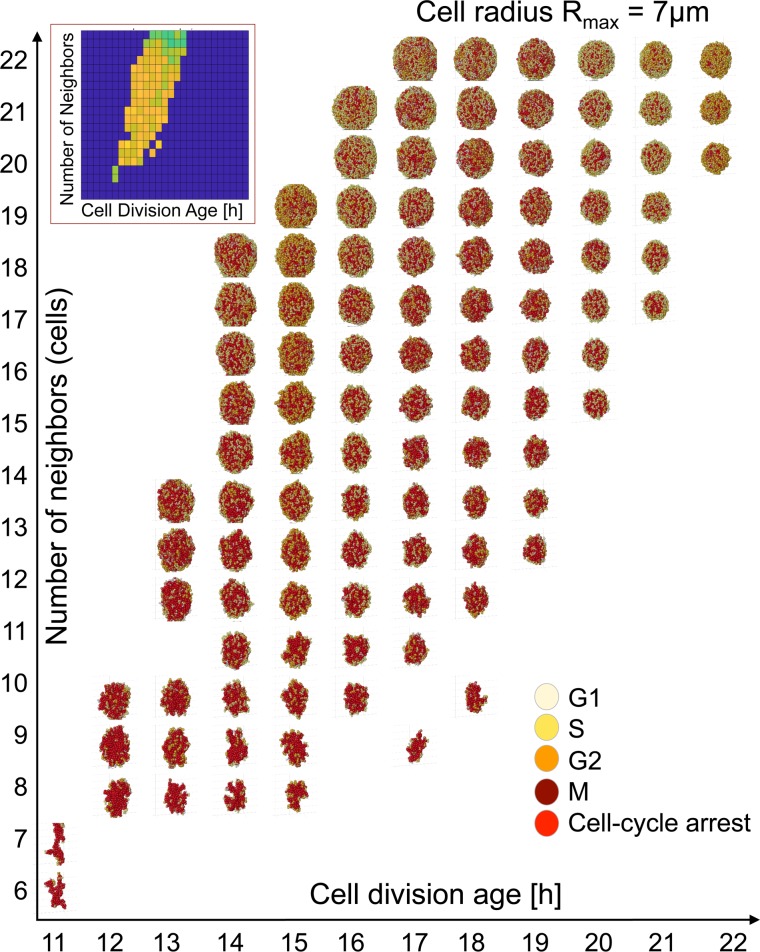
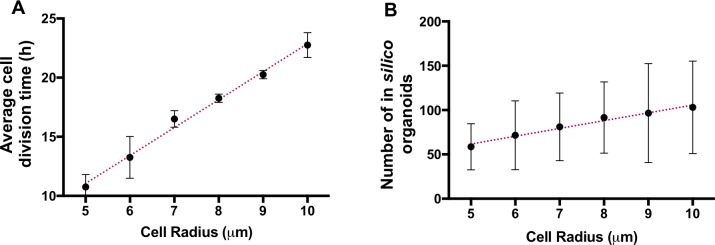
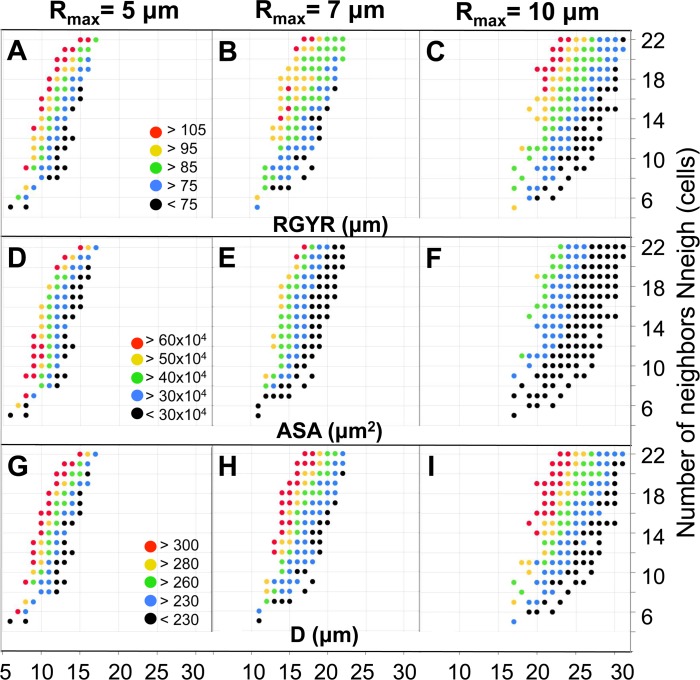
The dynamics of tumor progression is driven by multiple factors, which can be exogenous to the tumor (microenvironment) or intrinsic (genetic, epigenetic or due to intercellular interactions). While tumor heterogeneity has been extensively studied on the level of cell genetic profiles or cellular composition, tumor morphological diversity has not been given as much attention. The limited analysis of tumor morphophenotypes may be attributed to the lack of accurate models, both experimental and computational, capable of capturing changes in tumor morphology with fine levels of spatial detail. Using a three-dimensional, agent-based, lattice-free computational model, we generated a library of multicellular tumor organoids, the experimental analogues of in vivo tumors. By varying three biologically relevant parameters-cell radius, cell division age and cell sensitivity to contact inhibition, we showed that tumor organoids with similar growth dynamics can express distinct morphologies and possess diverse cellular compositions. Taking advantage of the high-resolution of computational modeling, we applied the quantitative measures of compactness and accessible surface area, concepts that originated from the structural biology of proteins. Based on these analyses, we demonstrated that tumor organoids with similar sizes may differ in features associated with drug effectiveness, such as potential exposure to the drug or the extent of drug penetration. Both these characteristics might lead to major differences in tumor organoid's response to therapy. This indicates that therapeutic protocols should not be based solely on tumor size, but take into account additional tumor features, such as their morphology or cellular packing density.
肿瘤进展的动力学是由多种因素驱动的,这些因素既可以是肿瘤外源性的(微环境),也可以是肿瘤内源性的(遗传、表观遗传或细胞间相互作用)。虽然肿瘤异质性已经在细胞遗传特征或细胞组成水平上得到了广泛研究,但肿瘤形态多样性并没有得到太多关注。肿瘤形态表型的有限分析可能归因于缺乏能够精确捕捉肿瘤形态变化的准确模型,包括实验模型和计算模型。我们使用一种基于 agent 的无晶格三维计算模型,生成了一个多细胞肿瘤类器官库,这是体内肿瘤的实验模拟物。通过改变三个生物学相关的参数——细胞半径、细胞分裂年龄和细胞对接触抑制的敏感性,我们表明具有相似生长动力学的肿瘤类器官可以表现出不同的形态和具有不同的细胞组成。利用计算建模的高分辨率,我们应用了源于蛋白质结构生物学的紧凑性和可及表面积的定量度量概念。基于这些分析,我们证明了具有相似大小的肿瘤类器官在与药物有效性相关的特征上可能存在差异,例如潜在的药物暴露或药物渗透程度。这些特征都可能导致肿瘤类器官对治疗的反应存在显著差异。这表明治疗方案不应仅仅基于肿瘤大小,还应考虑到其他肿瘤特征,如形态或细胞堆积密度。