Diagnosis and Therapeutic Center, Hypertension and Cardiovascular Prevention Unit, Hotel-Dieu Hospital, AP-HP, Université Paris Descartes, 75004 Paris, France.
Centre de Recherche Clinique, Grand Hôpital de l'Est Francilien (GHEF), 6-8 rue Saint-fiacre, 77100 Meaux, France.
Cells. 2019 Jul 15;8(7):726. doi: 10.3390/cells8070726.
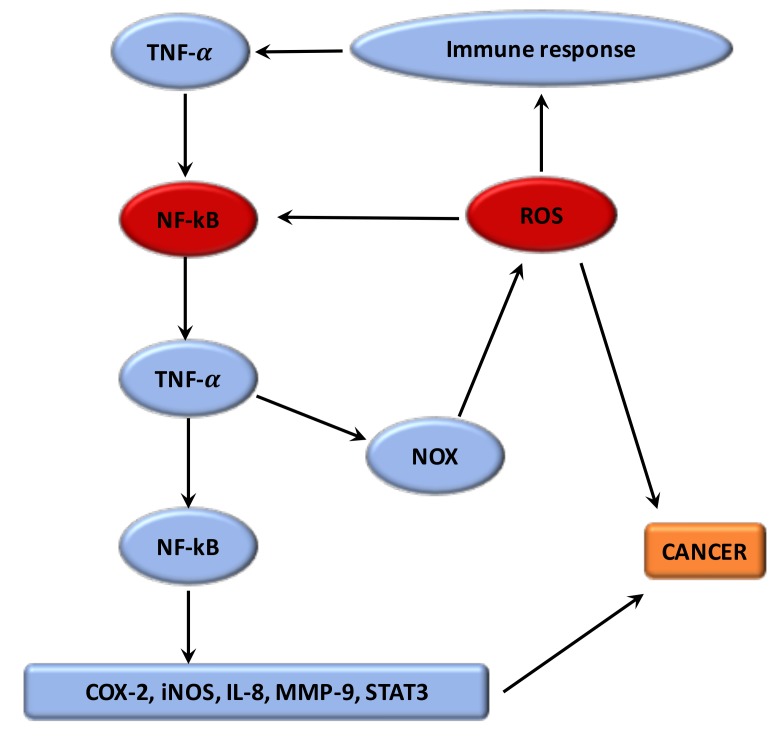
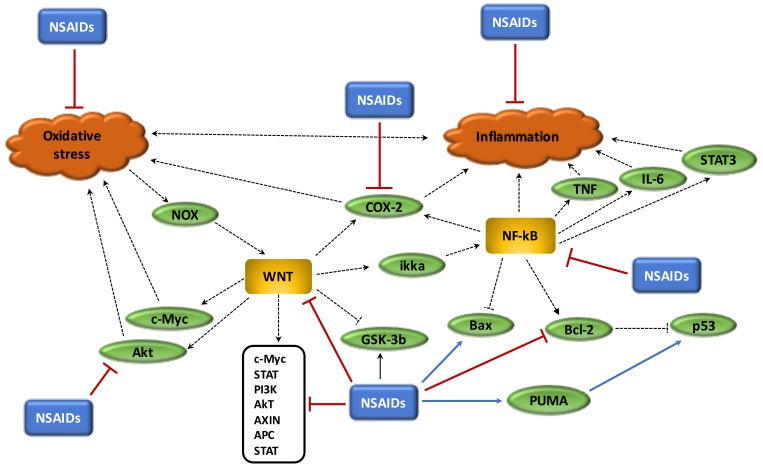
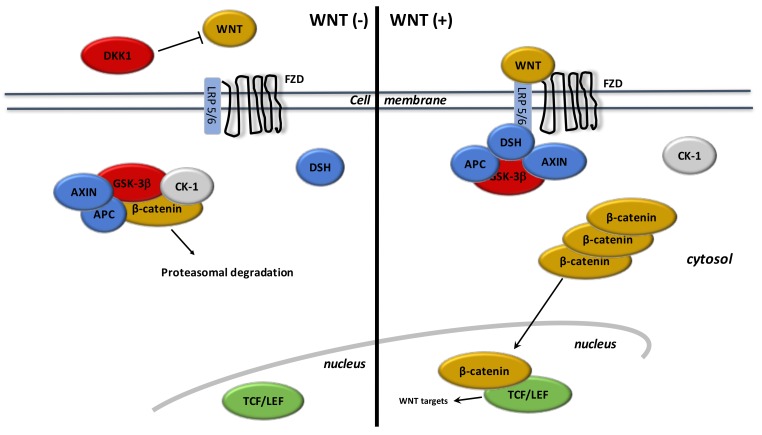
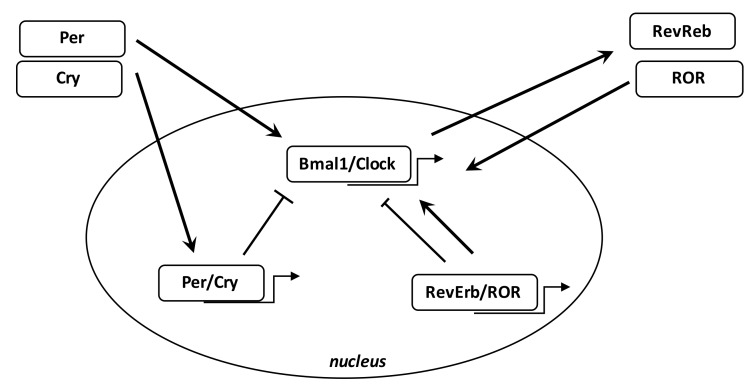
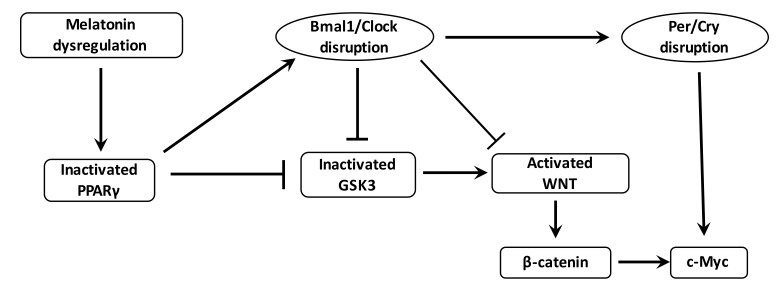
Chronic inflammation and oxidative stress are common and co-substantial pathological processes accompanying and contributing to cancers. Numerous epidemiological studies have indicated that non-steroidal anti-inflammatory drugs (NSAIDs) could have a positive effect on both the prevention of cancer and tumor therapy. Numerous hypotheses have postulated that NSAIDs could slow tumor growth by acting on both chronic inflammation and oxidative stress. This review takes a closer look at these hypotheses. In the cancer process, one of the major signaling pathways involved is the WNT/β-catenin pathway, which appears to be upregulated. This pathway is closely associated with both chronic inflammation and oxidative stress in cancers. The administration of NSAIDs has been observed to help in the downregulation of the WNT/β-catenin pathway and thus in the control of tumor growth. NSAIDs act as PPARγ agonists. The WNT/β-catenin pathway and PPARγ act in opposing manners. PPARγ agonists can promote cell cycle arrest, cell differentiation, and apoptosis, and can reduce inflammation, oxidative stress, proliferation, invasion, and cell migration. In parallel, the dysregulation of circadian rhythms (CRs) contributes to cancer development through the upregulation of the canonical WNT/β-catenin pathway. By stimulating PPARγ expression, NSAIDs can control CRs through the regulation of many key circadian genes. The administration of NSAIDs in cancer treatment would thus appear to be an interesting therapeutic strategy, which acts through their role in regulating WNT/β-catenin pathway and PPARγ activity levels.
慢性炎症和氧化应激是伴随并促进癌症发生的常见共同病理过程。大量的流行病学研究表明,非甾体抗炎药(NSAIDs)可能对癌症的预防和肿瘤治疗都有积极作用。许多假说认为,NSAIDs 可以通过作用于慢性炎症和氧化应激来减缓肿瘤生长。本综述更详细地探讨了这些假说。在癌症过程中,涉及的主要信号通路之一是 WNT/β-catenin 通路,该通路似乎被上调。该通路与癌症中的慢性炎症和氧化应激密切相关。观察到 NSAIDs 的给药有助于下调 WNT/β-catenin 通路,从而控制肿瘤生长。NSAIDs 作为 PPARγ 激动剂发挥作用。WNT/β-catenin 通路和 PPARγ 以相反的方式作用。PPARγ 激动剂可以促进细胞周期停滞、细胞分化和细胞凋亡,并减少炎症、氧化应激、增殖、侵袭和细胞迁移。同时,昼夜节律(CRs)的失调通过上调经典的 WNT/β-catenin 通路促进癌症的发展。通过刺激 PPARγ 表达,NSAIDs 可以通过调节许多关键的生物钟基因来控制 CRs。因此,在癌症治疗中使用 NSAIDs 似乎是一种有趣的治疗策略,它通过调节 WNT/β-catenin 通路和 PPARγ 活性水平发挥作用。