Department of Environmental Science and Analytical Chemistry, Stockholm University, Stockholm, SE, Sweden.
Department of Chemistry, Life Sciences, and Environmental Sustainability, University of Parma, Parma, IT, Italy.
Sci Rep. 2019 Jul 16;9(1):10296. doi: 10.1038/s41598-019-45358-x.
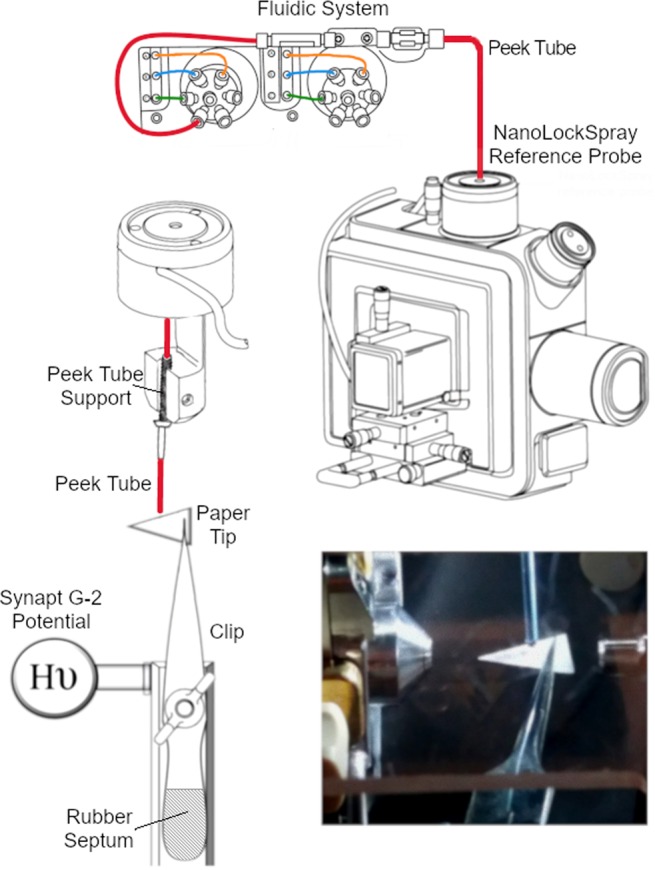
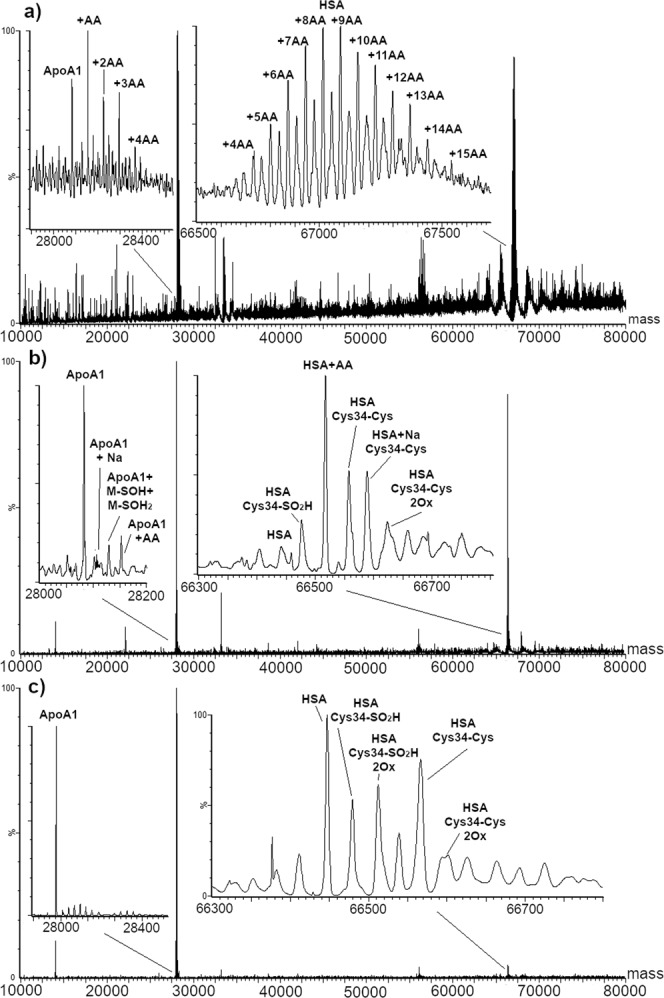
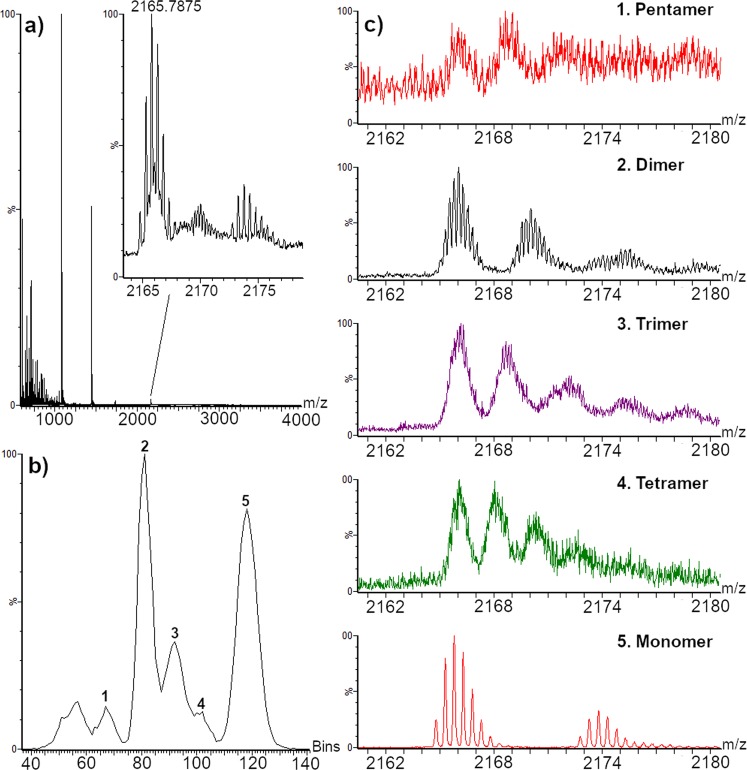
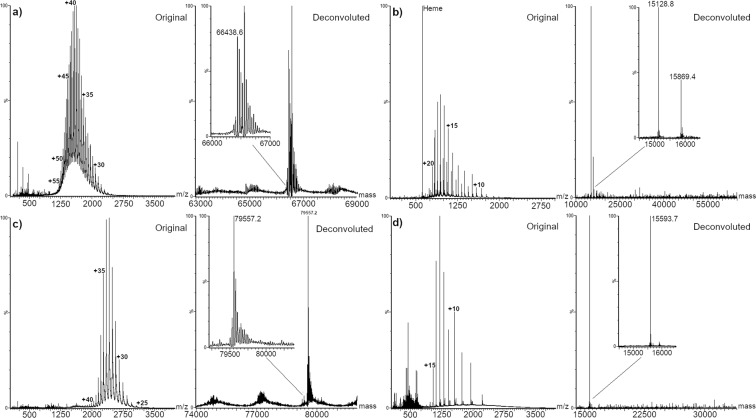
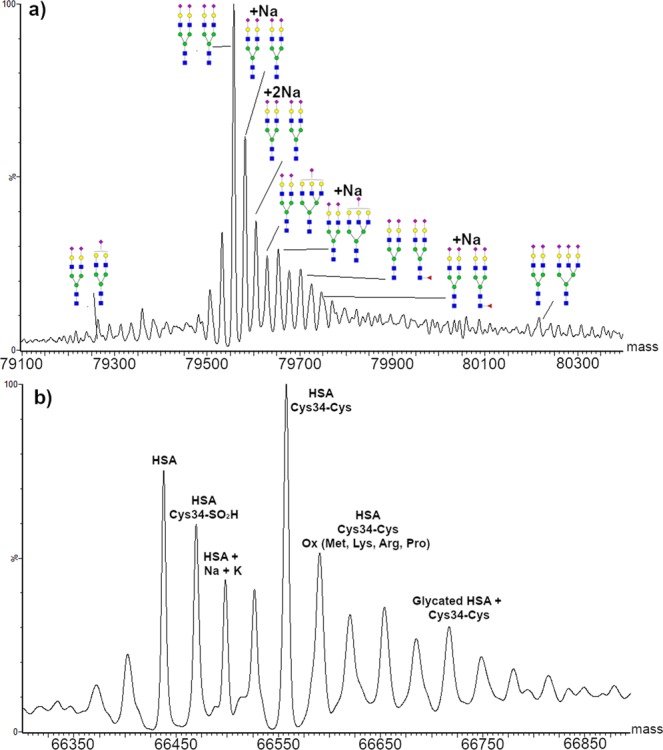
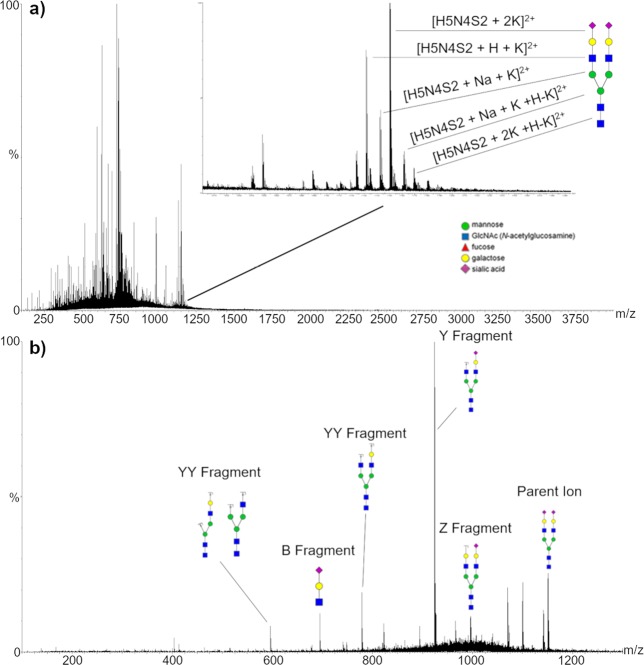
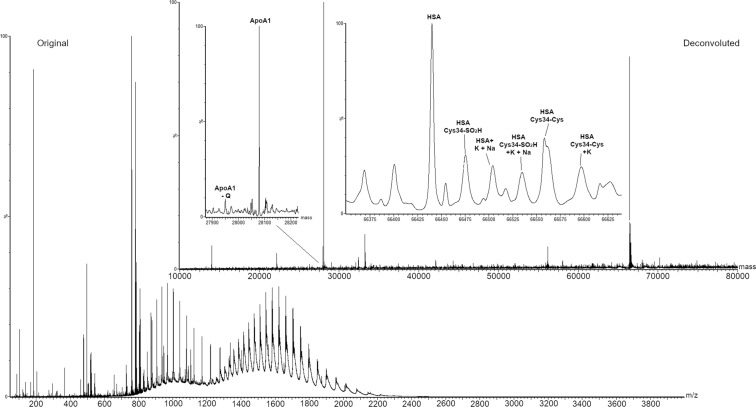
Paper Spray Ionization (PSI) is commonly applied for the analysis of small molecules, including drugs, metabolites, and pesticides in biological fluids, due to its high versatility, simplicity, and low costs. In this study, a new setup called Solvent Assisted Paper Spray Ionization (SAPSI), able to increase data acquisition time, signal stability, and repeatability, is proposed to overcome common PSI drawbacks. The setup relies on an integrated solution to provide ionization potential and constant solvent flow to the paper tip. Specifically, the ion source was connected to the instrument fluidics along with the voltage supply systems, ensuring a close control over the ionization conditions. SAPSI was successfully applied for the analysis of different classes of biomolecules: amyloidogenic peptides, proteins, and N-glycans. The prolonged analysis time allowed real-time monitoring of processes taking places on the paper tip, such as amyloid peptides aggregation and disaggregation phenomena. The enhanced signal stability allowed to discriminate protein species characterized by different post translational modifications and adducts with electrophilic compounds, both in aqueous solutions and in biofluids, such as serum and cerebrospinal fluid, without any sample pretreatment. In the next future, application to clinical relevant modifications, could lead to the development of quick and cost-effective diagnostic tools.
纸喷雾电离(PSI)由于其高通用性、简单性和低成本,常用于分析生物体液中的小分子,包括药物、代谢物和农药。在这项研究中,提出了一种称为溶剂辅助纸喷雾电离(SAPSI)的新装置,该装置能够增加数据采集时间、信号稳定性和重复性,以克服常见 PSI 的缺点。该装置依靠集成解决方案为纸尖端提供电离势和恒定的溶剂流。具体来说,离子源与仪器流路以及电压供应系统相连,确保对电离条件的紧密控制。SAPSI 成功应用于不同类别的生物分子的分析:淀粉样肽、蛋白质和 N-聚糖。延长的分析时间允许实时监测纸尖端上发生的过程,例如淀粉样肽的聚集和解聚现象。增强的信号稳定性允许区分具有不同翻译后修饰和与亲电化合物加合物的蛋白质种类,无论是在水溶液还是生物流体中,如血清和脑脊液,无需任何样品预处理。在未来,应用于临床相关的修饰,可能会开发出快速且具有成本效益的诊断工具。