University of Bergen, Department of Biological and Medical Psychology, Postboks 7807, 5020, Bergen, Norway.
Sci Rep. 2019 Jul 16;9(1):10317. doi: 10.1038/s41598-019-46266-w.
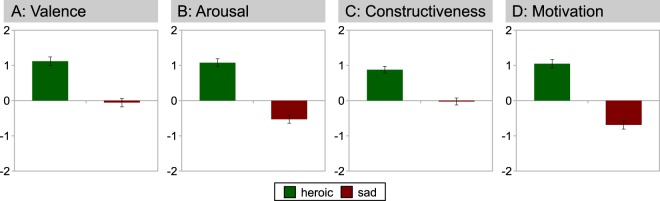
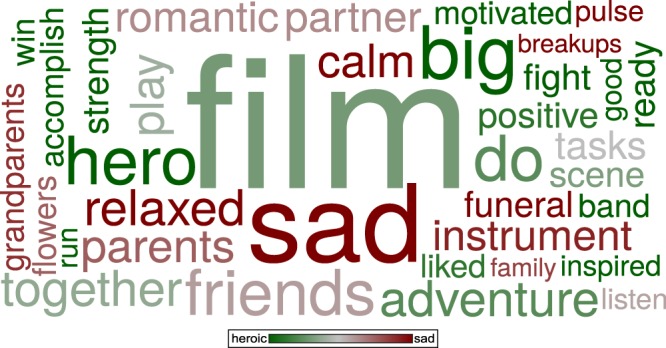
It is generally well-known, and scientifically well established, that music affects emotions and moods. However, only little is known about the influence of music on thoughts. This scarcity is particularly surprising given the importance of the valence of thoughts for psychological health and well-being. We presented excerpts of heroic- and sad-sounding music to n = 62 individuals, and collected thought probes after each excerpt, assessing the valence and the nature of thoughts stimulated by the music. Our results show that mind-wandering emerged during listening to either type of music (heroic, sad), and that the type of music strongly influenced the thought contents during mind-wandering. Heroic-sounding music evoked more positive, exciting, constructive, and motivating thoughts, while sad-sounding music evoked more calm or demotivating thoughts. The results thus indicate that music has a strong effect on the valence of thought contents during mind-wandering, with heroic music evoking more empowering and motivating thoughts, and sad music more relaxing or depressive thoughts. These findings have important implications for the use of music in everyday life to promote health and well-being in both clinical populations and healthy individuals.
人们普遍知道且科学已经证实,音乐能够影响情绪和心境。然而,人们对音乐对思想的影响知之甚少。鉴于思想的情绪效价对心理健康和幸福感的重要性,这种知识的匮乏尤为令人惊讶。我们向 62 名个体播放了英雄和悲伤曲风的音乐片段,在每段音乐片段后收集思维探测,评估音乐激发的思维的情绪效价和性质。研究结果表明,在聆听任何类型的音乐(英雄或悲伤)时都会出现走神,而且音乐的类型强烈影响走神时的思维内容。英雄曲风的音乐引发了更积极、兴奋、建设性和激励性的想法,而悲伤曲风的音乐则引发了更平静或令人沮丧的想法。因此,研究结果表明音乐对走神时思维内容的情绪效价有强烈影响,英雄曲风的音乐引发了更赋权和激励性的想法,而悲伤曲风的音乐则引发了更放松或抑郁的想法。这些发现对日常生活中使用音乐促进临床人群和健康个体的健康和幸福感具有重要意义。