Han Zhenggang, Shang-Guan Fang, Yang Jiangke
College of Biology and Pharmaceutical Engineering, Wuhan Polytechnic University, Wuhan, China.
Front Microbiol. 2019 Jul 2;10:1507. doi: 10.3389/fmicb.2019.01507. eCollection 2019.
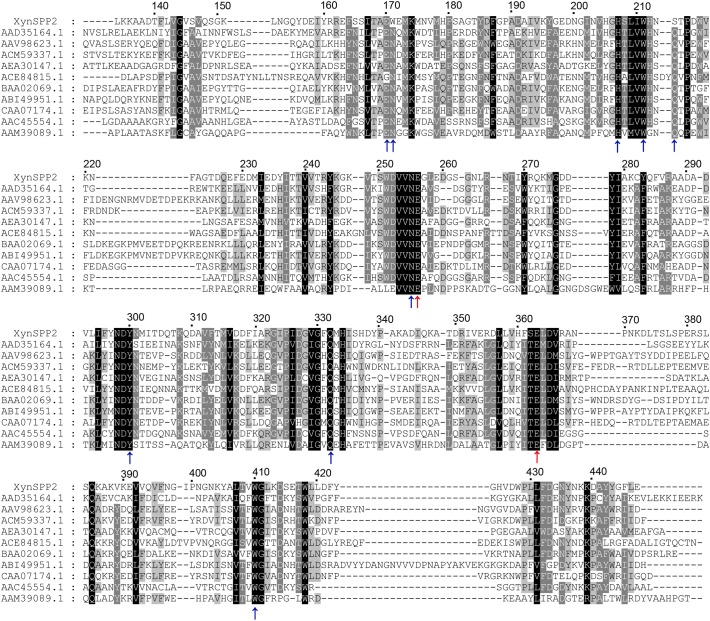
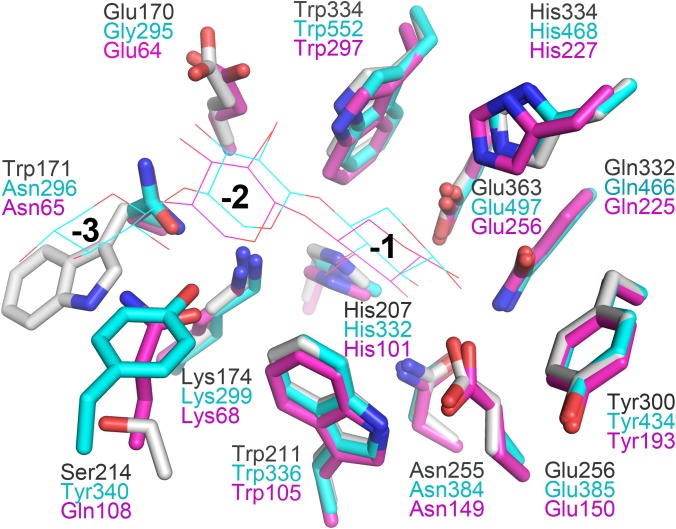
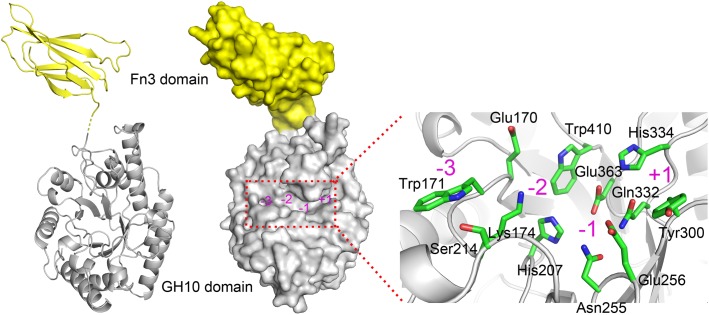
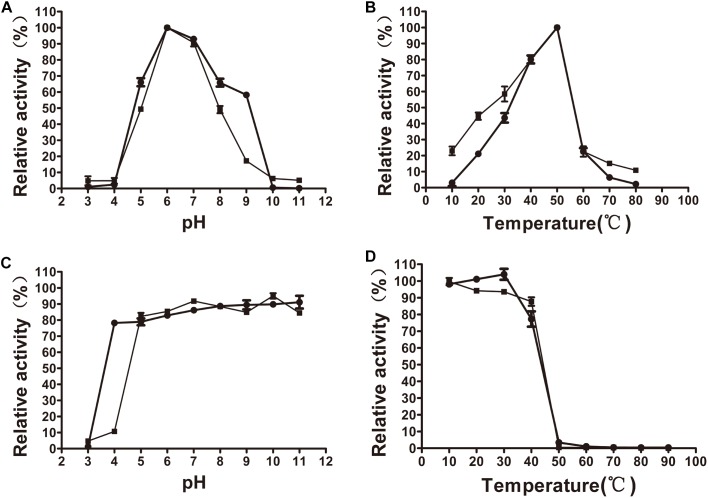
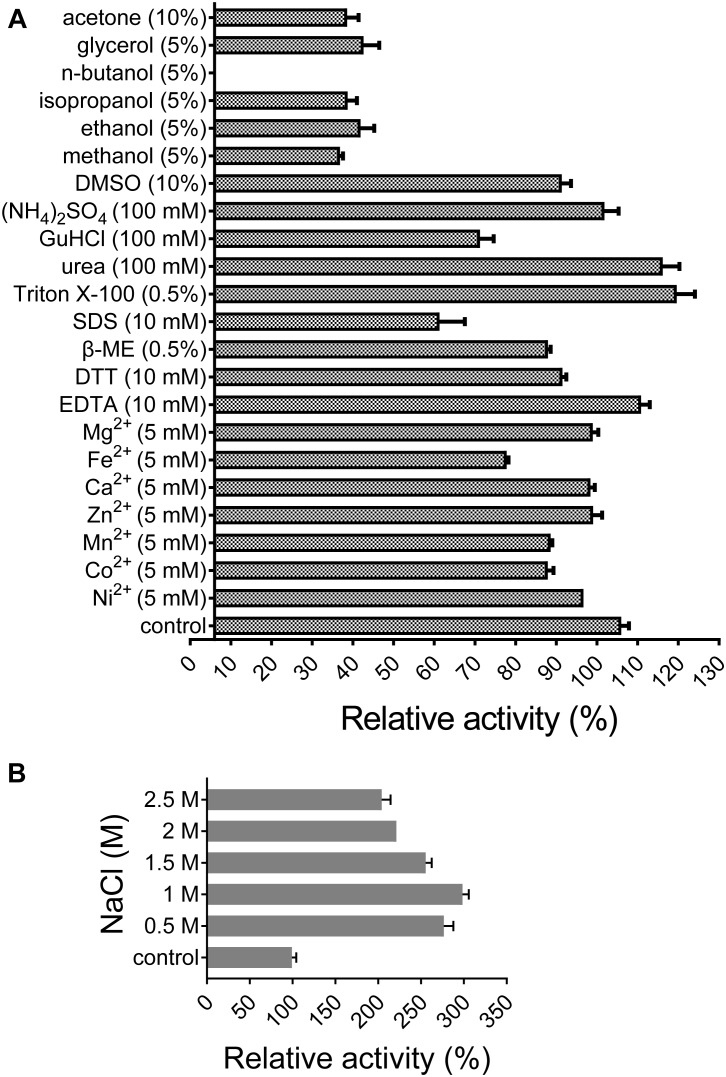
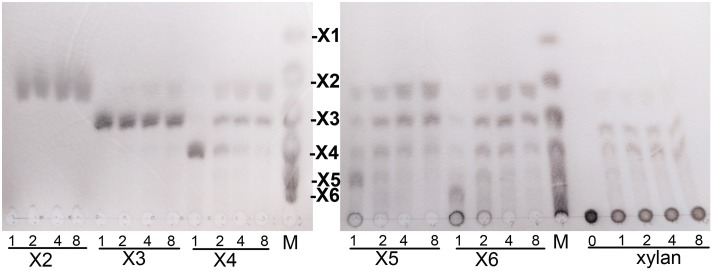
In this study, the first xylantic enzyme from the family , XynSPP2, was identified from bacterium strain SPP2. Amino acid sequence analysis revealed that XynSPP2 is a rare Fn3-fused xylanase, consisting of a signal peptide, a fibronectin type-III domain (Fn3), and a C-terminal catalytic domain belonging to glycoside hydrolase family 10 (GH10). The catalytic domain shared 17-46% identities to those of biochemically characterized GH10 xylanases. Structural analysis revealed that the conserved asparagine and glutamine at the glycone -2/-3 subsite of GH10 xylanases are substituted by a tryptophan and a serine, respectively, in XynSPP2. Full-length XynSPP2 and its Fn3-deleted variant (XynSPP2ΔFn3) were overexpressed in and purified by Ni-affinity chromatography. The optimum temperature and pH for both recombinant enzymes were 50°C and 6, respectively. The enzymes were stable under alkaline condition and at temperature lower than 50°C. With beechwood xylan as the substrate, XynSPP2 showed 2.8 times the catalytic efficiency of XynSPP2ΔFn3, indicating that the Fn3 module promotes xylanase activity. XynSPP2 was active toward xylooligosaccharides (XOSs) longer than xylotriose. Such a substrate preference can be explained by the unique -2/-3 subsite composition in the enzyme which provides new insight into subsite interaction within the GH10 family. XynSPP2 hydrolyzed beechwood xylan into small XOSs (xylotriose and xylotetraose as major products). No monosaccharide was detected by thin-layer chromatography which may be ascribed to putative transxylosylation activity of XynSPP2. Preferring long XOS substrate and lack of monosaccharide production suggest its potential in probiotic XOS manufacture.
在本研究中,从菌株SPP2中鉴定出了来自该家族的首个木聚糖酶XynSPP2。氨基酸序列分析表明,XynSPP2是一种罕见的Fn3融合木聚糖酶,由一个信号肽、一个纤连蛋白III型结构域(Fn3)和一个属于糖苷水解酶家族10(GH10)的C端催化结构域组成。该催化结构域与已进行生化表征的GH10木聚糖酶的催化结构域具有17%-46%的同一性。结构分析表明,GH10木聚糖酶在糖基-2/-3亚位点的保守天冬酰胺和谷氨酰胺在XynSPP2中分别被色氨酸和丝氨酸取代。全长XynSPP2及其缺失Fn3的变体(XynSPP2ΔFn3)在大肠杆菌中过量表达,并通过镍亲和层析进行纯化。两种重组酶的最适温度和pH分别为50°C和6。这些酶在碱性条件下以及低于50°C的温度下稳定。以山毛榉木聚糖为底物时,XynSPP2的催化效率是XynSPP2ΔFn3的2.8倍,表明Fn3模块促进了木聚糖酶活性。XynSPP2对木三糖以上的木寡糖(XOSs)具有活性。这种底物偏好可以通过该酶中独特的-2/-3亚位点组成来解释,这为GH10家族内的亚位点相互作用提供了新的见解。XynSPP2将山毛榉木聚糖水解为小的XOSs(主要产物为木三糖和木四糖)。薄层色谱未检测到单糖,这可能归因于XynSPP2假定的转木糖基化活性。偏好长链XOS底物且不产生单糖表明其在益生菌XOS生产中的潜力。