Rheumatology Research Group, Vall d'Hebron Research Institute, Barcelona, Spain.
Department of Experimental and Health Sciences, Universitat Pompeu Fabra, Barcelona, Spain.
Front Immunol. 2019 Jul 2;10:1459. doi: 10.3389/fimmu.2019.01459. eCollection 2019.
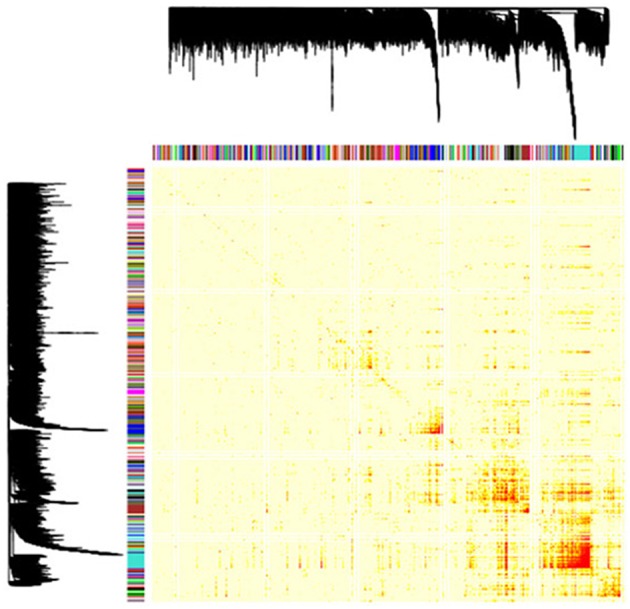
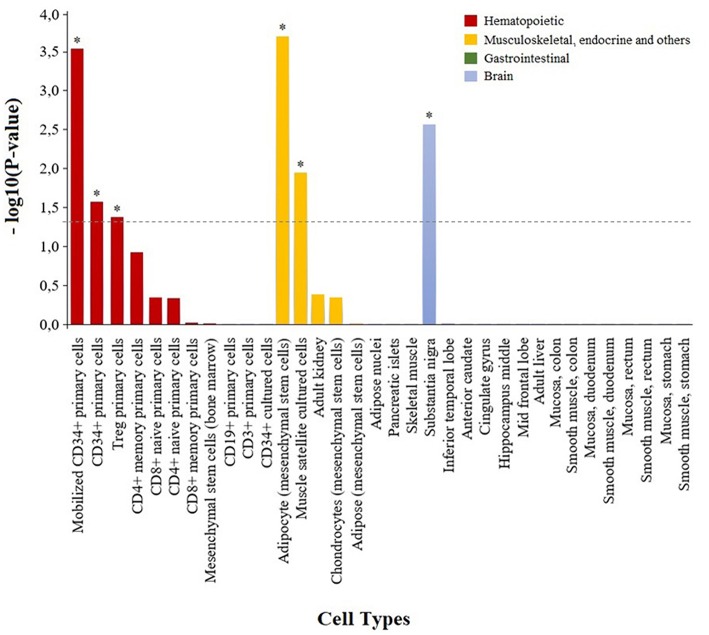
Rheumatoid arthritis (RA) is the most frequent autoimmune disease involving the joints. Although anti-TNF therapies have proven effective in the management of RA, approximately one third of patients do not show a significant clinical response. The objective of this study was to identify new genetic variation associated with the clinical response to anti-TNF therapy in RA. We performed a sequential multi-omic analysis integrating different sources of molecular information. First, we extracted the RNA from synovial biopsies of 11 RA patients starting anti-TNF therapy to identify gene coexpression modules (GCMs) in the RA synovium. Second, we analyzed the transcriptomic association between each GCM and the clinical response to anti-TNF therapy. The clinical response was determined at week 14 using the EULAR criteria. Third, we analyzed the association between the GCMs and anti-TNF response at the genetic level. For this objective, we used genome-wide data from a cohort of 348 anti-TNF treated patients from Spain. The GCMs that were significantly associated with the anti-TNF response were then tested for validation in an independent cohort of 2,706 anti-TNF treated patients. Finally, the functional implication of the validated GCMs was evaluated via pathway and cell type epigenetic enrichment analyses. A total of 149 GCMs were identified in the RA synovium. From these, 13 GCMs were found to be significantly associated with anti-TNF response ( < 0.05). At the genetic level, we detected two of the 13 GCMs to be significantly associated with the response to adalimumab ( = 0.0015) and infliximab ( = 0.021) in the Spain cohort. Using the independent cohort of RA patients, we replicated the association of the GCM associated with the response to adalimumab ( = 0.0019). The validated module was found to be significantly enriched for genes involved in the nucleotide metabolism ( = 2.41e-5) and epigenetic marks from immune cells, including CD4+ regulatory T cells ( = 0.041). These findings show the existence of a drug-specific genetic basis for anti-TNF response, thereby supporting treatment stratification in the search for response biomarkers in RA.
类风湿关节炎(RA)是最常见的累及关节的自身免疫性疾病。虽然抗 TNF 治疗已被证明可有效治疗 RA,但约有三分之一的患者没有显著的临床反应。本研究的目的是确定与 RA 患者抗 TNF 治疗临床反应相关的新的遗传变异。
我们进行了一项序贯多组学分析,整合了不同来源的分子信息。首先,我们从 11 名开始接受抗 TNF 治疗的 RA 患者的滑膜活检中提取 RNA,以鉴定 RA 滑膜中的基因共表达模块(GCM)。其次,我们分析了每个 GCM 与抗 TNF 治疗临床反应之间的转录组关联。临床反应在第 14 周使用 EULAR 标准进行评估。第三,我们在遗传水平上分析了 GCM 与抗 TNF 反应之间的关联。为此,我们使用了来自西班牙的 348 名接受抗 TNF 治疗患者的全基因组数据。然后,在另一项独立的 2706 名接受抗 TNF 治疗的患者队列中对与抗 TNF 反应显著相关的 GCM 进行了验证。最后,通过通路和细胞类型表观遗传富集分析评估了验证的 GCM 的功能意义。
在 RA 滑膜中鉴定出 149 个 GCM。其中,有 13 个 GCM 与抗 TNF 反应显著相关( < 0.05)。在遗传水平上,我们在西班牙队列中检测到其中两个 GCM 与阿达木单抗( = 0.0015)和英夫利昔单抗( = 0.021)的反应显著相关。在使用 RA 患者的独立队列中,我们复制了与阿达木单抗反应相关的 GCM 的关联( = 0.0019)。验证的模块在涉及核苷酸代谢的基因( = 2.41e-5)和免疫细胞的表观遗传标记中显著富集,包括 CD4+调节性 T 细胞( = 0.041)。
这些发现表明,抗 TNF 反应存在特定药物的遗传基础,从而支持在 RA 中寻找反应生物标志物的治疗分层。