Department of Legal Medicine, Asahikawa Medical University, 2-1-1-1 Midorigaoka-Higashi, Asahikawa, Hokkaido, 078-8510, Japan.
Division of Gastroenterology and Hematology/Oncology, Asahikawa Medical University, Asahikawa, Japan.
Dig Dis Sci. 2020 Jan;65(1):132-140. doi: 10.1007/s10620-019-05729-w. Epub 2019 Jul 17.
Colchicine binds to intracellular tubulin and prevents mitosis. Colchicine is also used as an anti-inflammatory drug. Meanwhile, excess administration of medication or accidental ingestion of colchicine-containing plants can cause acute colchicine poisoning, which initially results in gastrointestinal effects that may be followed by multiorgan dysfunction. However, the mechanism of colchicine poisoning remains unclear, and there are no standard therapeutic strategies.
We focused on intestinal barrier function and attempted to reveal the underlying mechanism of colchicine poisoning using an animal model.
Colchicine was orally administered to C57Bl/6 mice. Then, we performed histopathological analysis, serum endotoxin assays, and intestinal permeability testing. Additionally, the LPS-TLR4 signaling inhibitor TAK-242 was intraperitoneally injected after colchicine administration to analyze the therapeutic effect.
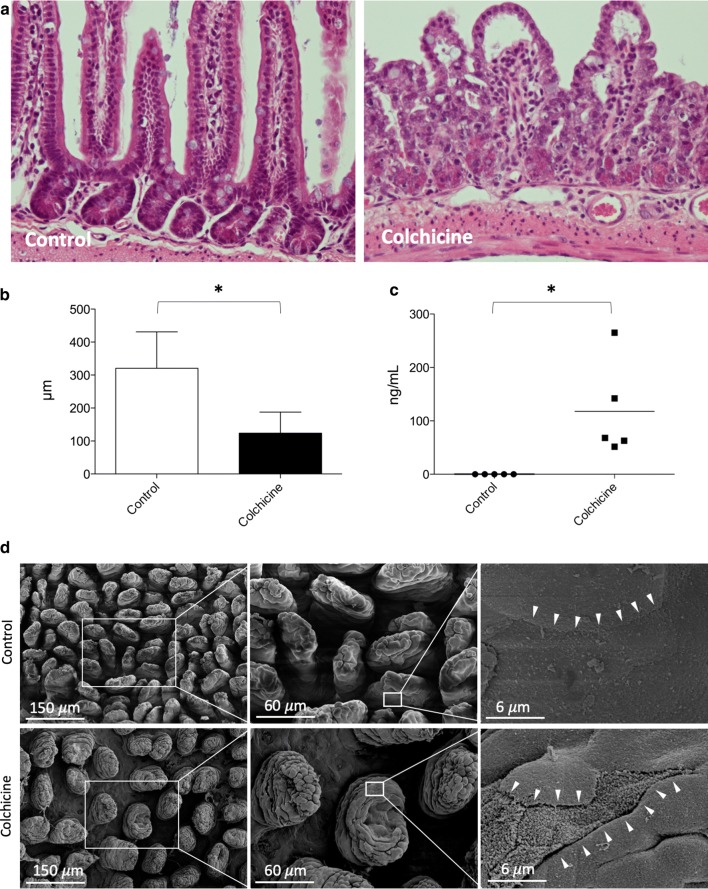
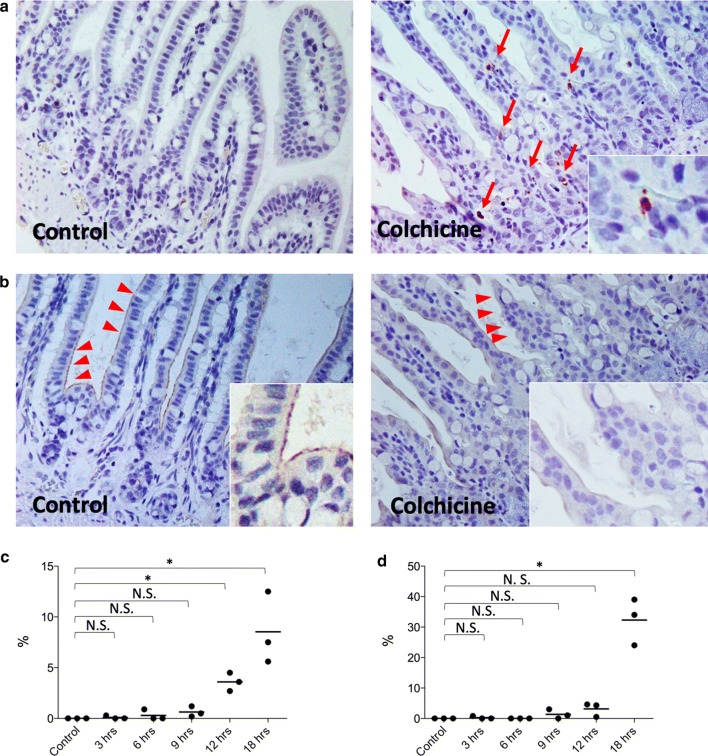
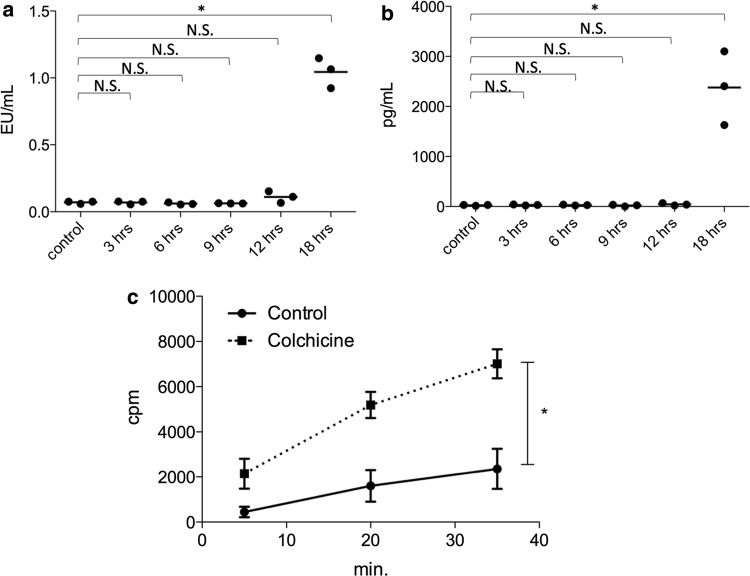
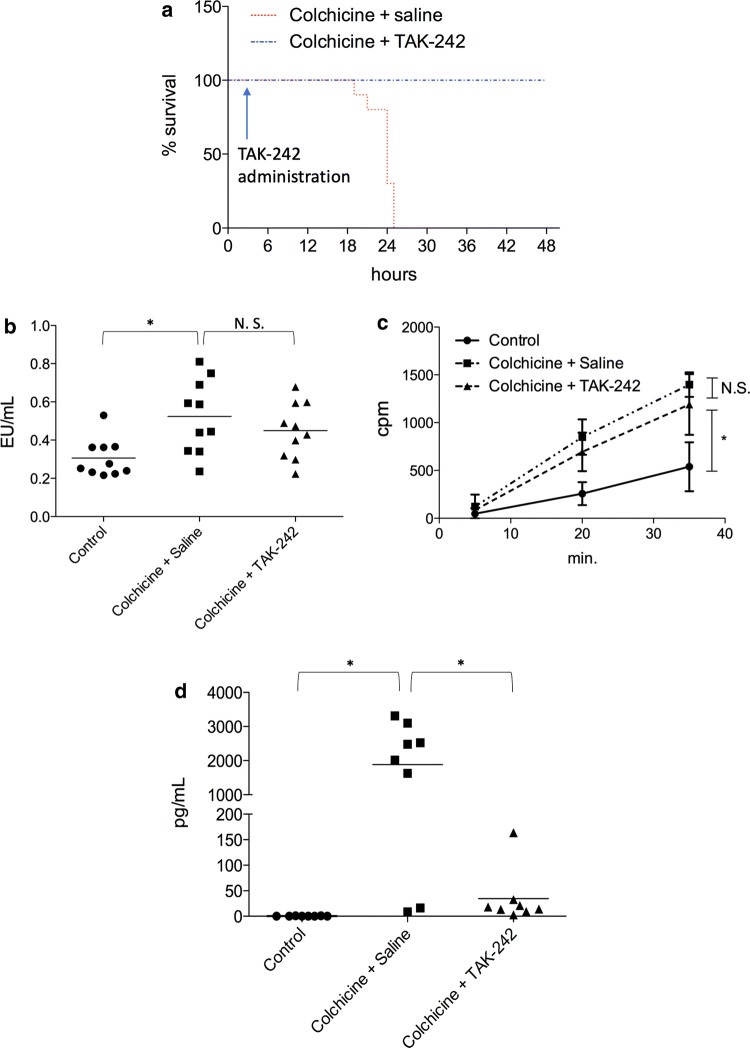
We observed villus height reduction and increased numbers of apoptotic cells in the gastrointestinal epithelium of colchicine-treated mice. Both intestinal permeability and serum endotoxin levels were higher in colchicine-treated mice than in control mice. Although colchicine-poisoned mice died within 25 h, those that also received TAK-242 treatment survived for more than 48 h.
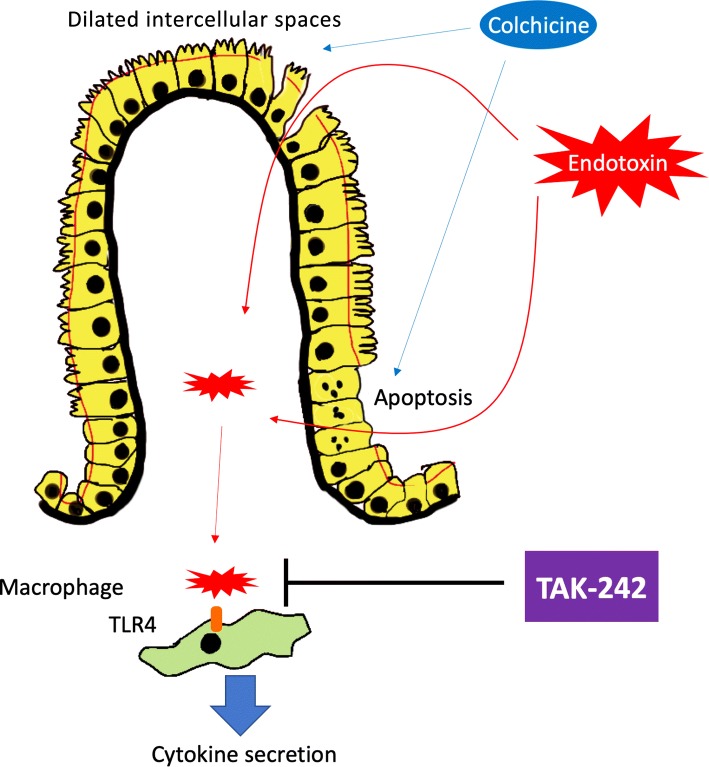
Colchicine disrupted intestinal barrier function and caused endotoxin shock. Therapeutic inhibition of LPS-TLR4 signaling might be beneficial for treating acute colchicine poisoning.
秋水仙碱与细胞内微管结合,阻止有丝分裂。秋水仙碱也被用作抗炎药物。同时,药物过量或意外摄入含秋水仙碱的植物会导致急性秋水仙碱中毒,最初会导致胃肠道效应,随后可能会出现多器官功能障碍。然而,秋水仙碱中毒的机制尚不清楚,也没有标准的治疗策略。
我们专注于肠屏障功能,并试图使用动物模型揭示秋水仙碱中毒的潜在机制。
将秋水仙碱经口给予 C57Bl/6 小鼠。然后,我们进行组织病理学分析、血清内毒素检测和肠道通透性检测。此外,在给予秋水仙碱后,通过腹腔注射 LPS-TLR4 信号抑制剂 TAK-242 来分析治疗效果。
我们观察到秋水仙碱处理的小鼠胃肠道上皮细胞中的绒毛高度降低和凋亡细胞数量增加。与对照组小鼠相比,秋水仙碱处理的小鼠的肠道通透性和血清内毒素水平均升高。尽管秋水仙碱中毒的小鼠在 25 小时内死亡,但那些接受 TAK-242 治疗的小鼠存活时间超过 48 小时。
秋水仙碱破坏了肠道屏障功能并导致内毒素休克。抑制 LPS-TLR4 信号的治疗可能有益于治疗急性秋水仙碱中毒。