Hirayama Ichiro, Hiruma Takahiro, Ueda Yoshihiro, Doi Kent, Morimura Naoto
Department of Acute Medicine, The University of Tokyo Hospital, 7-3-1 Hongo, Bunkyo-ku, Tokyo, 113-8655, Japan.
J Med Case Rep. 2018 Jul 4;12(1):191. doi: 10.1186/s13256-018-1737-5.
Although 0.8 mg/kg is considered a lethal dose of colchicine, fatal cases of patients who followed a critical disease course after an intake below this lethal dose have been reported.
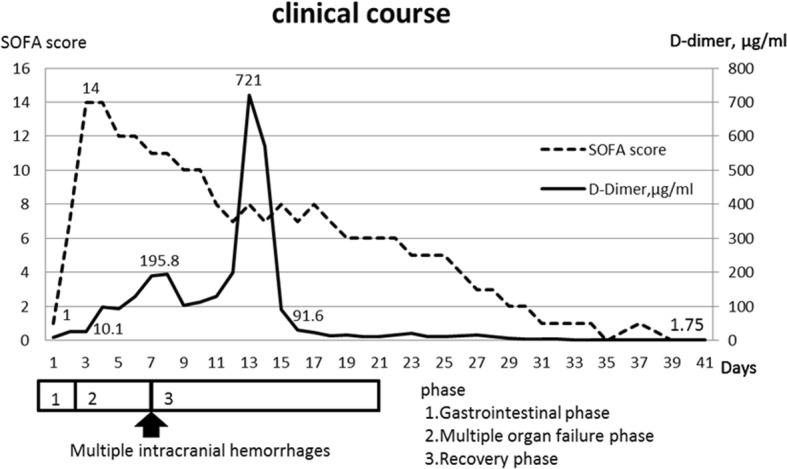
An 18-year-old Japanese woman who had taken an overdose of prescription colchicine (15 mg; 0.2 mg/kg) was brought to our emergency out-patient department. Although her colchicine intake was below 0.8 mg/kg (considered the lethal dose), she reached a critical state and underwent three phases characterizing colchicine poisoning (gastrointestinal symptoms, multiple organ failure, and recovery). Her condition was critical, with a Sequential Organ Failure Assessment score of a maximum of 14.
Patients might reach a critical stage after colchicine ingestion at a non-lethal dose. Thus, it might be necessary to review which dose of colchicine should be considered lethal.
尽管秋水仙碱的致死剂量被认为是0.8毫克/千克,但已有报告称,摄入低于该致死剂量的患者在经历严重病程后出现了死亡病例。
一名18岁的日本女性因过量服用处方秋水仙碱(15毫克;0.2毫克/千克)被送至我院急诊门诊。尽管她摄入的秋水仙碱低于0.8毫克/千克(被认为是致死剂量),但她进入了危急状态,并经历了秋水仙碱中毒的三个阶段(胃肠道症状、多器官功能衰竭和恢复)。她的病情危急,序贯器官衰竭评估评分最高达到14分。
患者在摄入非致死剂量的秋水仙碱后可能会进入危急阶段。因此,可能有必要重新审视应将何种剂量的秋水仙碱视为致死剂量。