Grumezescu Alexandru Mihai, Stoica Alexandra Elena, Dima-Bălcescu Mihnea-Ștefan, Chircov Cristina, Gharbia Sami, Baltă Cornel, Roșu Marcel, Herman Hildegard, Holban Alina Maria, Ficai Anton, Vasile Bogdan Stefan, Andronescu Ecaterina, Chifiriuc Mariana Carmen, Hermenean Anca
Department of Science and Engineering of Oxide Materials and Nanomaterials, Faculty of Applied Chemistry and Materials Science, University Politehnica of Bucharest, 060042 Bucharest, Romania.
Academy of Romanian Scientists, 050094 Bucharest, Romania.
J Clin Med. 2019 Jul 16;8(7):1039. doi: 10.3390/jcm8071039.
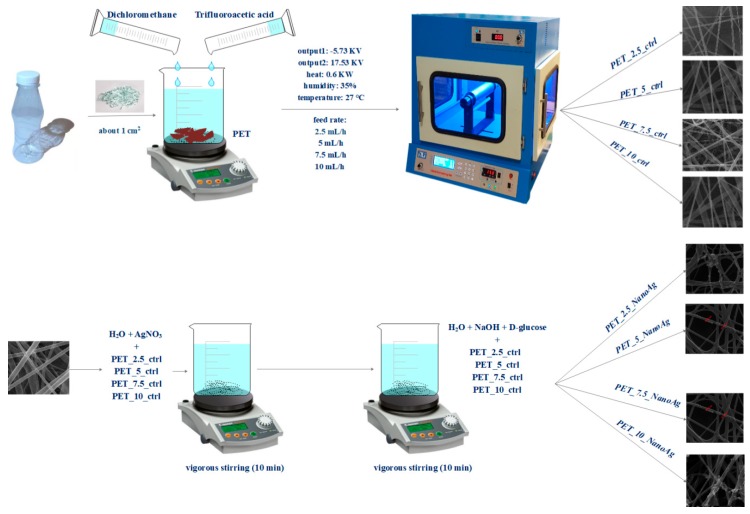
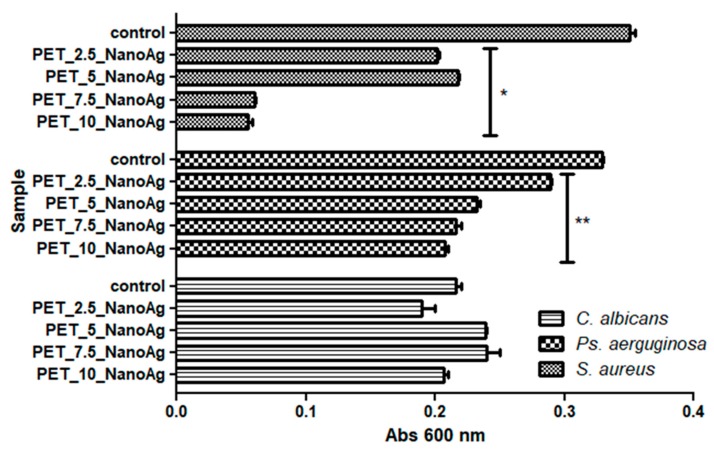
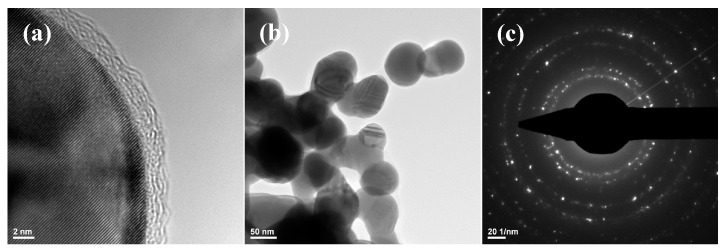
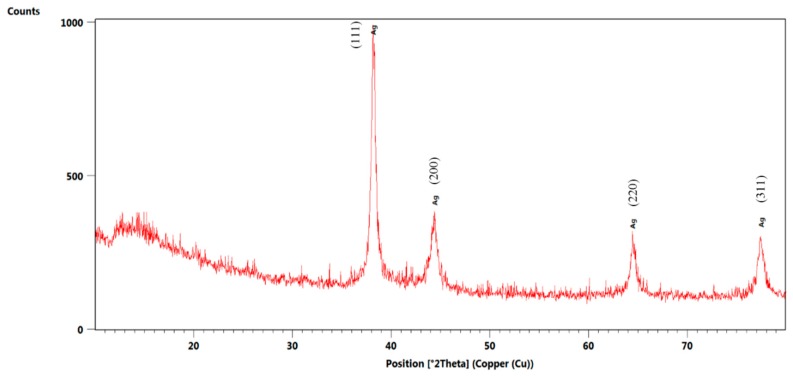
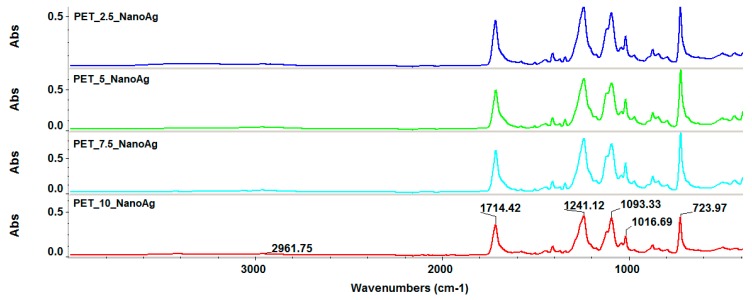
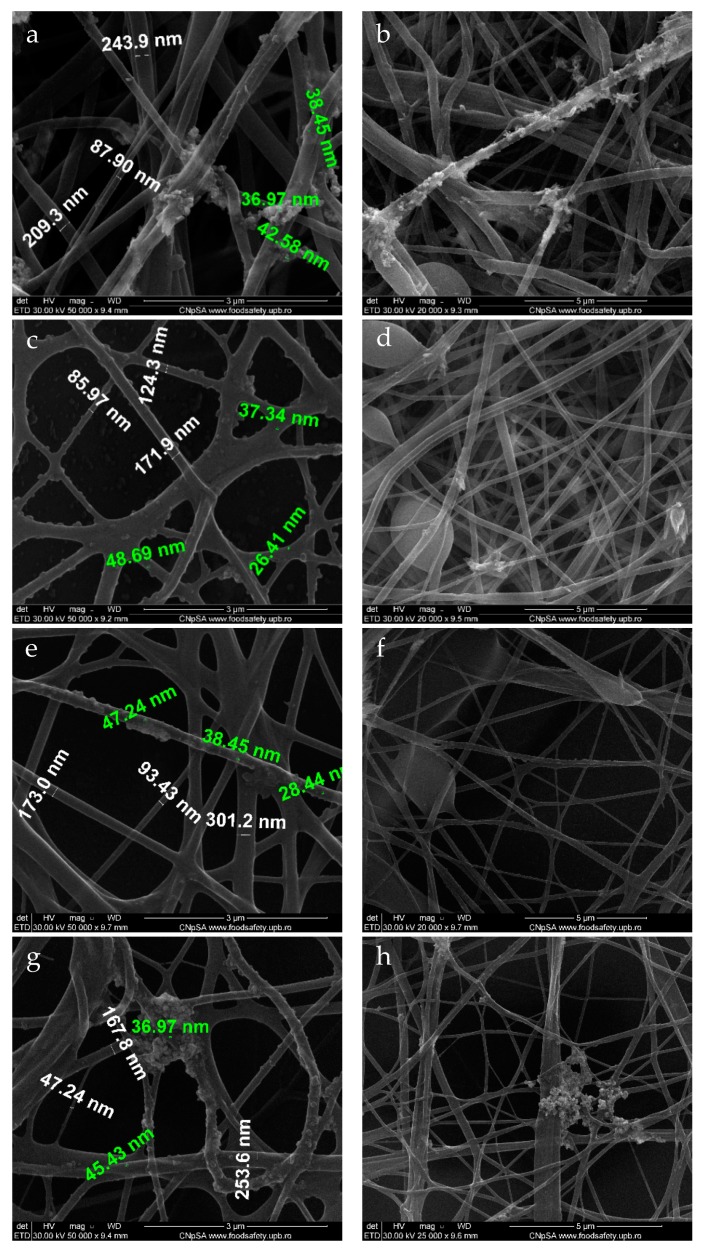
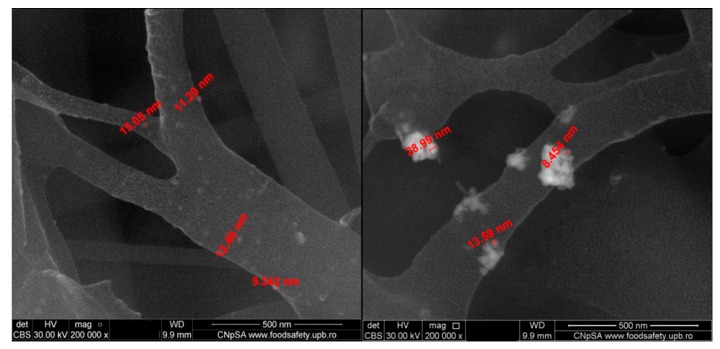
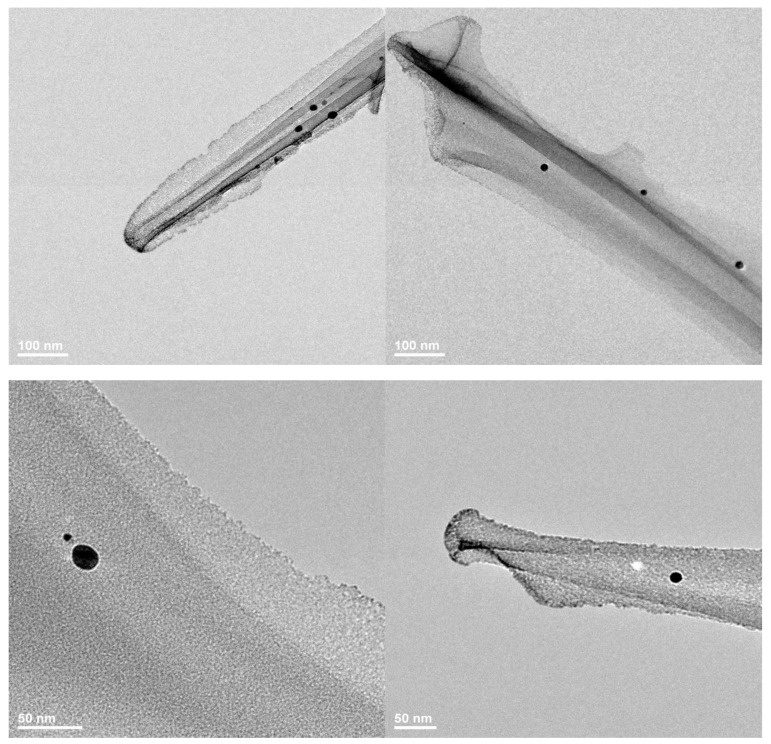
Polyethylene terephthalate (PET) is a major pollutant polymer, due to its wide use in food packaging and fiber production industries worldwide. Currently, there is great interest for recycling the huge amount of PET-based materials, derived especially from the food and textile industries. In this study, we applied the electrospinning technique to obtain nanostructured fibrillary membranes based on PET materials. Subsequently, the recycled PET networks were decorated with silver nanoparticles through the chemical reduction method for antimicrobial applications. After the characterization of the materials in terms of crystallinity, chemical bonding, and morphology, the effect against Gram-positive and Gram-negative bacteria, as well as fungal strains, was investigated. Furthermore, in vitro and in vivo biocompatibility tests were performed in order to open up potential biomedical applications, such as wound dressings or implant coatings. Silver-decorated fibers showed lower cytotoxicity and inflammatory effects and increased antibiofilm activity, thus highlighting the potential of these systems for antimicrobial purposes.
聚对苯二甲酸乙二酯(PET)是一种主要的污染性聚合物,这是由于其在全球食品包装和纤维生产行业中广泛使用。目前,人们对回收大量源自食品和纺织行业的PET基材料有着浓厚兴趣。在本研究中,我们应用静电纺丝技术来制备基于PET材料的纳米结构纤维膜。随后,通过化学还原法用银纳米颗粒修饰回收的PET网络,以用于抗菌应用。在对材料的结晶度、化学键合和形态进行表征之后,研究了其对革兰氏阳性菌、革兰氏阴性菌以及真菌菌株的作用效果。此外,还进行了体外和体内生物相容性测试,以开拓潜在的生物医学应用,如伤口敷料或植入物涂层。银修饰的纤维显示出较低的细胞毒性和炎症效应,并增强了抗生物膜活性,从而突出了这些体系在抗菌方面的潜力。