Hacettepe University, Center for Stem Cell Research and Development PEDI-STEM, Ankara, Turkey.
Division of Pediatric Hematology and Bone Marrow Transplantation Unit, Department of Pediatrics, Faculty of Medicine, Hacettepe University, Ankara, Turkey.
Stem Cell Res Ther. 2019 Jul 17;10(1):211. doi: 10.1186/s13287-019-1316-8.
Autosomal recessive osteopetrosis is a genetically and phenotypically heterogeneous disease, caused by defects in osteoclast formation and function. The only available treatment is allogeneic stem cell transplantation that has still high morbidity and mortality. The goal of the present study was to generate iPSCs from bone marrow-derived MSCs of osteopetrosis patients with three most common mutations by using two different integration-free gene transfer methods and compare their efficiencies. The secondary objective was to select the most appropriate integration-free production method for our institutional iPSC bank using this rare disease as a prototype.
Two different integration-free gene transfer methods (episomal and Sendai viral vectors) were tested and compared on the same set of patient samples exhibiting three different mutations associated with osteopetrosis. Generated iPSCs were characterized by standard assays, including immunophenotyping, immunocytochemistry, RT-PCR, embryoid body, and teratoma assays. Karyotype analyses were performed to evaluate genetic stability.
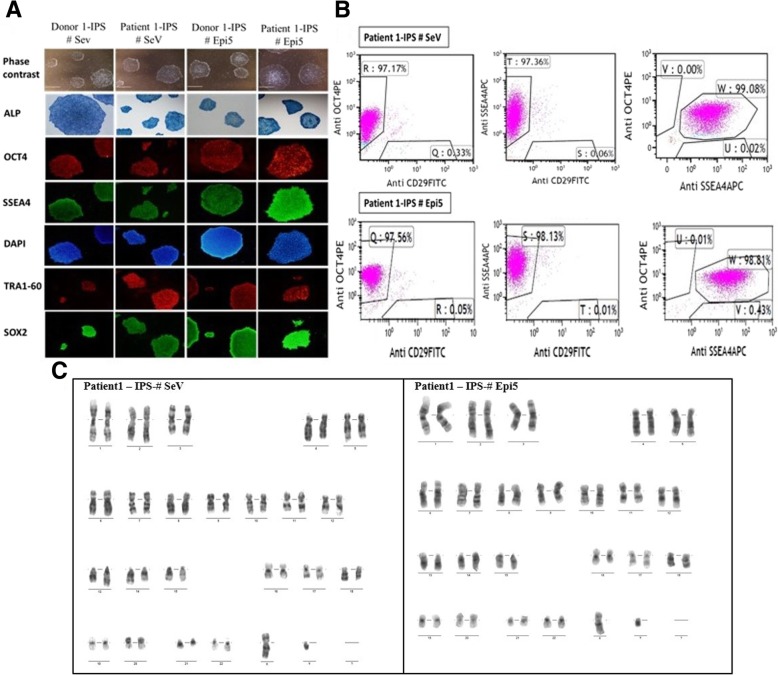
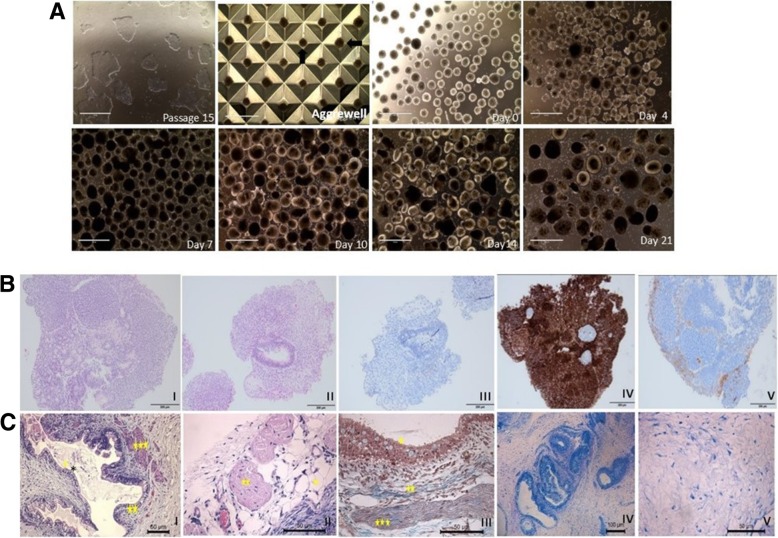
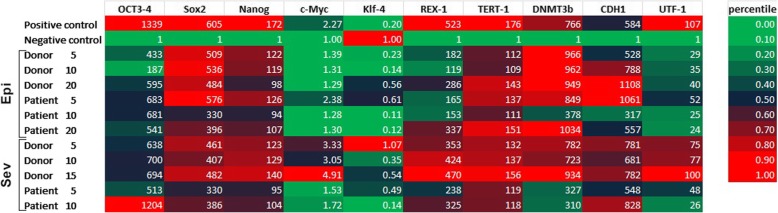
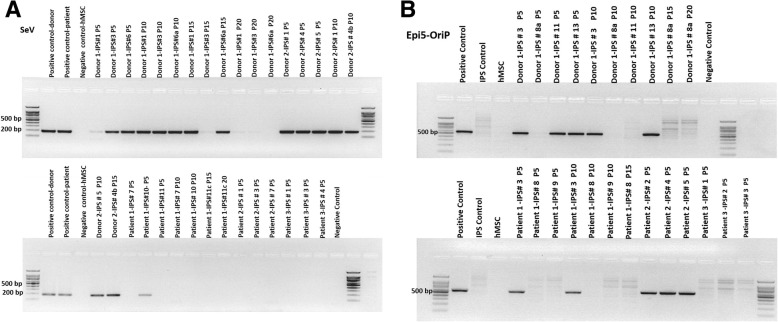
iPSC lines exhibiting typical ESC-like colony morphology were shown to express pluripotency markers by immunofluorescence staining. Over 90% of the cells were found positive for SSEA-4 and OCT3/4 and negative/weak positive for CD29 by flow cytometry. Immunohistochemical staining of teratoma and spontaneously differentiated embryoid body sections confirmed their trilineage differentiation potential. All iPSC lines expressed pluripotency-related genes. Karyotype analyses were found normal. Direct sequencing of PCR-amplified DNA showed that disease-related mutations were retained in the patient-specific iPSCs.
Generation of iPSC using SeV and episomal DNA vectors have several advantages over other methods like the ease of production, reliability, high efficiency, and safety, which is required for translational research. Furthermore, owing to the pluripotency and self-renewal capacity, patient-specific iPSCs seem to be ideal cell source for the modeling of a rare genetic bone disease like osteopetrosis to identify osteoclast defects, leading to clinical heterogeneity in osteopetrosis patients, especially among those with different mutations in the same gene.
常染色体隐性遗传型骨质石化症是一种遗传性和表型上具有异质性的疾病,由破骨细胞形成和功能缺陷引起。唯一可用的治疗方法是异体干细胞移植,但仍有很高的发病率和死亡率。本研究的目的是使用两种不同的无整合基因转移方法从骨质石化症患者的骨髓来源 MSC 中生成 iPSC,并比较它们的效率。次要目标是使用这种罕见疾病作为原型,为我们的机构 iPSC 库选择最合适的无整合生产方法。
在同一组表现出与骨质石化症相关的三种不同突变的患者样本上,测试并比较了两种不同的无整合基因转移方法(附加体和 Sendai 病毒载体)。通过标准检测,包括免疫表型分析、免疫细胞化学、RT-PCR、类胚体和畸胎瘤检测,对生成的 iPSC 进行了鉴定。进行核型分析以评估遗传稳定性。
表现出典型 ESC 样集落形态的 iPSC 系被证明通过免疫荧光染色表达多能性标志物。通过流式细胞术,超过 90%的细胞对 SSEA-4 和 OCT3/4 呈阳性,对 CD29 呈阴性/弱阳性。畸胎瘤和自发分化类胚体切片的免疫组织化学染色证实了它们的三系分化潜能。所有 iPSC 系均表达多能性相关基因。核型分析正常。PCR 扩增 DNA 的直接测序表明,患者特异性 iPSC 中保留了与疾病相关的突变。
使用 SeV 和附加体 DNA 载体生成 iPSC 具有许多优于其他方法的优势,例如生产的简便性、可靠性、高效率和安全性,这对于转化研究是必需的。此外,由于具有多能性和自我更新能力,患者特异性 iPSC 似乎是模拟骨质石化症等罕见遗传性骨疾病的理想细胞来源,以确定破骨细胞缺陷,导致骨质石化症患者的临床异质性,尤其是在同一基因中具有不同突变的患者中。